Home » open mind (Page 2)
Category Archives: open mind

ATLAS-TO-CAPE EXODUS
RAINBOW BROADBAND
Traitor Mandela
Chillax
Twenty-seven years in prison
Apartheid venom
Fails to corrode his bones
Iapartheid aithethi isiXhosa
Aiyazi ukuthi
Aigobeki le ntsimbi
Robben Island
Made the man
On the one hand
Broke the man’ soul
On the other
Threw his boxing gloves
To the sea lions
Chillax ashore

Gather no weeds
Hammer away rocks
Abound on the island
Protective gear
A remote idea
Rock chips and dust
Mess your eyes up
You can’t cry freedom
You can’t see
When you couldn’t care
About
Carving freedom out of stone
Rock chips and dust
Clog your nostrils up
You can’t smell
Misery of the people
In the air
In as much as
Post-Mandela’s death
People can’t smell Corona
That way it can’t be real
And the people continue
To die like flies
In as much as
Mandela’s
Liberation of
The people of
Mzansi is fake
Fo sho
This is the land
Mandela sold away to
White man’s burden
Legacy perpetrators
They call them
White Monopoly Capital buffoons
To whom
Gupta brothers
Came’n added
Colour’n spice
’n pocketed
Mandela’ sellout inheritors
Dazed in agarbatti smoke clouds
When you thought
Weed was bad
Eroding
Mzansi land
Left, right and centre
Fo sho
With their cupidity machines
Thinking that
Gravy train
Conspicuous consumption symbols
Ferrari and Maserati
Exhaust polenta to
The people of Mzansi for sho
Meanwhile
Maybach leverages mortuaries
Competing for corpses
Around Mzansi fo sho
Some corpses dappered in
Johann Rupert’s
Jewellery empire vanity chains
Stones upon which studded
Wouldn’t feed even
Insects and worms
As is the nature of stones
Who knows that better than
Northern deserts’ pyramids
Perhaps
We should all head south
Go detox
White man’s burden faeces
On Robben Island
For the illusive redemption of
Africa burning
In self-perpetuatory
White man’s burden
Transgenerational trauma
Self-annihilatory black curse
Some look up to
The Pyramids of Egypt
Findings in
The bowels of which
Only confirm
Our once upon a time grandeur
That’s all
Non-revolutionary
Static pride
In ancient times
Disconnected
With realities of our times
Just keeps us sinking
Beneath our rivers
In the age of
Global warming
Of not Mandela’s doing
The Nile shall
Swallow the pyramids
One of these days
What you gon’ do
When the pyramids’re gone
The Congo shall
Flood the belly of Africa
Someday
Who’ll be left to say anything
Whoever’ll be looking
To find Lumumba’s bones floating around
Shall be doing so in vain
The Zambezi is coming
The Kariba Dam’s already
Getting weary
Listen to your basic instincts
What you gon’ do
When Sharon Stone’s
King Solomon’s mines are gone
Wake up
Dude
Put seventy
University
Degrees
To good us for once
For goodness’ sake
It’s okay
The Greenback’s on the streets
Mzansi Rand’ still
Real money fo sho
Got Mandela’s face
On it, neh
Wathi
Pamberi ne ntontoni
Umtu
(Oh, thixo, bawo, Nkosi sikelela!)
Revolutionary Africa
Been at war
With itself from during
Anti-colonial struggle days
Civil wars continued upon
Independence attainment
Free at last to play out
White man’s burden
Transgenerational trauma
Self-annihilatory black curse games
To this day
Freedom is a relative state
In all African states
Basest result of state dysfunctionality
In Africa
As elsewhere
Is a constant
Tyrants everywhere
Including America
Staying alive
Feeding on
Murder in all its execution variabilities
Survivors rot in jail
People endure suffering
In all its construction variables
People dream of life-supportive
Freedoms elsewhere
Since Mandela’s
Betrayal of
The African self-determination cause
Twenty-seven years ago
Mzansi fo sho
Has yet
To degenerate to levels
Of truly liberated
Free Mother Africa
Making a mockery of
Pan-Africanist dreams
When free Mother Africa’s people
Give up on the miseries
Of their tyrannical
Genocidal
War-torn lands
Of once upon a time
Ancient Mega Star Warrior Kings
As accessible to today
As
The horizon of history
Choose to rather not
Get roasted walking the Sahara
Drown treading the Mediterranean
There’s a rainbow broadband
Linking the poles of Africa
From the Atlas to the Cape
Making a joke of
Cecil Rhode’s Cape-to-Cairo
Highway dream
Following this rainbow
Many an African soul
Crushed under own meaning
Of true self-annihilatory African liberation
Land in awesome Gauteng
Cradle of Humankind grounds
City of gold
Mystical
Below and above
The ground
People begin to breathe here
People grow wings here
People reach all corners of Mzansi fo sho from here
People’s dreams come true here
The rest is magic
Argh, cxh
Afro-xenophobia
Comes and goes
Now and then
Mzansi fo sho
Playing out its own version of
White man’s burden
Transgenerational trauma
Self-annihilatory black curses
Call it divide and rule devices
I’ve asked before
Who’s better
Who’s worse
Same difference
Same shit
The southern-most
Tip of the
Africa-long broadband rainbow
Touches Robben Island
In this lament here
Nelson Mandela legacy spirit infused
I lay my head
On the anvil
In this lament here
I proclaim that
Africa’s future’s anchored here
Prove me wrong
If you can
Hammer my brains out
If I’m wrong
Come along
Join The Rainbow Nation’s march
To go detox itself of
White man’s burden faeces
On Robben Island
For the illusive redemption of
Africa burning
In self-perpetuatory
White man’s burden
Transgenerational trauma
Self-annihilatory black curse
Singing
Africa unite

Desmond Tutu
Knew
May His Soul Rest
In Eternal Power of Love and Peace
It’s all in
The rainbow
Of humanity’s diversity vibrancy
Embrace it
As it garrisons you
In Mzansi fo sho
Desmond Tutu’s magical
Rainbow Nation
Where tyrants
Cave in under the law
Whilst
White man’s burden faeces
Detox movement goes on
Bloody messy
As it gets
As it was in the beginning
END
©Simon Chilembo 28/12-2021
SIMON CHILEMBO
OSLO
NORWAY
January 02, 2022
Tel.: +4792525032
RECOMMENDATION: Do you want to start writing own blog or website? Try WordPress!
PS
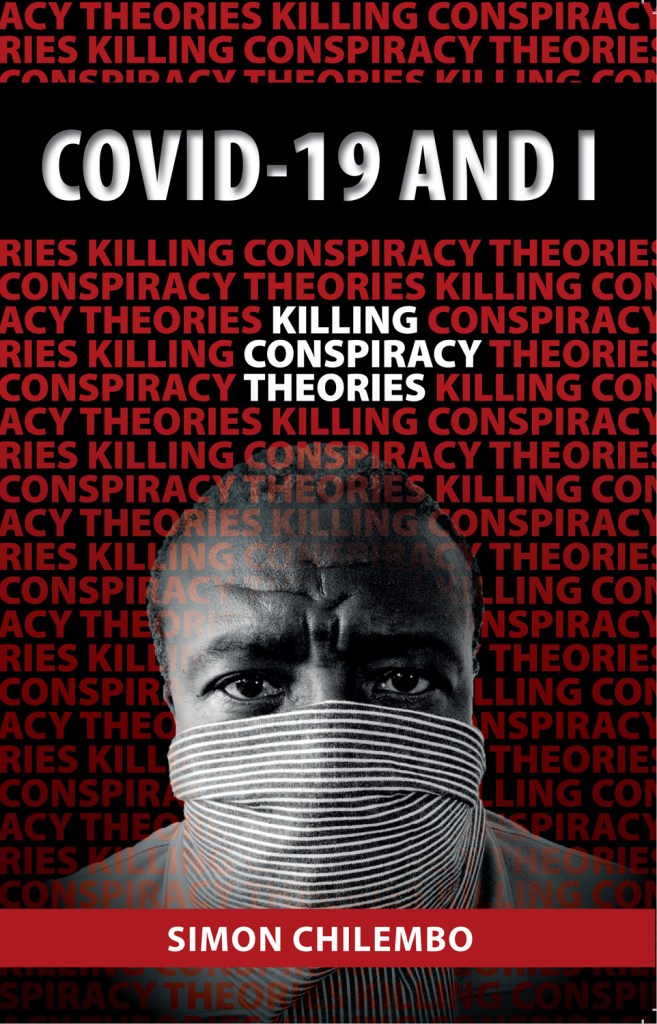
Order, read, and be inspired by my 7th book, Covid-19 and I: Killing Conspiracy Theories.


CONSEQUENCES – A Poem
CHOICES
Akin to
Dead men walking
Free spirits
Are indifferent to pain
Suffering unbeknown
Know no barriers
Are of all times
Immortality
Is the name of their being
Akin to the wind
Dead men walking
Free spirits
Embrace space
Devoid of sentiment
Propelled by
The fair and righteous
Infused with clear conscience
Akin to that
Of saints
I made my choices
I took my chances
You made your choices
You took no chances
You the illusory chosen one
Sitter on the
Right hand of God
Centre of the universe
In your comfort zone
Delusional
You cry foul
At the world
You decry makers of you
For thorns and no roses
In your comfort zone
As if they
Your makers
Pruned the flowers
And left you in the bush
When the choice to stay was yours
Ultimately
You ought
To have seen the autumn
Cease coming your way
Aeons gone by
Grown man
You could never learn
How to harvest
Never learned
How to sow
In the first place
Akin to
Baby bird
Who never left the nest
Soundless
Mouth agape
From dusk to dawn
Season after season
Anticipating feeding time
Long gone with the elements
Catastrophe
Akin to
Destitute baby bird
Who never left the nest
Your mamma is dead
So is your dad
I could never be them
Even if I wanted to
I could never replicate
Their parental obligations to you
Much as
I long for heiresses and heirs
My progeny
Products of my loins
Carrying my blood
In their flesh and bones
Made not like bread
You could never be them
Even if I wanted you to be
Miracles of nature
Have their limits
Ancient Greece mythology
Created Oedipus
It never worked out well for the man
Poor soul crushed
He gouged out his own eyes
Tragedy
And now
You want to
Shoot my brains out
Kill me dead already
Can you take
The ricochet
Dead men walking
Free spirits
Die only once
Forget the resurrection jive, man
It isn’t I who killed promises of
The fiasco
That is the mark of the beast of
Your comfort zones
All I ever did
Was to seek to
Blow light over your life
Or did I come out too strong
Struck like lightning
When I chose not
To plunge into
A miserable life
Of men of no vision
Succumbed to wretchedness of the earth
When you’ve attuned your eyes
To seeing
Only evil spirits in the air
You could never see
The good of my intentions
Pure as silence
In the domain of
Dead men walking
Disentangled
From thorns of love nor hate
Only drawn towards
The fair and just
Amongst the living
You wanna know
How to grow
The #Midas touch
How to
Reap gold
From what you sow
Open your eyes
To the light
Be humble
Be a little grateful
Look and learn
Dead men walking
Amongst the living
Have it all
END
©Simon Chilembo 12/10-2021
SIMON CHILEMBO
OSLO
NORWAY
Telephone: +4792525032
RECOMMENDATION: Do you want to start writing own blog or website? Try WordPress!
PS
Order, read, and be inspired by my 7th book, Covid-19 and I: Killing Conspiracy Theories. It might save yours and your loved one’s lives.

THE RUTHLESS RULE
Kassie Jungle Law: Only the Strong Survive
In my never-ending attempt at seeking to make sense of events in the world today, I, as a reflex, regularly look back at the first fourteen-and-half years of my life in South Africa, 1960 June – 1975 January. Growing up in the then racist apartheid state has profoundly impacted my life. Day-to-day living was ever so dramatically charged. Such that, on the one hand, one could but choose to numb oneself to the volatility of emotions, if not traumas arising, and live on disenchanted and detached from the gruesome, disenfranchised reality.
On the other hand, one could look at, hop onto the intricate traumatic feelings and thoughts bandwagon, learn survival ropes, and hope for the best; longevity being a remote idea. Wishful thinking. Although the OPEC oil crunch of the early 1970s had already begun to make its mark globally, this period could easily be seen as the golden years of the apartheid regime’s economic might. The oppressed Black population segment was subjected to extremes of state security agencies’ violence.
Oppression is some costly business. It curtails human resources productive potential growth and manifestation. Atrocious. Oppression will last to the extent that the oppressors’ financial base remains sufficiently robust to sustain the oiling of the oppressive state machinery at all levels. Money talks. Money rules. As it is with South Africa, a country’s endowment with a variety of natural resources that the world is willing to pay generously for is of crucial importance. Oppressors maximize their hold by capturing the wealth of their nations, therefore. They personalize the wealth, becoming super-rich individually and along with their family members, as well as their power clique hounds: oligarchs’ fangs drooling kleptocracy and nepotism poison in everything they touch. At the same time, their nations get caught in quagmires of long-term poverty and international indebtedness.
The Soweto Students’ Uprising of June 16, 1976, would not only change the liberation struggle course. It changed the political landscape of South Africa as well; further weakening the oppressive state’s capital base. Apartheid had to ultimately collapse. Not because somebody woke up one morning and suddenly discovered that the system was in fact diabolic. The fact is that it simply was no longer economically viable. And prospects of any meaningful bounce back were bleak. Added pressure from the international trade sanctions had brought the country down on its knees.
The effective brutality of the apartheid regime reproduced itself across the entire Black populace by default – in the home; at absolutely all levels of social interaction. That to the extent that the nature of fundamental survival power relations dynamics cultivated then amongst Black people themselves have endured. Albeit manifest at even more sophisticated, grander scale, and more destructive levels in keeping with societal management complexities and technological advancements of the times in the 21st Century.
During the apartheid domination years, many a Black South African exile carried along with them these survival power relations dynamics into the Diaspora. Not that it helped the concerned exiles much from the point of view of applying the same survival strategies as generally functional in the township, or kassie culture in Black South Africa. Kassie is a corruption of the Afrikaans language word, lokasie; which means location. Observing, establishing, and maintaining links with fellow South African exiles has kept my fascination with the Black people’s fundamental survival power relations dynamics alive during all these years.
Post-1994 South Africa has also been accessible to me. It’s the land of my birth, the land of my family’s maternal-side ancestry, after all. Thirty-eight-and-half years since living abroad, I returned to stay in the country for five years, 2013-18. As such, I have been in touch with the trends in the land all along. Much had changed drastically at about all levels. However, characteristic personal survival attitudinal attributes have remained constant. I shall dwell on these later on in this essay as I unravel prerequisites for the workings of the ruthlessness of kassie jungle law rule.
Kassie is a funky catchphrase these days. But originally, it essentially implied a slum; not much unlike Brazilian favelas, for example. In practice, the meaning hasn’t changed in any big way. From the colonial era, peaking during the apartheid years, and stretching into contemporary times, tens of thousands-upon-thousands-to-millions of Black South Africans were dumped here. It initially was predominantly male labourers working in the mines and the agro-industrial complex.
There would be a few state functionaries and even fewer professionals in various vocational categories here and there. Much as there would be numerous fortune hunters engaged in all kinds of illicit endeavours; from petty crimes to large-scale organized crime activities involving alcohol, drugs, precious stones and metals smuggling, human trafficking, prostitution, and more. Family units would eventually emerge as a natural human development process, of course. Children would be born, raised, become adults, lead miserable lives, and subsequently die; the indignity of poverty accompanying them to the grave. Causes of death variable, from murder to illness, if not natural causes.
Prevalent land conditions are far from prime in the townships. This makes the construction of decent domiciles a daunting challenge for impoverished people. Sustainable subsistence food production from the land is near impossible. Minimal to total lack of functional social amenities comes with the package here. If there was anything prime about the original townships, it was the potential to induce and generationally perpetuate poverty with all its attendant maladies: disease, moral decay, ignorance. All that to facilitate self-annihilation amongst Black people: kill them; let them kill themselves; create space for more European trash to come to work, settle, and add to the growth of the white population in the country.
Conditions are even worse these days, taking into consideration, since 1994, the influx of millions of refugees and fortune hunters from war-torn, dysfunctional African states to the north. Others come from other parts of the world, especially Asia. Competition for limited resources and livable spaces in the townships has spiked exponentially, apparently in favour of the new immigrants. Many of the latter come into South Africa with more by far international hustling experience: higher academic qualifications and vocational experience in both the social and natural sciences, military or guerilla warfare experience, and all that it entails – daring nature, PTSD, and other related outcomes. Also, investment capital for entrepreneurial ventures in various fields, often starting with small-scale grocery stores called spaza shops.
The latter attributes above are often accompanied by extreme manifestations of arrogance of power towards the locals, who are considered to be intellectually lacking, lazy, and fearful of White people, who still own the land, anyway. It’s hardly surprising, therefore, that strong anti-immigrant sentiments have mushroomed across the country, culminating in several outbursts of brutal xenophobia-inspired violence in recent years. Afro-xenophobia expression is ascribed to South African Black-on-African Black violence. In keeping with characteristic basal kassie culture, violence is the first instinctual option to eradicating conflict. Tragedy is ever the outcome that never brings forth solutions for a peaceful co-existence for all in the country.
The reality of the matter is that, much like the Ununited States of America, South Africa owes much of its economic might to the historical inflow of migrants from all corners of the world. As I’ve already implied above, these people bring into the country a wide diversity of creative/ intellectual/ academic, productive, and entrepreneurial skills that contribute to the robustness of the country’s vibrant economic and social advancement in the long run.
There’ll always be a few bad apples here and there. But assuming a functional justice system prevailing in the land, relevant policing and legal institutions are there to deal with lawbreakers. South Africa is truly a multi-cultural melting pot. Bishop Desmond Tutu’s broadly embraced Rainbow Nation nickname for the country supersedes discrimination neither based on race nor origin of the people that call South Africa their home, either by birth or immigration.
From an epistemological perspective, it is clear that the concept of township/ location/ kassie in South Africa was never meant to create ideal, conducive conditions for Black people to thrive and propagate themselves; neither to attain ever higher standards of living in time, in pace with national economic growth prospects.
The rise of apartheid economic might was at the expense of the lives of Black people, both at the hands of the apartheid state security machinery, and intra-Black violence across mainly urban South Africa. Many other Black lives were also lost through fatal accidents and occupational diseases in the agro-industrial-mining complex. Functionally concerning apartheid intentions, townships were supposed to provide temporary shelter for lives destined to be “… solitary, poore, nasty, brutish, and short.”
But then again, survival instincts abode in all humanity. People can remain wretched only for so long. If they are not wiped off from the face of the earth, they shall engage in all sorts of means to prolong their existence. Perhaps fate can change for someone, someday: break the bonds of subjugation, rise and liberate the people, and, ideally, live happily ever after in boundless abundance.
In the meantime, at the individual level in the South African kassie context, survival was and still is about ruthless “semphete ke o fete” (Sesotho: don’t overtake me, I overtake you) tendencies. Here, the strong survive. The ruthless rule; applying cruelty as their claim to prosperity and longevity.
Brought forth, elaborated in my Black South African context, and set in alphabetical order below are personal dispositions I’ve identified as being cardinal for relative individual survival and ruling potential in the South African kassie culture of violence. That as a tool for understanding the nature of human relations power dynamics, and consequences thereof, at all levels of contemporary society, both locally and globally (In the latter, i.e., globally, the USA fits in like a glove). The respective attributes may be understood regarding the identification of the individual as to who they are, and what their social standing is concerning behavioural phenomena observed of them. In essence, this is the making of despots ekassie, a microcosm of the Dream of America nightmare:
- Bodomo (street parlance – Setsotsi) is derived from the Afrikaans word dom. Alternatively bokwala (Sesotho), it means stupidity; downright idiocy. Amidst events, act like you don’t know what’s going on. Go about your daily business indifferent as to whether or not you cause others harm in your endeavours; you lack empathy. You are not interested in reason. You are a denialist. You are a revisionist.
- Bokhopo (Sesotho) is cruelty. When it is deep-seated, merciless, non-benevolent, and non-repentant it is called khohlahalo in the same language. Rule by absolute iron-fisted fearsomeness. Without exception, anybody transgressing you in any way shall suffer the full ruthlessness of your wrath in line with the nature of the offence and the choice of punishment you dim fit. The line between life and death is often very thin here. This tends to elicit baffling loyalty from your cohorts. Much to the bewilderment of your detractors.
- Ho tella (Sesotho)/ ukudelela (isiZulu) is an uninhibited show of lack of respect. Total disdain. You are brazen. You bulldoze your way through towards the attainment of your power or material acquisitions, and other egocentric ambitions. In your interpersonal and other relations in the community, it’s your rules or no rules at all.
- Lenyatso (Sesotho) is the root of ho tella and leqhoko, immediately above and below respectively. It means to undermine, to belittle other people. Tools applied include patronization, ridicule, insults, unjust criticism, passive aggression, isolation or exclusion, subjugation; all propelled by jealousy and/ or feelings of threat irrationally perceived or real because the victim may, indeed, be the better person in many respects. The idea is to crush the victim, cut them to size, and put them in their place of insignificance. This is pure mental and emotional abuse that often easily degenerates to physical abuse.
- Leqhoko (Sesotho) is provocativeness. Be agitative even out of nothingness just so your presence is noticed, is not forgotten. Be relentlessly disruptive. Cause havoc; be an ass. Instigate and sustain fear. Use all means at your disposal: bully, defame, riot, vandalize, pillage, depose, fight, maim, kill. Ultimately, emerge as the leader of the pack; level-headed and solution-oriented, if only to cow and manipulate the terrorized towards aiding to secure attained dominant safe position.
- Mamello (Sesotho)/ Qinisela (isiXhosa/ isiZulu) refers to tolerance capacity; endurance in both hard and good times, depending. Good times are generally no big deal. But in hard times, practice self-preservation by keeping to yourself and your own. Hang in there. Stay away from trouble. Be invisible. Make no noise. Cultivate hope. Keep the faith because everything is going to be alright someday. Persevere.
For the mighty, though, mamello/ ukuqinisela means staying the course no matter what: keep on pushing; stand tall, don’t fall. Never, never, never give up! Never change the course of action once commitment to act in a certain manner is made. Here, mamello/ ukuqinisela becomes an interplay of bodomo, bokhopo, ho tella, leqhoko, and manganga in variable doses and combinations according to the circumstances prevailing at any one time and space. - Manganga (Sesotho)/ Inkani (isiZulu) is absolute stubbornness. Take a stand, be resolute to the very end, whatever the cost. Whether or not original intended goals are attained is not the essence. You are defiant to the extreme. Stay rock-steady as a matter of principle because you cannot be wrong, or you cannot be denied your demands. You are the truth. You are the light. If you are not the son of God, then you ARE God! Your opponents shall declare you as deranged, delusional; but that doesn’t bother you at all. You are mmampodi (Sesotho)/ champion; you rule. You live above the law. You own your followers through and through. Each one of them understands that you are their life saviour.
A street parlance (Setsotsi) adage goes like this, “Maziwaziwe, maz’bidlikaz’bidlike! (isiZulu)/ If they (e.g. towers) fall, they fall; if they collapse, they collapse!”
It is what it is.
Tyrants, hard-core conspiracy theorists, and charlatans fall under this category. So, in the USA, Coronavirus is just the common flu; “… it’ll disappear just like a miracle!”
Not forgetting The Big Lie that Joe Biden and the Democrats stole the presidential elections of November, 2020. And then supporters of The Big Lie insurrect The Capitol peacefully like tourists, leaving destruction and carnage behind. Very special people that The Big Lie spinner loves.
You can also do an egotistical, parochial, typically falls premises pushed brexshit and pull your country out of a body of international solidarity in the Western world.
Neither does State Capture exist in South Africa. You know none in your family that has contracted AIDS in South Africa. Therefore, it doesn’t exist. Step aside rule in the ANC? What’s that? If you are indeed going to fall, you don’t go alone. You are vindictive. - Sebete is a Sesotho word for liver.The liver is considered to be an organ of courage in my part of Black South African culture. A courageous person is said to “have a liver”/ O sebete. Courage is a common thread linking all survival, or power attributes in kassie.
Ho sa (Sesotho, noun), lumps together the attributes above into one virulent trait: petulance as gross as only an extremely spoiled brat can display. The descriptive form of ho sa is “O sele!”, meaning “He/ she is petulant!”
People of all ages manifesting ho sa as a characteristic social interaction trait are some of the most dangerous a community can have. Makings of despots emerge here.
Underpinning the relative kassie individual survival and ruling potential laid out above is the question: O tshepile mang (Sesotho)? Which directly translates as, “Who is it you trust?”
Who’s covering your back?
Simple as the question might seem, it is not necessarily a daily conversation question posed in my original part of Black South Africa. The question is profound to the extent that it is asked a person directly, or others are asked about a particular individual when the latter’s negative behaviour defies not only mainstream social protocols across the board, but sheer common sense as well. It is believed that there must be some extra-ordinary qualities, some mystic about these kinds of people. For example:
- What gives them the guts? What makes them tick?
- Whose progeny are they? What are their lineages?
- Do they have some guardian angels, perhaps? In that case, who are the latter? Where are they?
- What do they have that ordinary people do not have?
- Are they working for somebody even more powerful than themselves? Who are these people?
- Are they protected by God? Ancestral spirits? Wizards and witches?
- Or are they just raving mad, sick in their heads? Are they bewitched?
- Do they have magical powers themselves? If so, from where do the powers derive?
- Are they members of some organized crime gangs? Or some secret societies? The Illuminati?
- Is it just because they are too rich? But where does their wealth come from?
It’s only if and when sufficient knowledge about these treacherous people is gathered that concerned individuals or the community can effectively react to get rid of them in one way or another. It’s not unusual that the former fall from glory in the most dramatic and humiliating fashions; those who lived by the sword dying exactly as they lived. Such is kassie life. The ruthless rule but momentarily.
The strong are often the smart with senses of moral and ethical awareness. They tend to survive, break out of the mould of kassie misery and ignorance, and live longer. Some in this category will in time even travel wide and see the world, permanently breaking the spell of kassie anti-life attributes. Expressing themselves through diverse media and creative and performance forms, they may also become proponents of liberty, justice, and equality as fundamental Human Rights tenets all of humanity on earth is entitled to.
Meanwhile, South Africa has yet to cleanse itself of the kassie anti-life attributes spell, to the extent that it’s possible. However, given the current display of elite kassie mentality antics in various judicial and organizational platforms in the country, it is clear that much more work remains to be done at this rate. Well, cumulatively from the onset of contemporary European colonialism in the 17th Century up to the apartheid era in the 20th Century, the mechanizations that facilitated their imposition had at least four hundred years to dehumanize my people and screw up our psyche. The Rainbow Nation is only twenty-seven years old.
Khotso is a common Sesotho name for South African males. It means peace. The female version is Mma-Khotso both as a formal name and may denote that the woman is a mother of a boychild called Khotso. The name has significant connotations. In practice and conceptually, peace is a universal prerequisite for progressive human co-existence. That making for harnessing humanity’s creative potential towards a sustainable, infinitely fulfilling life for all. The South African national anthem, Nkosi Sikelel’ iAfrika! (Nkosi Sikelela) is essentially a cry for peace, captured in the Sesotho text:
Morena boloka sechaba sa heso/ Lord Almighty, save my nation
O fedisa dintwa le matshwenyeho/ Bring an end to strife and suffering
Were the ruthless and the smart kassie people of South Africa and beyond to realign their attitudes and heed the message of Nkosi Sikelela, the future would be bright for all. I want to be here in four hundred years to gloss in the glory of the heaven on earth that South Africa and the rest of the world will have become. I sit here in a space of relative peace. I breathe. I dream. I write. Ever conscious of the lasting impact that my kassie life background has had on me, I have every reason to want to choose to be hopeful.
SIMON CHILEMBO
OSLO
NORWAY
May 29, 2021
RECOMMENDATION: Do you want to start writing own blog or website? Try WordPress!
PS
Order, read, and be inspired by my latest book, Covid-19 and I: Killing Conspiracy Theories.

I REFUSE – A Poem
Fairytales in My World
Must I look away
From children
In my daily
Living spaces
On 2021 17 May
Norway’s National Day
Show-casing tangible
Children’s worth and joy
In a free world of peace
Whilst other children perish
At this very moment
In ravages of war
In baby Jesus’ world
Where peace is but
A concept in foreign vocabularies
Studied in Military Sciences
At Ivy League universities
Of this world
Jesus was a child of the wind
May be reason why
Nobody cares about
The fate of
Children of the soil
When the missiles rain out there
Must I obliterate myself
From the scene
The moment I hear
Children’s voices
In my proximity
Must I sing
I would rather go blind
Than to see
Children’s eyes on me
In their fields of vision
Fields of play
Must I be
Malignant angel
To a child
Warming my heart
With their purity of emotion
As I sense them
Must I suppress
My paternal instincts
To want to assure
A child that
I want only to
See them happy
Exuberant and free
Must I refrain from
Singing for a child
Dancing for them
Clowning for them
Reaching out
To touch them
For them to feel
The warmth
The honesty
Of my actions
My intentions
Must I ever look over my shoulders
In children’s presence
For fears
Of my actions
My intentions
Being misconstrued
By eyes
Seers of whom
For reasons obtaining
From their own fears
The nature of their lives’ journeys
Has taught them
To see only evil
In the acts of
The joyous
Glowing in the light
Of children
Yet to know
The sentiment of envy
The force of hate
I refuse
‘cause
I don’t know
How not to suffuse
Pure affection profusion
In view of children
I refuse
To succumb
To malicious fairy tales’ pitfalls by
Delusional prejudicial minds
Seeing reality
Through
Diabolic colours-tinted lenses
Tainting my honour
In view of confrontations with
Their own insecurities
In which their design
Their display
My hands
Never had a role to play
Could never want to
Never
Never
Never
On the contrary
My hands sought
Only
To build
Pillars of strength
Towers of power
Alas
In a moment of
Attention gone astray
Monsters were birthed …
(Continues in the book MACHONA POETRY: Rage and Slam in Tigersburg)
©Simon Chilembo 16/05-2021
SIMON CHILEMBO
OSLO
NORWAY
TEL.: +4792525032
May 30, 2021
RECOMMENDATION: Do you want to start writing own blog or website? Try WordPress!
PS
Order, read, and be inspired by my latest book, Covid-19 and I: Killing Conspiracy Theories.

CORONA VACCINE 1st JAB
When you have life work to do, you don’t go around with the nihilistic thought that “we’re all gonna die someday”. I, for one, have a 1000 books to write, many more stories to tell; a 1000 songs to write, to sing. And, then, there is the dance long as life ever expands.

I go around thinking longevity, immortality. If ever I die, I die. But it’ll be on my terms. Even then, I’ll die fighting. Science is my arsenal. Medicine is my weapon of choice. I kill Coronavirusdisease Covid-19 with vaccines. Works with high level of precision; call it efficacy. On a bad day, shit could hit the fan. That’s the way of the world. When we go out to war, we carry body bags too. Some of our comrades shall sure fall. Could be me. Could be another. It is what it is.
“You gonna fight, you gonna get hit!” so said a martial arts teacher once.
No, I’m NOT afraid of death. I’m not afraid of dying. Mementomori. I just don’t have time for dying. Life is just too good. I want to live it to the fullest potential. Should I in any way die before my work is done, I’ll be back! Watch this space.
Done got my first vaccine shot yesterday, Friday: practice what you preach. Can’t wait for second shot in six weeks’ time. Excellent service at my neighbourhood health centre, Frogner helsestasjon: systemic efficiency, warm human effectiveness, reassuring. Were it up to me, I’d take all available vaccines all at once, once and for all and continue with my good life.
SIMON CHILEMBO
OSLO
NORWAY
Tel.: +4792525032
May 01, 2021
RECOMMENDATION: Do you want to start writing own blog or website? Try WordPress!
PS
Order, read, and be inspired by my latest book, Covid-19 and I: Killing Conspiracy Theories.

MAKE ME WANT TO LOVE AGAIN – A Poem
Keep Singing
Sing on
Baby
Make me
Want to love again
The way
You sing
Your voice
Ignites
Feelings
In my being
Taking me back
In time
To
An evening
In that phase
In time
When
A boy child
Transitions to
Man child
My first love
Took my hand
Urged me
To step along
With her
Into a passage
Where she’d
Teach me
How to know
When I love a woman
She embraced me
The maiden kiss
She gave me
Morphed me
Into
Adult lover man
In a young man’s shell
In an instant
Since then
Only
A certain
Kind of girl
A certain
Kind of woman
Only the
Boy child
In me
Instinctually recognizes
Moves me
Like you do
Keep on singing
I just can’t love
Just anything
Called a girl
Just anything
Called a woman
Mine is
Love discerning
Much as
Yours is
Melody exceptional
As I hear
Your song
Sing on
Baby
Make me
Want to love again
I want to love again
Because
Without love
I have
No reason for living
Without love
I go from day-to-day
Doing all
I have to do
Merely
Out of duty
Breathing
For life
With no passion
Like
Post-inferno ashes
On parched land
In depressed
Climatic states
Of being in nature
Waiting
For the storm
To wash away
Into oblivion
At sea
With
Tumultuous waters
Over barren earth
As I breathe
Dry air
Brittle
Incapacitating
My olfactory system
If I can’t
Sense
The odour of you
In the atmosphere
There can be no love
As to enliven
My immediacy
So
Sing on
Baby
Lubricate my soul
With your song nectar
Make me
Want to love again
As
I inhale deep
Hold my breath
Listen to my heart
Singing along
With you
Pumping
Your song sweetness
Into every cell
Composing the lover in me
In sync
With the love vibrations
You ooze
With your song
In this state
I feel in perfect health
I want to live for
I want to love
Only you
The boy child in me in love
Says to tell
That
For you
We shall live
We shall love
Until
Eternity
Comes knocking
On my door
Sing on
Baby
If it pleases you
Urge me
To step
Into your love corridors
If you love me too
For
I could never ever intrude
Into your love chambers
Yearning for you
Much as I do
Give me your song
Give me hope
Teach me
How you want me
To love you
Like you sing
Like you make love to your song
Only you make me
Want to love again
Sing on
Honey
Baby
END
©Simon Chilembo 05/04-2021
SIMON CHILEMBO
OSLO
NORWAY
Telephone: +4792525032
April 12, 2021
RECOMMENDATION: Do you want to start writing own blog or website? Try WordPress!
PS
Order, read, and be inspired by my latest book, Covid-19 and I: Killing Conspiracy Theories.
THE UNTHINKABLE – PT1: A Poem
THE UNTHINKABLE – 1
The unthinkable happens
When it happens
And we pay the price
It’s simple
To kill
One hundred thousand people
In a spring of
One year
Move slow
Like a ship
Sinking in icy waters
Be Stupid:
No, the ship won’t perish
Water shall freeze
It shall keep the vessel together
Iced machines don’t move, see
We’re doing great
Great job
We won’t drown
Maybe summer will come
Maybe it won’t
We’ll see what happens
You never know
And, yes,
Maybe ice shall turn into water again
Maybe it won’t
Who knows
We see what happens
All we got to do is
Move on with our sailing
We were made to sail
The world over as we want
We are the greatest people ever
In the history of mankind
It’s our right
We deserve it
I won the election
It was perfect
Perfect like
The letter
The call to Ukraine
You know
Perfect like never before
Don’t be sorry:
When
The unthinkable happens
The sea thaws in silence
Ferocious as a tornado
In a silent movie
It swallows down the ship
A hundred thousand people die
Right in front of your eyes
But this is fake reality to you
For each dead person
A hundred thousand pairs of eyes cry
They shed tears
Enough to raise the sea level by
A hundred thousand millimeters
A hundred thousand more
People are going to die
We are all going to perish
Your eyes are dry
You are so stupid
Your brains are so dry-iced
You don’t know
How to cry
Your brains cannot see
That
The solution is
Noah’s ark
The drawings are here
So are the engineers
There is a bit of time yet
Teach people how to swim
Build boats
Train sailors
Your brains are so dry-iced
Your hearing capacity
Is impaired
You cannot listen to reason
When you speak
Your speech spews
Sounds of cracking
Contaminated
Dry-ice that forms your brain …
(Continued in the book Covid-19 and I: Killing Conspiracy Theories)
END
©Simon Chilembo, 01/ 05- 2020
Simon Chilembo
Oslo
Norway
Telephone: +4792525032
NB: Deadliest day, USA – https://www.cnbc.com/2020/05/02/who-us-just-reported-deadliest-day-for-coronavirus.html (Total, 02/ 05- 2020: 65,173)
See also: “US coronavirus death toll surpasses 100,000,” https://youtu.be/CVLpAMlaoM8
PS
Order, read, and be inspired by my latest book, Covid-19 and I: Killing Conspiracy Theories.

RECOMMENDATION: Do you want to start writing own blog or website? Try WordPress!
LANGUAGE AND DESCRIPTION OF EXPERIENCE: COVID-19 OUTCOMES CASE
IT IS WHAT YOU SAY
More talk on how to cope with survivor issues around outcomes of Coronavirus disease (COVID-19) on a personal level. Talk structured around principles of my COOL Coaching (Chilembo Optimal Outcomes Life Coaching) method*.
Pivotal point in awareness of language usage: “Reality manifests itself with impressions that the mind creates as from the language it processes,” Simon Chilembo.
E.g.
1. Ahmet Altan: “… like all writers, I have magic. I can pass through walls with ease.”
2. Mwamedi Semboja, Twitter account tagline: “You can travel anywhere, just by closing your eyes.”
Earlier presentations:
1. SHOULD I DIE: COVID-19 Reflections
2. CORONA VIRUS DISEASE COVID-19 SHALL FALL: My Reason for Optimism
3. Ode to Manu Dibango: WALK SOUL MAKOSSA
4. SIMON’S KITCHEN IMPROMPTU COVID-19 QUARANTINE VEG STEW
*Subsequently edited and presented in the book Covid-19 and I: Killing Conspiracy Theories)
SIMON CHILEMBO
OSLO
NORWAY
Tel.: +4792525032
April 14, 2020
PS
Order, read, and be inspired by my latest book, Covid-19 and I: Killing Conspiracy Theories.
RECOMMENDATION: Do you want to start writing own blog or website? Try WordPress!
SELF-DOUBT
WHEN I’M HERE
NOTE: Contributing to discussion on UNSTUCK – The Refinition of Manhood
“I live with no doubts. If I have any doubts, I don’t do it. If I do it anyway and get burned as a result, too bad. What’s done is done. If I die, I die. Closed chapter. If I don’t die, no regrets. I pay the price I have to pay, and move on; assuming that I can still breathe, stand, walk, and think,” Simon Chilembo.

©Simon Chilembo 2017
It was as a four-and-half-year-old on my first day at school in Lesotho that I first became aware of my hereness. That was as an immediate response to the awareness of my differentness. The latter arose from my consciousness awakening to find me surrounded by many people. I somehow just understood that all were school children of all ages. There were numerous of my age, and others older. My guide, Dineo, was an older girl from the estate where I was staying not so far away from the school.
I found Dineo alternately being aggressively protective of me, and talking proudly about how far smarter I was compared to local children: I was of course tinier and blacker than all the other children because I was not one of them; I was not of their blood since my father came from a land far, far away in the north. In this so distant land, no Lesotho person had ever been. Dineo emphasized.
She went on to remind everyone about how ruthless her father was. So, if anybody was unkind to me, her father would come and destroy their lives the whole lot of them! Also, my father could do terrible things to them using powerful wizardry from his lands. Otherwise I was a sweet and happy child easy to be with, Dineo concluded.
This was a strange and fascinating scenario I could only watch without uttering a word. I did not only not know what to say or do, the atmosphere was also overwhelming in its simultaneous bewilderment and euphoria. The following day my grandmother took me to another school. I recall hearing whispers that word had been going around in the village that it was not safe for me to be at the first school. The alternative Peka Catholic school would be a safer bet for me, therefore.
At Peka Catholic school I recall being initially received by a group of nuns and the parish priest, Father Hemmel. The next thing was that I found myself in a room with several other children. We were singing “I am a tea pot. This is handle. This is mouth. Pour me out! Pour me out!”
Tracking animal pictures pasted up and around the walls of the room, I recall us repeating after the teacher, Mme Blandina, “A baby cow is called a calf. A baby sheep is called a lamb …”
And then, “A cat mews. A bull bellows. A hen cackles …”
Such began my school career. I would be at Peka Catholic school for four years, 1965-69. These remain the happiest years of my school life. This is the time I understood that I somehow grasped lessons faster than the lot of my classmates. I further found out that the teachers were extra fond of me. All nuns. The warmth they afforded me is unforgettable.
My popularity extended to older pupils, especially girls, in higher grades. At the same time, though, there were older boys that were not fond of me at all. They used to engage me into fights almost every day after school. I got my beatings much as I gave my share of the same. It ever infuriated everyone so much because I was unusually strong and stubborn for my age and, especially, body size.
I never thought too much about limitations of my personal attributes. All I knew was that I could never allow anybody to beat me up and get away with it. This was particularly so from age six, after my mother had instilled in my head the warrior heart attitude of learning to fight my own battles and settle scores alone.
I was already a seasoned fighter by the time that in my older youth years, my Karate teacher, in response to a report about a legendary fight that I had put up against some of the most notorious and dreaded street-fighters of Lusaka, Zambia, said, “If you must fight, fight. But don’t lose!”
That ethos drives my survival instincts in all situations to this day.
In the commotion typical around street fighting scenes, I would pick out ludicrous utterances that I was the way that I was as a hard-fighting child because of the strange blood that I carried from my strange, alien father. I was a little wizard that had to be killed whilst I was still a child because I was going to kill everyone else if I was to be allowed to grow up into a man.
These were really not nice things to hear for a child not even eight years old then. Now I’m a grown-up man soon to be sixty-years-old. Not a single person has perished in my hands yet. On the contrary, I have in my work saved more than one lives.
I thus learned how to balance getting unwanted extreme attention very early in my life. That, together with receiving much love on the one hand and buttressing myself against prejudice and hatred on the other, inculcated in me a strong sense of awareness of where I am at any one time.
Therefore, when I’m here, I’m here. What has to be will be. I shall do what I have to do to sustain my hereness for as long as possible, or for as long as it is necessary. If I have to love, I shall love. If I have to fight, I shall fight. The assumption being that my presence is valued here and now, and that my being here is not detrimental to my continued real and conceptual existential imperatives.
It’s not uncommon for me to hear that I take too much space when I’m here. It’s of little interest for me to seek to impose my hereness to personal and conceptual spaces that cannot, or are not willing to accommodate my being here.
If I’m here for a specific reason, I’ll do what I have to do to the best of my ability according to expectations, if not instructions. If it is really fun, I tend to go beyond, though. I’ll perform and deliver to the extent that what has to be done is compatible with my values and defined obligations vis-à-vis the given situation.
If I succeed, I succeed. If I fail, I fail. If the latter is due to factors I can correct, I shall do so accordingly. If it’s beyond my powers to correct, or do anything else in order to attain the original desired outcome, then I let go and move on to next level challenges; paying the price I have to if need be. It is what it is.
I never carry on with regrets. I carry on with new learned experiences that often empower me to perform better in the next level, even if the next level may not be related to the previous fiasco in any way. What matters is the new mental, emotional, spiritual, and physical fortification I’ve attained for the new way forward.
Throughout my life I’ve lived with the consciousness that I’ll meet all kinds of resistance in my endeavours to live my life as I see it, and as I wish to live it within the parameters of established life-supportive societal norms. I learned very early how to exert my presence with all my outward expressive faculties. This was an important skill to develop given the fact that I, as earlier stated, was a tiny child in a partially but grossly cruel world. In my adult years I never grew up to be the physically biggest man around either.
My mind, my intellect is my weapon. I load my mind with knowledge acquisition pursuits. I fire with my words: I write, I speak. I can sing too. My body is my combat machine. In this state of being, self-doubt is a known but non-applicable phenomenon to me. That is how I’ll always rise above negative forces working against me. Indeed, I might fall and lose one thing or another.
Actually, I have lost a lot of tangible and intangible things during the last twelve-to-fifteen-years. If I don’t die, I’ll rise again. It doesn’t matter how long it takes, but I will rise again. I am on the rise again as it is. My death can wait. I ain’t got no time to die as yet.
It happens time and time again: for each knock and fall I get, for each loss, at least tenfold new options for the better present themselves upon my rising again. For that reason, I never cry over spilt milk. When it is clear that the milk loss is inevitable no matter what preventive measures I may apply, I let go without shedding a tear.
No resistance. When change is gonna come, it’s gonna come. If one of the new options emerging after the milk loss will be a dairy cow, I hardly ever get surprised. Nevertheless, I remain ever humble in the face of continuous favours bestowed upon me by nature, my ancestral spirits, and my God. The resilience I put forth in times of trouble, in my darkest hours, does wonders for my ego. But that resilience is of origins far beyond the realms of my ego’s mind games’ current manifest performance and ultimate potential.
Deep down inside of me I know that constant pursuance of being a decent human being is my inclination by default, much as are my human fallibilities. When I get a knock for my own failings, my inadequacies, I shall with dignity take the punishment I get. My sense of dignity gets even more profound in the face of injustice and malice directed upon my person. Always.
I am cognizant of my strengths and vulnerabilities. These two qualities annihilate any sense of self-doubt I might have in any given situation. Because I know, i.e. my personal cognitive and intuitive data bases are adequately supplied with relevant information and energy, I’ll always have options in both good and challenging times.
The phrase Machona Awakening came not only from that moment I finally understood for myself that a place called home can be more a function of thoughts and feelings, contra its being one’s place of birth only. Machona Awakening is also about that moment in time it dawned upon me that I, indeed, am that I am. I am that I am with all the beauty and the ugly that define me in the eye of the beholder. That with respect to the conscious and unconscious display of my deeds as I dance through the intricacies of my life for as long as I live.
Fear I might have. Insecurity I might have. These may arise in times and situations where I lack applicable functional and conceptual knowledge. When and where I don’t know, I’m likely to be invisible; silent. If I’m ignorant relative to a given reality, it may perhaps be because it’s neither interesting nor important for my existential needs here and now, or there and then. Knowledge is power over fear, insecurity, and self-doubt. It’s about knowing what branch of knowledge is relevant where, how, and when.
I’m not a thrill-seeker. As such I’m not given to blind pursuits of the unknown at any cost. So, let it pass. Ain’t no love lost. No regrets. Self-doubt possibilities eliminated. But does that not limit maximal growth potential? Well, all things considered, I can only grow to the level I reach today. The next levels of growth tomorrow and beyond are only dreams with today’s growth experiences as their launch pad; as certain as the sun shall rise tomorrow for all living creatures of the earth. No doubt from the self, neither from nature. Solid knowledge. Self-doubt expunged.
SIMON CHILEMBO
OSLO
NORWAY
TEL.: +4792525032
March 02, 2020
IN THE FLESH
IN THE FLESH, IN THE BLOOD

Found myself in her territory
Saturday night
She was in full
Flesh and blood splendour
She was blonde
She was brunette
She was rouge
She was melanin rich
She was petite
She was medium
She was voluptuous
LOLLY!
Then I hear a voice say
Look
Don’t touch
Keep your mouth shut
She came to me
She caressed
My face
She kissed me
She whispered
You are so sweet
Into my right ear this time
My left ear the next time
Many times
I held my breath
I imagined
I was in a straight jacket
I wished
I was words
In the book
Of her life story
I’m still in a daze
END
©Simon Chilembo (17/ 02- 2020)
Simon Chilembo
Oslo
Norway
Telephone: +4792525032
February 17, 2020
 Simon Chilembo