Home » Posts tagged 'africa'
Tag Archives: africa

𝗦𝗢𝗨𝗧𝗛 𝗔𝗙𝗥𝗜𝗖𝗔’𝗦 𝗔𝗙𝗥𝗢-𝗫𝗘𝗡𝗢𝗣𝗛𝗢𝗕𝗜𝗔-𝗙𝗨𝗘𝗟𝗟𝗘𝗗 𝗗𝗘𝗣𝗢𝗥𝗧𝗔𝗧𝗜𝗢𝗡 𝗢𝗙 𝗠𝗔𝗖𝗛𝗢𝗡𝗔 𝗘𝗠𝗜𝗚𝗥𝗔𝗡𝗧𝗦 𝗙𝗨𝗧𝗜𝗟𝗘
𝗧𝗛𝗘𝗬’𝗟𝗟 𝗕𝗘 𝗕𝗔𝗖𝗞!
Your deported foreigner Black African neighbours shall be back, Black South African, you being Afro-xenophobic or not. Nothing, no one can stop the tide. More and more Black Africans will keep finding their way into South Africa, one way or another. They ARE coming! Just like they’ve been flowing into the country for four-hundred years and more.
Send them back!!! process is only effective in the now, the moment of execution; providing short-term victory laps to ruthless, envious, ill-advised, myopic, ignorant, insecure, Apartheid malice intoxicated, corrupt, culturally vain, self-hating, tribalist, regionalist, non-patriotic, petty, egocentric Black South Africans.
What do you think would happen to Black South Africans if, hypothetically, all the unwanted Black African immigrants were to go away, never to return? Well, Black South Africans would be left with only themselves to confront with their centuries-long anger and frustration over the deprivation of enjoyment of the fruits of the mighty post-1994 South African economy. What next, then? Let’s hear your thoughts in the “Comments below”.
Isolated to Black South Africans for purposes of this presentation, the globally acknowledged endemic violent nature of the South African society is deeply embedded in the long-time Black South Africans tribal divisions faults. It may be plausible to argue that in reality, Afro-xenophobia may, for now, be a diversionary tool off the power relations tensions ever pulsating both in the undercurrents and crevices of Black South African ethnic divisions.
STATISTICS
Without a structured medium to long-term empirical research exercise, it’ll currently be difficult to state categorically that a certain percentage of the recently June 30, 2026, South African Afro-xenophobia deportees will return to the country after a while. It could take only a few days to several years depending on a plethora of variabilities amongst the concerned individuals or particular social constellations from anywhere in Africa.
According to the South African government information services online platform, 109 344 deportations were carried out during the 2024 and 2025 financial years. Various news media, including The Associated Press (AP) estimate that at least 53 000 were deported on June 30, 2026. This brings the approximate grand total to 162 344.
Granted illnesses and other incapacitating misfortunes, death, or outright disappearances without traces, even simply successfully resettling once back home, I’ll bet that about half of these deportees will return, or will make concerted efforts to return to South Africa over the next few years. In time, some may not return in the first person but through their foreign-born progeny, relatives, and friends. In the minds of the people, South Africa is the next best thing to heaven. They’ll do anything to get to South Africa, and stay there for as long as possible, if not forever; no matter what it takes. To them, the bad of South Africa, if at all, is a seeing is believing matter.
IGNORANCE
Many South Africans have limited knowledge of the world and history, as well as how the progressive part of humanity functions in the world today. That includes those South Africans that may be well-educated and have travelled the world but remain analytically base, ignorant, and myopic. How the ruthless rule and destroy South Africa in front of our eyes!
Colonial-to-Apartheid oppression intergenerationally traumatized cognitively impaired South Africans have no clue as to how profoundly attractive South Africa is in the heads of fellow Africans to the north. This is a lingering colonial implanted mindset amongst the people. Because many militant nationalist Black South Africans are ignorant of history, they have no clue as to how the illusion of heaven-on-earth South Africa was ever so intensely inculcated in the minds of former colonial subjects, especially in the Southern African region.
DIVIDE AND RULE

That was done so as to both induce and coerce then African colonial subjects to come and sell their labour cheaply in South Africa; that way alienating Black South Africans from the bounty of their land – effectively terribly curtailing the potentially higher growth of liberation struggle forces. Oppressed, disjointed, poverty-stricken people are easier to dominate, manipulate, and, subsequently, annihilate. Start with the English divide-and-rule strategy from the colonial days. That’s the story of Black South Africans, even more brutalized and antagonized against one another during the Apartheid years, 1947-94.
South African divisional tribal stereotypes that emerged from the divide and rule colonial applied strategy were taught at school and church. With a Bible in hand. The divisional tribal stereotypes were further planted with violence on the streets, and stratified in work places, by predetermining accessibility to which jobs for which African ethnic groups, where in the country.
I personally experienced that whilst growing up as a child in South Africa in the 1960s and the early 1970s. For example, following the earliest 19th Century dramatic encounters between European settlers and the African people of the now KwaZulu Natal, the Zulus have since been institutionalized into an impressionable, non-rational, impulsive, brutal warrior class. King Shaka and others’ successful war prowess and strategies were trivialized in the European settlers’ subsequent domination manipulatory strategies.
These days, as portrayed in diverse visual media platforms whenever social upheavals occur in especially urban South Africa, ibeshu, the Zulu warrior outfit, has been diminished into a street violence brand. Pathetic. The original impi must be turning in their graves.
The Xhosa were classified as the cleverest Blacks of South Africa; the learned that spoke Fort Hare University Shakespeare English to claim superiority to other Blacks, such as the supposedly cowardly Basotho that ran up Thaba Bosiu fleeing the White man. That Basotho saved their kingdom doesn’t matter; nxargh, they are still poor, mos.
Labelled as weak and timid, the Batswana withdrew north-westwards into the Kgalagadi Desert. They later found diamonds in the 20th Century. National economic success owing to this discovery has boosted Batswana’s sense of pride. Who’s laughing now?
It’s not as if African immigrants came into the country only with the advent of the post-1994 South Africa. Historically migratorily speaking, Africans have always been in South Africa. The history of contemporary South African economic might growing with, and consequent upon the European Industrial Revolution during and post the Age of Enlightenment from the 16th Century onwards is written upon the backs and bones of African migrant labourers and slaves. Of course, yes, the colonialists brought slaves from everywhere in the former colonies. We, for now, dwell on the plight of Black Africans in the context of this presentation.
EVERYONE IS A FOREIGNER
The Khoisan will tell you that everyone, including Black South Africans, is a foreigner in South Africa. Scientific sociological research documents that South Africa’s oldest people are the Khoisan. These people have been in the country for more than a hundred thousand years. From my mother’s side, I’ve inherited a hybrid of Khoisan-Bantu-European genetic legacy. I can feel it in my whole being. Yet, with my non-typical Black South African physical appearance taken after my pedigree African Zambian father, I risk getting killed on the streets of South Africa for being tagged as a foreigner. At home and abroad in the Diaspora, I have lived with South African anti-Black African hostility overtly and subtly directed towards me all my life, actually.
CHANGE THE NARRATIVE
The magnitude of the impact of the historical presence of Black African migrant labourers and other modern hustlers across the entire South African society and economic endeavours is enormous. It far outweighs the argument of Africa having accommodated South African refugees during the latter’s liberation struggle days.
That Grand Old Mother Africa stood with and for now-spoilt, apparently ungrateful liberated South Africa has become an impotent point of contention because it, indeed, is the truth that much of independent Africa stood by the then South African anti-Apartheid struggle. No Black South African in their right frame of mind can deny that. Done and dusted deal.
Looking at it from a tit for tat perspective in that regard, I have yet to come across any credible estimate that places the number of South African refugees above 100 000 people globally. If anybody can come up with any more substantive input here, please comment and give references in “Comments” below. The low number of South Africans that were hosted by African states during the anti-Apartheid struggle days nullifies the arrogance of power and the sense of entitlement to things often exhibited by some African immigrants in the country.
I’ve further argued elsewhere that Black Africans must be clear as to whether they expected Mandela to, in meek gratitude, annex the rest of the continent after the fall of Apartheid. As a sovereign state, South Africa is under no obligation to succumb to unreasonable demands and unbecoming social conduct from continental Africans seeking protection and opportunities as refugees and ordinary migrants in the country.
Let’s get this straight once and for all in the 21st Century and beyond: Black Africans are not in any way superior to Black South Africans. Black South Africans owe Black Africans no crap. People will be as unique and as special as to how they relate to the inherently variable earthly environments in which they find themselves against challenges of propagation, longevity, and immortality.
In the Norwegian language, a reflection (speilbilde) is directly translated as “mirror picture”. As it ought to be for all humanity, Black Africans and Black South Africans are one another’s mirror pictures everywhere they meet. They all gotta learn to live together in both the good and the bad times. They gotta learn to amicably solve challenges that threaten all our common existence and legitimate claims to the right to live on and love the planet.
Yeah, love thy neighbour, mothers, nxhh! What say Yee, God-fearing Christians and other like-minded uppity, fake people of fake faiths of the world?
The South African constitution does not give ordinary citizens the right to take the law into their hands and apply violent vigilante militancy against Black African, or any other, immigrants irrespective of the latter’s official status in the country. It’s the job of the police and other mandated national security and safety organizations to deal with those that break the law of the land, including the so-called illegal immigrants.
In our time, talk about the dynamics that are firing up Black South African Afro-xenophobia contra what I call the RAINBOW BROADBAND: Atlas-to-Cape Exodus. Perhaps the Millennials will understand you when you speak the language of reality today. The future is shaped by younger generations of today walking into the outcomes of choices made today. That informed, amongst others, by the guidance of older generations not ever glossing in glories of past solutions to outdated challenges.
Africa’s biggest challenge today is the need for applied unified action towards continental developmental growth. Paranoidal Afro-xenophobia is indicative of an acutely broken sense of mutual trust and dependency amongst Black Africans across the continent. Divide and rule is alive and well in Africa. As is the continental lack of capacity or willingness to learn and apply necessary skills imperative to successful governance of modern states in the face of overwhelming competing global econo-politico and theological hegemony interests.
MIGRATION POEM TO THE SOUTH
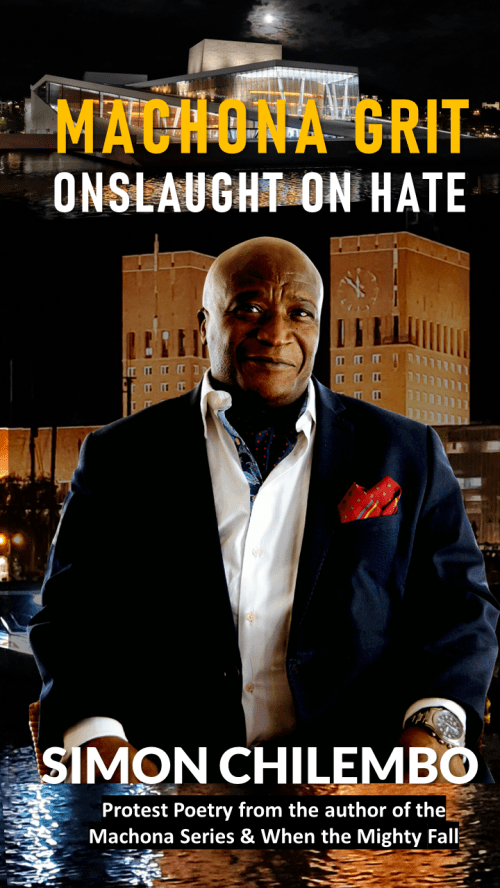
RAINBOW BROADBAND: Atlas-to-Cape Exodus is a poem I wrote on December 28, 2021, following the violent South African Afro-xenophobia events of the year. I’ll read some stanzas from the middle of the piece (the poem is on p. 111 of the second poetry collection book of mine called MACHONA GRIT – onslaught on hate):
[…]
Revolutionary Africa
Been at war
With itself from during
Anti-colonial struggle days
Civil wars continued upon
Independence attainment
Free at last to play out
White man’s burden
Transgenerational trauma
Self-annihilatory black curse games
To this day
Freedom is a relative state
In all African states
Basest result of state dysfunctionality
In Africa
As elsewhere
Is a constant
Including America
Staying alive
Feeding on
Murder in all its execution variabilities
Survivors rot in jail
People endure suffering
In all its construction variables
People dream of life-supportive
Freedoms elsewhere
Since Mandela’s
Betrayal of
The African self-determination cause
Twenty-seven years ago [32 years ago now!]
Mzansi fo sho
Has yet
To degenerate to levels
Of truly liberated
When free Mother Africa’s people
Give up on the miseries
Of their tyrannical
War-torn lands
Of once upon a time
Ancient Mega Star Warrior Kings
As accessible to today as
The horizon of history
Choose to rather not
Get roasted walking the Sahara
Drown treading the Mediterranean
There’s a rainbow broadband
Linking the poles of Africa
Making a joke of
Cecil Rhode’s Cape-to-Cairo
Highway dream
Following this rainbow
Many an African soul
Crushed under own meaning
Of true self-annihilatory African liberation
Land in awesome Gauteng
Cradle of Humankind grounds
City of gold
Mystical
Below as above
The ground
People begin to breathe here
People of Black America know this here
People get no knees on necks here
People grow wings here
People reach all corners of Mzansi fo sho from here
People’s dreams come true here
The rest is magic
Argh, cxh
Afro-xenophobia
Comes and goes
Now and then
Mzansi fo sho
Playing out its own version of
White man’s burden
Transgenerational trauma
Self-annihilatory black curses
Call it divide and rule devices
I’ve asked before
Who’s better
Who’s worse
Same difference
[…]
IMMIGRATION STATUS IN SOUTH AFRICA
The current number of African immigrants in South Africa is around 3-million people by several accounts. The 162 344 deported above is 5.4% of the number, a mere 0.25% of the overall South African population of approximately 65 million people. How such a relatively small number of people could cause so much havoc in mighty South Africa boggles my mind.
Both South Africa and the rest of other African countries have yet to get their governance right. On the one hand, and on the surface, South Africa has kept its act together and has yet to collapse as a functional modern society. All things considered, as a land of hope in contemporary Africa, the South African state machinery has sustained that old paradise myth about the land. That’s how Black Africans and others will keep streaming to the country for protection and work by all means possible; by all means necessary, if you will. All continuing, and all major wars breaking out in the world today mean ever more refugees seeking protection all across the world, including South Africa.
The challenge is for the South African immigration authorities to streamline and patch up loopholes in the processing of entry visas, residence and work permits, political asylum issuances, as well as such other relevant bureaucratic measures to ensure the integrity of the system and all the people concerned.
On the other hand, the dysfunctionalities of the 30-50 years earlier independent, self-governing African states continue unabated. Destructive conflicts and wars of all extents in time and space go on unabated in much of Africa. Strife and disease prevail – Ebola is rocking the DRC right now. Provision of social amenities is an unknown phenomenon in some regions. Lack of food and essential commodities are the order of the day.
Abuse of state police and military powers is rife in Africa. People are oppressed by their own in their homelands; even where there, on the surface, is peace, order, stability, and productivity. People live in subjugating fear not unlike in tyrannical states, where Human Rights is a concept spoken about by traitors against the state. Once identified, the traitors must be punished in the extreme, if not eliminated altogether.
Under the conditions above, the historical, colonial-inculcated beckoning of South Africa is ever relentless. Pragmatic, resourceful people would rather be in South Africa than endure the kind of suffering they find in their homelands. Therefore, as soon as opportunity arises, the people head back to South Africa, hoping for the best. That regardless of whether the return entry into South Africa will be legal or not. When their homelands fail them, Afro-xenophobia plagued South Africa is the lesser evil. How many more Black Africans will South African gangster Afro-xenophobes kill with impunity? It’s important to bear in mind that Afro-xenophobia is not state-sanctioned in South Africa.

“But why is the South African state not doing anything convincing to protect the Afro-xenophobes’ brutalized immigrants?” people ask, often with much hostility, upon hearing that I come from South Africa originally.
“Why do the concerned African states not protect their people against murders perpetrated by their own home-grown Boko Haram, Al-Shabaab, and the M23 group, where applicable respectively, to name but three, for example?” I retort.
Samme fæn! as we say in Norwegian.
Yet, as a fundamental principle, states, whether opulent or poverty-stricken, have the duty to ensure that their citizens are durably sufficiently provided with the most basic of human needs: education, food, health, protection, and shelter. People’s choices of unilaterally migrating to South Africa in search of a better life must be looked at in the broader context.
Without condoning or justifying the South African Afro-xenophobia violent and inhumane practices tendencies, I ask: what is better or worse off – desperate African youth getting roasted on the vast braai earth that is the Sahara Desert, or drowning in the Mediterranean Sea in their futile attempts to get to anticipated illusory opulent living in Europe? Or suffering unspeakable indignities at the hands of human traffickers in Libya?
UBUNTU HIJACKED
Regarding South Africa, if we acknowledge the suffering that the African immigrants are running away from in their countries of origin, what happened to the concept of Ubuntu? I’ve argued before that Ubuntu has been defiled. Which, for me, explains the degenerate Afro-xenophobia movement in South Africa. Ubuntu in its simplest form means humanity living itself with humaneness. Humaneness manifest and sustained through acts of ceaseless, boundless compassion.
At the same time Ubuntu does not negate the presence of humility on the part of those to whom Ubuntu extends its helping hand. Ubuntu implies a peaceful, progressive co-existence for all, with all playing their respective roles within the context of mutual recognition of one another’s human strengths and vulnerabilities.
When the balance amongst multi-level conflicting interests’ variable strengths and vulnerabilities breaks down, chaos seeds are planted, and phenomena like Afro-xenophobia arise. Likewise, the civil wars ravaging many a dysfunctional Black African state do not start by themselves as if they were randomly occurring calamitous forces of nature beyond man’s control. It’s not as if non-Black African states are doing any better in this regard either, so we are clear.
The moment business understood the Marketing value of Ubuntu as a concept, they bought it, branded it, and developed lucrative modern business models around it. The most prominent is South African-born Mark Shuttleworth’s global Linux-Ubuntu IT enterprise.
Business has eaten Ubuntu’s heart away. Historically ignorant, culturally inadequate, egocentric Black South Africans and their Black African immigrant guests are equally responsible for the Afro-xenophobia mess currently prevailing in the country. A solution to this has to necessarily be a joint effort by all African leaders and their people.
DEPORTATION DEHUMANIZES
Deportation is a very painful experience. Particularly so when it’s indiscriminately targeted towards certain particular groups more out of prejudice and deliberate misinterpretations of the law to justify the actions of the deporting state. Often are large sections of these groups already weak and vulnerable at the bottom of economic success ladders in society. Even worse is when people are dispatched to, and dumped at new places that they had never been to before, or they hadn’t been to for many years.
It may be a different story for the global wealthy, though. Some of these even go to the extent of wilfully deporting themselves from their own countries. Doing that often in protest against certain national economic policies that have perceived or actual negative impact on sustainable private wealth creation and management. So-called tax-havens such as British Virgin Islands are self-deportation refuge states of choice for the wealthy of the world.
For married people, the impact of deportation can have dire, lasting consequences for their families. Divorces are not uncommon. Separation of families where the husband or the wife is deported alone and never manage to reunite with their spouses and children again is another tragedy. Deportation can bring a sudden tarnishing of identity and sense of belonging especially for children.
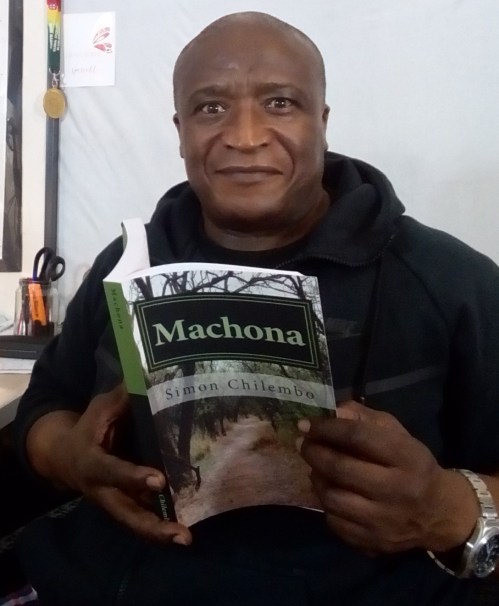
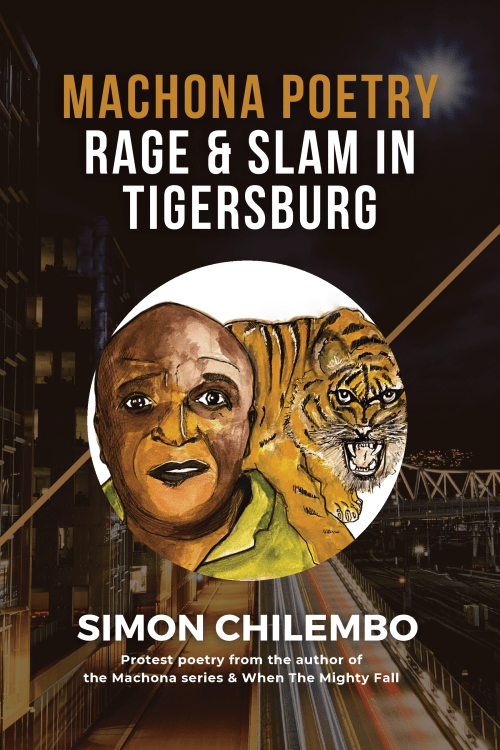
For example, South African-born children of a Zambian man and a South African woman discovering that they neither have strong bonds with either countries can lead to challenging anti-social behaviour in some cases. In my MACHONA – emigrant series of books I explore and expound upon the theme of getting caught up in the various traps of migration, of which, I venture to say, deportation is one of the most dehumanizing.
During the last push of the former South African Apartheid regime’s Bantustans/ Homelands in the early 1970s, hundreds of thousands, if not millions of Black South Africans were stripped of their South African citizenship. People were through force and deceit internally deported and displaced from mainly urban South Africa to impoverished tribal homelands that many had no prior relationship with, or knowledge of.
Sometime in 1970-71, I witnessed a lot of suffering of thousands of people. They were dumped overnight on a rocky piece of land surrounding a hill across a road about half a kilometre from my uncle’s house in Thaba Nchu, Free State Province. Thaba Nchu fell under the then Bophuthatswana homeland. But these people represented the entire spectrum of the major Black South African tribes. I got to play with some of the children my age there; so, I know.
All were left to fend for themselves regarding creation of private spaces and the like. No law, no order existed. Needless to say, violence and abuses of all kinds were the order of the day. Recollections of those tragic times in Thaba Nchu make me cringe. How I survived all that is a miracle for me.
Although Botshabelo is today a thriving, larger, modern community lying between Thaba Nchu and Bloemfontein, its origin, structure, and demographic composition is similar to the one I’ve just described above. Human survival conditions were really bad for a long time here. Black South Africans forget these things. Or they really just don’t know the history of their land. (And this is why we write books. People must read!)
In post-1994 South Africa, the phenomenon of the under-privileged people’s rebellious establishment of informal settlements in and around major urban centres across the land is widespread and continues unabated. This follows, and is the legacy of the same pattern established by both the authorities and scammers during the displacement of the people to the Bantustans in the 1970s as narrated above.
I felt much empathy for the internally deported people dumped overnight in no-man’s land bordering my maternal uncle’s formally partitioned Bophuthatswana’s then Builtfontein No. 3 zone in Thaba Nchu. But my empathy was of a detached nature. I.e., I felt their pain, but there was nothing I could do for them. I had already begun to appreciate my own sense of non-belongingness myself as a son of a Zambian immigrant man. At my former Thaba Nchu school, Namanyane Primary School, and our neighbourhood in general, there was much talk about these people and many more others that had also recently been dumped at Botshabelo.
I recall hearing how the adults used to talk about how these displaced people deserved what they got because many of the latter were lazy drunkards that didn’t want to work, or were simply unemployable because of their backwardness – stupid villagers; wasted farm-hands! And, besides, there were there also far too many foreigners from neighbouring countries. If these foreigners didn’t want to return to their own countries such as Lesotho, Mozambique, Malawi, and Rhodesia (Zimbabwe) then, their suffering is self-inflicted. This didn’t bode well with me. But there was nothing I could do. I was only a child then.
As children anywhere would, I got to interact with the new arrival, so-called lower-class children in no time. We fetched water from the same well for our respective families. We all drank and washed with the same dirty water. Together with my neighbourhood boys about by age, 10-11 years old in 1970-71, we played competitive football with the new kids on the block. There wasn’t much talking; and playing was never so enthralling. There were too much negativity and fear around. Too much pain.
THE REAL AFRICA HARDSHIPS
It wasn’t until my parents, my three younger siblings, Thabo, Sisi, and Sono, and I got to Blantyre, Malawi, in February, 1975, that the fate of deportees came closer to home. The former South African Apartheid regime had from the mid-1960s already been deporting Malawians, (Southern) Rhodesians, Tanzanians, and Zambians on a large scale. That was mainly in reaction to the independence wind of change blowing across colonial Africa then.
Even more Zambians would subsequently be deported in retaliation to Zambia’s hardcore anti-apartheid stance. It is worth noting that almost all the deportees were middle-aged and older men that had lived and worked in South Africa since the 1940s, if not earlier in some cases. They were deported together with their South African-born wives and children.
In about all the cases, instant deportation orders would be delivered and effected there and then, often in the middle of the night. The latter as a surprise element when people would be sleep-drunk and, therefore, easier to cow into deportation trucks, and, later, trains. It was also so as not to draw too much attention from the neighbours.
That meant that the deportees would arrive in their respective countries poorly clothed, and with the barest minimum of personal effects. Money was not a thing to talk about. Many of these people were already poor in South Africa; the men would have reached pension age without having been able to save any monies. They’d have worked for years in various industries and sectors grossly under-paid. Crushing the longstanding local myths that Machonas earned tons of monies in South Africa.
There were also cases of severely ill and/ or physically handicapped unmarried and childless younger men that had survived industrial and mining accidents whilst working in South Africa. These would have been deported without any form of workman’s compensation from their former employers.
That the deported Machonas returned home tired and poor upset many in their larger family circles and the wider community.
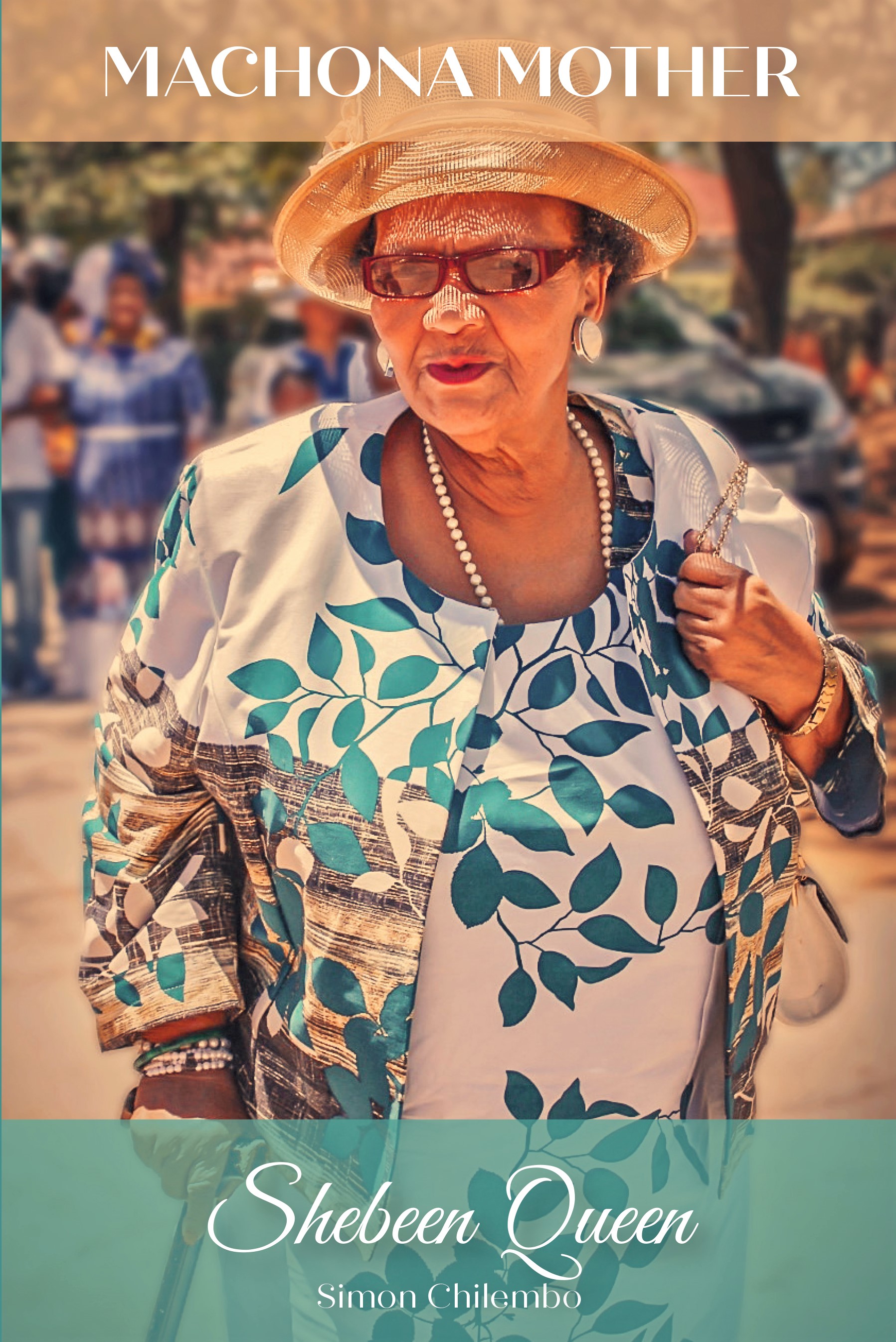
Because my father’s return to Zambia had instead been a planned affair by his wife, a successful Shebeen Queen, a female night club entrepreneur, in our former township, Thabong, my parents did have a bit of cash to carry along with. Their plan had been to take us children to school in Zambia, and they’d go back to South Africa and continue with the life they knew there. However, due to complications arising from the then intensifying anti-Apartheid liberation struggle dynamics, my parents got stuck in Zambia. In June, 1976, my mother managed to travel back to South Africa. My father’s chance would emerge ten years later.
My family encountered some hardships on the three months train and bus journey to Zambia, via Botswana, Rhodesia, Mozambique, and Malawi. But our hardships were a world apart from what some of the deportee families we found already both in Blantyre and Lusaka had to endure on the way from South Africa.
For one thing, my family travelled on the more comfortable then-2nd Class train carriages with the luxury of private compartments options of 1-person to 4-people sleeping facilities. We dined on fine food in the restaurant wagons. Except one incident on the last Beira (Mozambique)-Blantyre stretch, my father and his family were treated with deference by train staff as well as fellow passengers in the exclusive class, only below the ultra-premier Whites Only 1st Class in the then Apartheid South Africa rail travel system. At their prime, my parents were a smashing power couple.
The other families told us of harrowing experiences of over-crowded trains and buses, all-the-way harassment by officials and fellow travellers upon the discovery that the families travelling from South Africa were poor deportees; pathetic Machona losers! Worst of all were degrading racial attacks on the often light-skinned or Coloured/ mixed race Machona wives and their children. Tired, confused, ashamed, and far outnumbered by their own people, the deportee Malawian and Zambian men could only sit and absorb stoically the extreme hostilities they and their families were subjected to.
Final arrival in Blantyre and Lusaka, where applicable, presented even more degrading experiences that would traumatize some children to severe recurrent depression bouts over many years. Others got outright mental breakdowns. Some cases of suicide were reported here and there. I, for one, know that although I have now found inner peace and joy, the thirteen years I lived in Zambia, 1975-88, remain the unhappiest years of my life so far.
The hard choices on matters such as love, marriage, fatherhood, and identity that I had already made for myself as a twelve-year-old in South Africa became reinforced in Zambia. I continue to live by those principled choices: I won’t fall in love with just anything; I don’t want a wife and children to the extent that I’m economically inadequate to sustainably provide for my wife and kids. I’ve never been interested in getting involved with some rich women who’ll shower me with their monies. I create my wealth on my terms.
In Lusaka, large deportee families with as many as fifteen children had no immediate suitable accommodation available. This exposed the children to varying degrees of abuse and exploitation on the streets, as well as in ever temporary abodes that they’d get with relatives and family friends here and there. In the most extreme cases, children never even attended school; ending up languishing on the streets.
Exhausted and spiritually crushed, the semi-to-fully-illiterate fathers and mothers without any formal career skills, had problems getting into the Zambian normal employment mainstream. Life was hard for these people. It was a sad state of affairs to see. The plight of poor, unemployable, deported Machonas with little or no entrepreneurial skills or interest was projected into the Zambian popular culture by the legendary singer/ songwriter/ band leader Nashil Pichen Kazembe’s blockbuster song titled“A-Phiri Anabwera”. (I’ve provided the YouTube link for the song in the “Comments” below).
By the time I’d leave Lusaka for Oslo myself in 1988, some few South African deportee families had come under the tutelage of the African National Congress (ANC) and other liberation movements with presence in Lusaka. Through confidential personal relations with certain functionaries at various leadership and operational levels, my family served the ANC in several ways.
Through these liberation movements, either direct recruitment into combat guerilla forces or academic studies abroad were facilitated for older children. Numerous died under various circumstances in different parts of the world. Others survived and have, against the odds, made decent humans out of themselves both in the Diaspora and post-1994 South Africa.
Almost without exception, all the deportee families we met and heard of in Blantyre and Lusaka dreamt of returning to South Africa someday. And by hook or by crook several of these had, indeed, made successful returns.
The wave of the UN-guided repatriation of South African refugees in Lusaka in 1993/ 4 took with it many deportees from the 1960s and 1970s. That notwithstanding, there are still thousands of undocumented, now-grown-up South African-born children and their descendants living under various existential challenges in Malawi and Zambia.
The plight of many of these first-generation South African born children stranded in Africa has largely been shaped by their parents’ lack of resourcefulness and resilience capacities in hostile environments. The African fathers had been caught up in a vicious cycle of exploitation and impoverishment:
- Born, raised, and broken in then then British colonial administration.
- Landed in South Africa poorer than they were upon leaving their villages in Africa.
- Overwhelmed by sudden but inaccessible to opulence due to racial and capital barriers to entry, many would never break and take themselves out of the poverty conundrum. If at all in some form of formal employment, these people were paid paltry sums of money for salaries. Perpetual poverty and misery were guaranteed here, enabling continuing capital accumulation making for sustenance of the then Apartheid regime in South Africa.
- Forced to suddenly return home twenty-to-thirty years later, hard-beaten by the realities of life in the ever volatile then Apartheid and current South Africa, they find a new Africa that does not value them much either. Many men give up all hope and cease to make any efforts to find ways and means to better the lives of their imported families. They die; leave their families destitute. And the spiral of poverty and suffering goes on and on.
These are some of the peripheral outcomes that deportations subject fellow human beings to. South Africans kick foreigners out, throwing their own children into the lions’ dens at the same time. I was raised with the ethos that every Black child born in South Africa was a child of the land. At the same time, if one of the parents is a foreigner, the child is also a child of the land of the parent from abroad.
Despite everything else, then, the recognition and the love I have for both South Africa and Zambia are founded on the principle that I am both conceptually and in practice a child of these lands at any one time. Sadly, this holds to the extent that I am, as an extension of my parents’ joint legacy, resourceful, strong, and resilient. No one in the world can deny me my claim to my dual South African-Zambian heritage.
South Africans have no clue as to how strong the South African bug ever is, and how deeply the dizzying Jo’burg city lights impact plant themselves into the psyche of Africans that have sat foot in the country!
The deportees ARE coming back soon, Black South Africa. There will be more and more illegal immigrants getting into the country. How many more Afro-xenophobia killing orgies are going to take place in the country? Strengthen borders? My foot! How? Build walls? Fences? Dig trenches? This crap will never give sustainable solutions. It hasn’t worked for centuries. Solution lies in deep thinking about what Ubuntu is and what its implications are.
CORRUPTION: Incompatible with Ubuntu
To begin with, Ubuntu principles are incompatible with the corruption that underpins national leadership dysfunctions across Africa. When people are hungry, they’ll go where food is found. It goes without saying. When people are sick, they’ll go where public health care services work. If it’s in South Africa, so be it. It is what it is.
Shame on Black African states that the leadership of whom also must be accountable for the plight of their own people in primitive, selfish, ungrateful South Africa. At the same time, somebody in the global capitalist network goes laughing to the bank. The Chinese are also reaping the rewards of African chronic lack of adroitness in problem-solving nationally, regionally, continentally, and geo-politically.
Africa’s future can be saved, though. It’s in individual or collective progressive forces working with the Millennials and the following generations to teach them how to look at and appreciate reality for what it is today. And that reality is that Africa is raped, Africa is screwed. Only fresh, deeply analytical, critical thinking, forward-looking, long-term thinking leaders of the future can get things on track, facilitating the real application of African oneness ideals.
People must reset their minds in relation to wealth creation and sustenance thereof. Wealth creation endeavours, such as corruption, lacking in ethical (right v/s wrong) and moral (good v/s bad) awareness don’t often end well. When successful, corruption tends to offer instant hedonistic gratification; and nothing more and beyond.
Genuine, functional, Ubuntu fuelled African oneness can eliminate Afro-xenophobia within a short space of time. Our anti-racism struggle will never victor parallel to thriving Afro-xenophobia in South Africa. As I’ve stated above, “The future is shaped by younger generations of today walking into the outcomes of choices made today. That informed, amongst others, by guidance of older generations not ever glossing in glories of past solutions to outdated challenges.”
A viable future demands that the problems of today be solved with forward-looking solutions of today.
END
©Simon Chilembo 20.07.2026
SIMON CHILEMBO
August 31, 2026

AGING AFRICAN DIASPORANTS ABROAD RETIREMENT LIFE OPTIONS
WHO IS RIGHT OR WRONG ABOUT AFRICAN DIASPORANTS’ RETIREMENT MOVES CHOICES?
PREMISE
Every African or any other Diasporant tell and live their own respective stories. The only common thread binding us Diasporants is the reality that we are all human. We are in the daily life-long pursuit of the same fundamental material and conceptual existential values. We all happen to be doing so in faraway lands from our varying original homelands. And this is where the similarities end.
We are not only individually functionally different as to each our individual capacities and capabilities to work to satisfy our variable personal needs and wants for survival. Both in terms of consumption and access to things, we, as individuals and members of collectives share certain common cohesive values. But we relate differently to the bounty of the earth and beyond. That according to particular times and spaces, status, knowledge, tastes and preferences prevailing.
INFINITE BOUNTY OF THE EARTH
All things remaining equal, what bounty the earth has on offer to humanity is unfathomably infinitely diverse. This is the basis for our individual and collective identities. From it spurs and are sustained as innumerable systems of thought. These thought systems endeavour to make sense of our material and non-material worlds. Sustenance and prolongation of life, if not attainment of immortality, being the ultimate goal.
Inclusive of our personally inherent cognitive and neuro-hormonal proclivities, our hopes, fears, and motivations are linkable to our identities, as well as our real or perceived positions and roles in society. This is a critical reality check concept to grasp when analysing why and how people make choices and decisions in life.
POSTULATION
I state, therefore, that there is no one-size-fits-all solution to the quagmire facing old retiree African Diasporants regarding where they want to live their last years of life on earth. We can only share our thoughts and experiences, also offer our advice as necessary. It’s condemnable to compel, to judge, to induce guilt, instil fear, manipulate, or even to scam vulnerable Diasporants.
As in everything else in life, there will be those that are very clear as to their choices and plans. Due to various favourable factors such as unhindered access to necessary supportive material and human resources and more, these fortunate ones may be able to execute their choices and plans to desirable outcomes and live happily ever after. For these kinds of people, well, things seem to work out well all the time. Like those privileged classes Diasporants that’ll get to live it up irrespective of whether they choose to live abroad for life or not.
Unfortunately, for many an African Diasporant it’s never so easy. Whereas, say, two separate Diasporant men, each originating from a separate country, might have identical current life situations, e.g.:
- Both married; five children each – youngest children are a sixteen-years-old boy on either side
- Both fifty-five years old
- Both living in the USA for the past thirty years
- Both men and their spouses hold Ivy League universities PhDs in some fields or others
- Both families highly successful. Well-established in the USA. Have invested in property and other ventures back home in Africa. Both with solid philanthropic reputations back home
FORTUNES DIVERGENCES
When it comes to addressing the return-home-or-not retirement question, it’s not a given that the two men and their respective families above will address it similarly despite their mutually relatable obvious successes in the Diaspora. The array of the relational dynamics within each family unit, amongst individual family members regarding their needs and wants, fears, hopes, and expectations is multifaceted. That, to begin with, is more than enough of a challenge to deal with.
The thirty years aspect of living abroad takes a different meaning when viewed with considerations of making major relocating moves. The world and all that live on it change drastically over a thirty-year period. Growing up in specific geographical locations on earth, people are constantly impacted by natural features and processes occurring as characteristic of these places. Needless to say, human relations and resultant sociological formations/ culture will appreciably be reflective of the humans-nature bilateral relationship.
It means that people not only grow up where they do; these places and their unique natural attributes metaphorically grow inside the individuals too. This is expressed, amongst a multitude of others, in how people organize themselves in the gathering and production of food, protection against enemies, reproduction and birthing rituals, raising of children, and land ownership rights determination. Included in this category is the relationship to death, disposal of the dead, as well as mourning and closure rituals. Therefore, it’s not often that people will on the spur of the moment voluntarily just pack and leave places that they have lived in for a long time.
Things can be even more challenging for the less successful Diasporants confronted with the second migration dilemma. Admittedly, life can be extremely hard for especially poor Diasporants in America, Europe, and elsewhere in the world. For these people, talks of investing back home make no sense.
I can’t imagine a poor Diasporant that’s lived abroad for many years having any meaningful family and friends safety nets back home. So, more often than not, people in this category simply succumb to their misfortunes, get stuck and live life to the end in the Diaspora. Miserable as it may be for some observers. But who is anybody to judge anybody whose inner demons battles and angelic joys nobody’ll ever know?
Some poor Diasporants may have come to the Diaspora already down-trodden from their home-countries. They may have used all sorts of unconventional, if not illegal means to enter the various Diaspora lands. They may have traversed the Sahara on foot; defied the Mediterranean Sea on perilous as can be hardly floating ferries and make-shift boats. In extreme cases, others may be survivors of global human trafficking gangs. The survivors may have been subjected to all sorts of abuse grossly contravening the United Nations Universal Declaration of Human Rights Charter.
IDENTITY
Both the attainment of opulent living and a pauper existence in the Diaspora are functions of intricate, diametrically opposed circumstances for people; from health, grit, to social intelligence. Much of that shaped by identity and values we carry with us from our socialization training processes in our respective homes in Africa. It is important to remember that identity does not collapse and lock itself into our unilaterality.
In view of their intentions, given what they know or don’t know about a person, third parties might assign the person observed an identity that is not aligned with what the person believes to know about themselves to be. Some African Diasporants never manage to rise above the negative identities that anti-immigrants elements use. The xenophobes use the negative identities to justify harassment and abuse of African people in America, Europe, and elsewhere.
If an anti-Black racist identifies an African person as sub-human, then, the racist will illtreat the Black African with impunity. Dire legal consequences, or worse, might follow here, though.
In another demeaning, discriminatory context, the same does happen to some not so successful Diasporants that do get to return home after decades abroad, after all. In Zambia, my fatherland, they call them Machona, “the vanishing one”.
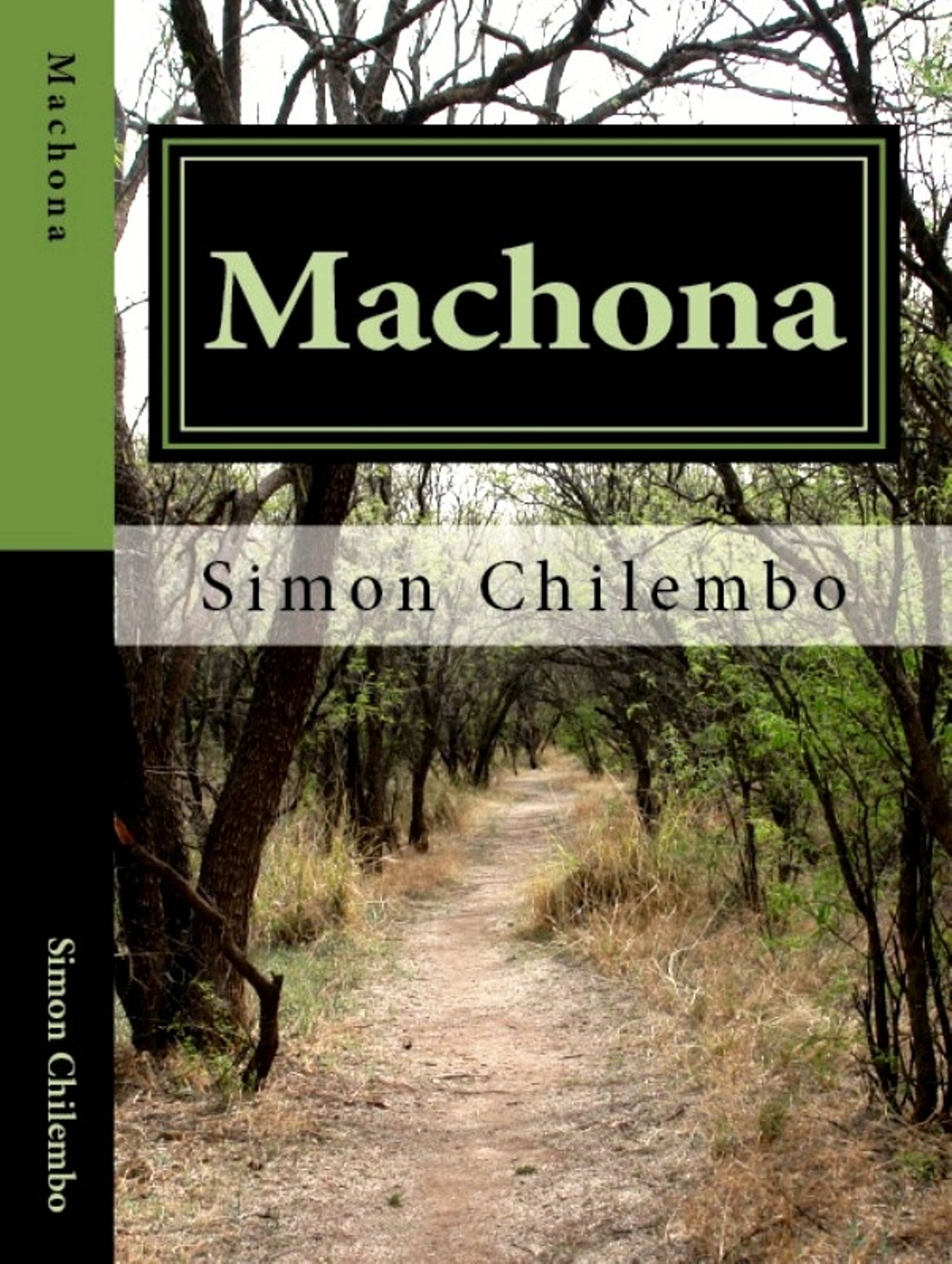
MACHONA = DIASPORAN: Emigrant
Machona and Diasporant describe the same phenomenon of people leaving their original homelands. That being for a variety of reasons of own volition, by coercion, or any other factors beyond the people’s control. It’s just that, in our context here, Machona label applies to one that disappears within Africa. Whereas Diasporant is for those that vanish to overseas lands.
Upon his return to Zambia in 1975 after living for an unbroken twenty-eight years’ period in South Africa, my father was not a man of means. Other than his wife and then four kids, he had nothing to show for all those years he had lived and worked supposedly for millions in South Africa. In his mid-forties then, my father was tired. The hardships of life under the then oppressive and exploitative racist Apartheid econo-political system had taken their toll on him.
My father’s immediate and extended family members, like many other people in the Southern African hinterland, were taken by the myth that all benefitted from South Africa’s legendary mega wealth. These people couldn’t understand how, if at all and almost without exception, their relatives returned home from South Africa destitute. Never mind that these now overtly poor people never could send much money home (Black Tax) whilst living and working in South Africa.
My father drew very little sympathy from his people. Some of the people were extremely spiteful, saying and doing obnoxious things towards my father. He took it all with stoicism only half of which would make me a better person if I could muster it. The negative attitudes towards my father spilled over to his wife and children. The consequent mental self-protective wall I built around me meant that I’d never want to have anything to do with these bad people against my father and his wife and kids.
Lacking documentable academic qualifications or professional accreditations, my father blatantly failed to reconnect with modern Zambia. By 1975, Zambia had been a sovereign state since October 24, 1964. The country had made huge sociological transformations unrecognizable from the old Northern Rhodesia my father had left for the neon lights of the golden city of Johannesburg, South Africa, in 1947. Zambians ruled. Zambians were royalty in their land. Zambians were Black and proud. This was a whole new world for my father and his nuclear family.
Ba-MACHONA, Ba-Elias(-i)
Applied to my father particularly in the broader family circles, the Machona tag was used derogatorily. It meant that he was a loser with no future in Zambia. To be identified as “Ah, this one is the child of that Machona, ba-Elias” was meant to belittle us, my father’s children. As did “This one is the wife of ba-Machona Elias” referring to my mother. My loser father had brought to Zambia a loser family from South Africa, people used to say. Now, that hurt.
In 1986, my father would return to South Africa. Despite having a new set of challenges in connection with Zambia, my father lived fairly more dignified in South Africa until his demise in 1998. In 1988, I myself packed my bags and left for higher education studies in Norway. I’ve been a Diasporant since then.
MACHONA POVERTY RAMPANT IN SOUTH AFRICA
My father’s plight in Zambia was a common feature amongst numerous other from-South Africa returnee Machonas. Many had it far worse than Pappa and his family. Despite the challenges, my parents did manage to keep their family together. Their three surviving children, Thabo, Sisi, and I have grown up to be alright human beings. My father would on the side beget another son, Nelson. The latter also has defied the odds and has grown up to be a decent human being.
Caught up in poverty-driven toxic family structures already whilst in South Africa, the other struggling returnee Machona families had it really tough. The Zambian fathers, some illiterate, couldn’t function at all in the Zambian labour market. And, besides, the myth of the mighty rich South African wealth was thought to have been a blessing for the Machonas in the country. So, people couldn’t fathom how it was that anybody could come out poor from South Africa, the land of milk and honey. In the eyes of many a Zambian people, lack of success attainment in South Africa meant that there was something wrong about their unresourceful returnee landsmen. The Diaspora curse at work.
PERSONAL RESOLVE
By the time we got to Lusaka in March 1975, I had already understood that it would be very, very long before we’d return to South Africa. I knew with committed certainty that no matter how long it’d take, though, I would return to South Africa at some point in the future, no matter what.
With time, looking at the hardships and indignities that Pappa and his fellow Machona returnees were subjected to in Lusaka, I knew that I’d never want to return to South Africa as a poor and uneducated man. This resolve informs my stand on the viability or not of my returning home to South Africa, or even Zambia, upon the arrival of my Diaspora retirement time in 2027. Much like my attitude towards marriage and fatherhood, if I know that I’m not durably sufficiently financially strong, I won’t do it; I don’t want it.
YOUTUBE INFLUENCERS
It’s easy to be charmed and convinced by many a YouTube pro-return-home for African Diasporants. Some of these proponents are really good eloquently and in the presentation of their visuals.
- Identity purists are passionate about the African identity. The purists argue that the Diaspora threatens to dilute or even obliterate the identity altogether if African people don’t return home.
- Pan-Afrikanists also want people to come back home to contribute to the efforts of creating a single, united, borderless Africa.
- Business and Economics pragmatists want the Diasporants to not only come back home but to also inject capital in various investments across sectors of their countries’ economies; thereby contributing to national development efforts. As if the Diaspora is an automatic, instant, and continuous capital gifting hand of God, or something. Not even the IMF or the World Bank work like that. Of course. Besides, not everybody is entrepreneurially oriented. Some people are happy just they have salt and water on the table.
I thoroughly enjoy many of these pro-African Diaspora return home shows on YouTube. That only to the extent that they talk about and show what is possible. I lose interest as soon as I detect a sense of superiority complex and a holier than though attitude pushing propaganda for people to return home at like all costs because “home is home”.
TO EVERYONE THEIR MOTIVATIONS, DREAMS, AND STRENGTHS
The Diaspora is not a sin. The African dream is not for everyone. Neither is heaven; not all of us are holy. People are not stupid. People are different. People are driven by a myriad of intrinsic motivations. People dream their own dreams, see their own dreams for the doable and the impossible. People fight their own demons.
Home for one person may be hell for another. Everyone must be allowed to assess their own life situations before taking a stand on the return-home-or-not African Diaspora dilemma. I fully encourage the expansion of YouTube talks as educational and advisory tools on the matter. Condescendence puts me off. Not everyone is born aristocrat.
For those ex-Diasporants that have made successful returns back home, I wholeheartedly rejoice with and for. Much as I do for those Diasporants that thrive and have decided to settle abroad. The Rock Stars in this regard are those that have managed to reach such levels of success that they can afford to live happily ever after with one foot in the Diaspora and the other back home; dying where the die, buried where they’ll be ultimately. Bravo!
I’m a 65-year-old lone survivor Diasporant in Norway. My official retirement is just a little over a year away. In a perfect world I’d be shuttling between Africa and Norway as a well-off Norwegian pensioner living it up. However, as things are today, I’ll only be able to sustain a reasonably okay living standard by being in one or the other, but not Norway and Africa alternately. And that’ll hold to the extent that I remain childless, single and unmarried. I wouldn’t even afford to keep neither a dog nor a cat. Not that I’d want to keep a pet, though.
To be clear, I don’t hate pets. I love women. I’m too poor to want to get married. Simple. I decide my ability to keep a pet and that of sustaining a happily-ever-after marriage here and now. Investing in this and that back home is out of the question now. I did try during my super economic might years in the early 2000s.
The whole thing broke my financial back lastingly. Almost killed me. Exposed dark sides that I never knew of in my family. I’ve just recently made a last investment attempt that was supposed to turn out as the mother of them all. Alas, it was a scam. Lost much money. Never again big business ventures in Africa for me. I’m tired. I’ve reached and crossed the rat-race finishing line. I’ve got a thousand books to write. Talk about aging with grace.
A whisper tells that there’s a critical minerals rich stretch of land from Eastern Congo to my ancestral land in Eastern Province, Zambia. If I invest US$10K today, another tomorrow, and then, monthly throughout 2026, I’ll be a Billionaire by the time I become a pensioner in Norway in 2027. I tell the whisper, “Go eff yourself; you can have it all!”
I’ve lived in Norway more than half my life. I became a man here. In my time, I’ve done and attained great things that big men do. I’ve experienced profuse joyous manhood exploits here. In the deepest recesses of my heart rest profound pains of loss of, longing for, and denial of seeing my manhood seed sprout to see the light of day in Norway. I’ve cried rivers in here. The rivers have dried. I’ve risen. I’m alive again. Despite the pains. My heart is strong.
Africa is born in me. I’ll be African all my living days. My roots pride will never die. I’ll stay in the Diaspora until I die. It’s my right to choose what feels right for me, for my life. To those the African Diasporants to whom it feels right and has shown to be feasible, go back home and thrive. We all deserve the good we create for ourselves anywhere we thrive in the world, including Guangzhou, even Ouagadougou too. Who is anybody to judge what is right or not for us about our respective solutions to the aging African Diasporants’ dilemma overseas?
This is my story today. The wealth of my future shining ever so bright ahead. The world is my oyster. Only getting started. The Diaspora is my springboard to any corner of the world I want to reach, be it today or tomorrow. From high up in the springboard leap trajectory, I’m free, I’m happy. I look back into the past, the database for all I need for the new opportunities and challenges of the future in the Diaspora and back home. I have no fear. This world is mine. Prove me wrong, if you can; back home or in the Diaspora.
©Simon Chilembo 02.03.2026
SIMON CHILEMBO
March 19, 2026

𝗧𝗛𝗘 𝗥𝗨𝗧𝗛𝗟𝗘𝗦𝗦 𝗥𝗨𝗟𝗘, 𝗣𝗮𝗿𝘁 𝟮
𝗠𝗔𝗚𝗔 𝗔𝗠𝗘𝗥𝗜𝗖𝗔 𝗦𝗔𝗠𝗘 𝗔𝗦 𝗗𝗔𝗥𝗞 𝗔𝗙𝗥𝗜𝗖𝗔: 𝗧𝗵𝗲 𝗕𝗹𝗮𝗰𝗸 𝗦𝗼𝘂𝘁𝗵 𝗔𝗳𝗿𝗶𝗰𝗮 𝗖𝗮𝘀𝗲
I’m ever so fascinated by the USA. At first, it was the illusion of the Dream of America. This Dream of America still lures poor, mostly involuntary wretched souls of the earth hoping to taste heaven on earth before they die. Some get to believe that they have secured a better future for their offspring, just from the first step on the soil of the land of dreamers. Going down on their knees, they kiss the Dream of America’s Mother Earth in deep felt gratitude.
The poor souls will have survived atrocities-extreme and/ or natural calamities in their original homelands in various parts of the world – elimination hole countries, as one elimination munching American mouth has called them. The stench of America emanating from the mouth nauseating the world. Like they’d be anywhere else in the world for they are human too, vile fortune hunters who’d eat their own mothers are also in the Dream of America rat race, abusing the poor hopefuls in all sorts of abhorrent ways.
The vile hustlers get to the land of Lady Liberty. They ride on the American Nightmare blood train, amassing the Green Back by any means. With the Dollar might, they burn and turn the land and the world red with their relentless destructive ways of relating to and managing society, to say the least of Mother Earth. Just hear them crap-talk Global Warming as a concept and reality. Sometimes I wonder if these cognitively inadequate people have their filthy elimination holes as the abodes for their brains. Scum of humanity.
My continuing fascination with the USA is about the elimination holes brains personalities fronting the American Nightmare discourse and social engineering efforts. I throw their supporters in the same boat of inherent or wilful ignorance and bigotry: dim-witted charlatans.
Between 1960 and 1975, I was born and raised in a systemically racist, self-encaged, media-repressive, stifled African people’s education, international relations pariah then-Apartheid South Africa. Elimination holes brains personalities fronting the American Nightmare want to establish a 21st Century Apartheid Dream of America state. A messy, costly, bloody lost cause.

From my childhood days in the 1960s to the mid-teens in the 1970s, the American Dream of heaven on earth was fed into my eyes through beautiful pictures of American life in carefully state-selected and censored magazines and movies. There were, of course, glimpses of pictures of violence on Black people here and there; also, those of gruesome assassinations of politicians and entertainers. Pictures of homeless people languishing on city street pavements, if not under bridges appeared here and there too.
But, the pictures of the glamorous Dream of America were overwhelming; from Miss World-type girls to style, automobiles, and New York City night neon lights, amongst others. The visual impact was accentuated by the sound of music. Some of them aware or not, Mega Stars across the musical genres sold the Dream of America more effectively than any other propaganda agents. In the South Africa of my childhood days, all the adult Jazz and Soul music lovers that I knew dreamt of going to America to see their favourite stars. Many believed that, given the apparent success of big names like Duke Ellington, John Coltrane, Louis Armstrong, Sam Cooke, James Brown, Ella Fitzgerald, and Aretha Franklin, to name but a few, America sure was Black people’s The Promised Land. Little did my music-loving South African aunts and uncles know about the history of Black African people’s slavery in the making of the American Dream economic might.
On the radio, jingles accompanying adverts of consumer items from cornflakes to tobacco always left me giddy in the head in their sweetness of melodies and painting of America as the epitome of high living. I couldn’t wait to get to America to enjoy all these amazing products from the source. Man, imagine me drinking Coca-Cola sitting in the Waldorf Astoria New York in the company of an American Miss World! That used to be a truly compelling dream.
And there was sport. Muhammad Ali’s boxing prowess notwithstanding, his political outspokenness in the Civil Rights sphere painted the path for my journey to The Promised Land someday. Post-the-Apollo 11 moon landing of 1969, I would for many years in wonder gaze long at the full moon. I never had ambitions of flying to the moon, but I used to think that if America could send men to the moon and back, then, in America, I could be all the great things I dreamt of being when I grew up.
In reality, though, I only wanted to be a medical doctor so that I could operate on people’s hearts like Dr Chris Barnard had done in Grooteschuur Hospital, Cape Town, on the 3rd December 1967. And I wanted to be rich and famous like the flashy heart surgeon. I was seven-and-half years old, then, and was already beginning to read newspaper headlines. Living in a highly politically charged environment whilst going to school in Lesotho at that time, I had already become an aspiring avid radio news listener. Therefore, I understood early that since I was not White, I could but with difficulty, perhaps, be a heart doctor in then-Apartheid South Africa. Instead, America would make me a great doctor, I earnestly believed.
From South Africa, via Zambia, I would end up in Norway 21 years later. I became a jack of many trades, but not a doctor. It is what it is. No worries. I have become an author; I write books. I am happy. I look at the USA with mixed emotions: feeling lied to, but not crushed. I am disappointed and appalled by the inhumane, parochial, and degenerative side of America that nearly half of the country’s population not only exhibits with impunity but strives to expand and perpetuate. All spearheaded by the insular, living-in-the-past racist White Supremacist MAGA America movement bent on establishing an Apartheid Dream of America state in the 21st Century.

As I write and think, and think and write, I find that the sociology of the American Nightmare half of America is not in any way divergent from that which I left behind in my Black South African township, Thabong, Welkom. This is transferable to urban South Africa across the board from Apartheid days to the present.
South Africa is a perfect USA microcosm match in more ways than one. In that sense, it’s just as well that I’ve ended up in Norway; a country by far better run than both South Africa and the USA. If the then-Apartheid South Africa came close to crushing my soul, the USA would have killed me already, I suspect. By the numbers, and by the guns, vicious MAGA America is more lethal than the pre-1994 South African township at any time, like-minded as they may be.
The regressive nature of American MAGA power relations dynamics is not different from that prevalent in Black South African townships. I’ll shortly demonstrate this in an exposé of the Township Nightmare power relations personality traits. In the same vein, I’ll implicitly demonstrate that human personality traits are driven by inherent internal biological structures and processes that supersede race and ethnicity theories.
For example, a human heart as an organ is a human heart whether it’s in the body of a male or female White, Black, or whatever colour of the spectrum person. Similarly, adrenaline is adrenaline; the nervous system is the nervous system. A certain neuro-hormonal imbalance will cause universally predictable behavioural outcomes cutting across race and ethnicity. That is how MAGA America can be understood in the context of the dark side of South African Black township culture. After all, South Africans and Americans are all human. Any human disease will similarly kill them if no necessary and recommended conventional medical preventive measures or curative treatments are given and adhered to. Needless to say, the recent COVID-19 pandemic caused havoc in much the same it did in South Africa as in the USA, including the rest of the world, of course.
The underlying guiding idea in my exposé is the consideration of psychopathy as an observable antisocial behavioural tendency amongst many MAGA America and South African Township Nightmare types.
Reacting to the strange, destructive behavioural tendencies exhibited by prominent American MAGA proponents, I, on October 13th, 2020, posted a comment on my Facebook feed. I have edited and expanded on the original text for this talk. And it goes as follows:
The hassle about psychopaths is that they cannot listen to reason; it’s beyond their cognitive capacities. For a psychopath, it’s their worldview or nothing. Conventional Ethics (right v/s wrong) and Morals (good v/s bad) are irrelevant concepts to psychopaths.
Depending on where in the world you live, are you on the ‘nothing’ side of a psychopath, they are likely to eliminate you in various ways. You’ll hear threatening expressions like, “We are coming for you!”. So, “… if you fuck around with us, if you do something bad to us, we are going to do things to you that have never been done before,” Guess Who.
As history documents over and over again, a dead opponent to a psychopath is the preference. Nevertheless, history is full of examples of how psychopaths in leadership roles across the board tend to have tragic demises. Google ‘world despots’, please! It’s free.
Despite its imperfections, where democracy works comparatively kind of okay, people shall seek to talk issues over through various established governance platforms, no matter how challenging or futile the exercise may be. In the end, votes are taken. Assuming a perfect world, outcomes are acknowledged. And the winner takes it all. Life goes on.
Democracy allows for election outcomes to be challenged when irregularities have been observed at any point during the process. Or even when the losing side just wants to be a nuisance. Democracy in practice can stand a lot of crap. Psychopaths thrive on the latter fact.
As current history unfolding shows somewhere in the world, when psychopaths win, humanity gets ever closer to thresholds of self-annihilation. Therefore, be ever so careful about who you elect to power in your land. Don’t allow yourself to be charmed by the cheap-feelgood-chronic-diarrhoea-like buffoonery antics of psychopaths.
If you don’t know how to identify a psychopath, call my number. For I’m not a medical doctor, I’ll guide you through an illuminating philosophical discourse that works all the time. It’s all about, amongst others, a solid academic and professional training background. Go to school. Acquire knowledge for human progress. Take your children to school. Read much and well. Pass exams clean; don’t cheat. Don’t burn books.
Ultimately, the reality is, though, there is a psychopath in all of us. Summarizing my philosophical discourse on what attributes to look out for in deciding, after analyzing a person’s socio-behavioural incongruencies, whether they exhibit psychopathic tendencies or not, a close brother-confidant of mine once said, “So, a psychopath need not be a raving mad personality in our midst?”
Yours truly, “Yepp, that’s right!”
Brother-confidant, “It means, then, that a psychopath may be the everyday smart-looking person sitting next to, or in front of you right now at any place?”
Yours truly, “Sure thing! But it’s all about relativism, see? Know thyself!

Whether or not I have a personal or some other human aspects relationship with the concerned, my labelling of a person as a psychopath is my pre-emptive self-preservation measure. This also helps me to put into perspective events in my immediate and distant worlds given who the dominant actors are in the different parts of the world, them sharing or not sharing common interests.
In my private survival instincts world, I don’t need to have a medical doctor to declare for me whether I am dealing with or am observing a psychopath in my immediate spaces or far out in the wide, wide world. Descriptively, I know a psychopath when I see one. I then behave accordingly to protect myself and my own in the face of actual or potential psychopathic onslaughts upon us. It’s a doctor’s job to diagnose and treat the patient accordingly. They can take all the time they need.
And, talking about personal survival instincts, I had on an earlier Facebook post declared that “Uncivility is an effective manner of attaining some degree of civilized talks with psychopaths. Communication leads to mutually desired outcomes to the extent that involved parties apply the same language and familiar terms of references.
“Failure to break through psychopaths’ noise and deficient knowledge barriers should lead to withdrawal from talks, if feasible.
“Otherwise, the fools must be isolated, if not excluded from civilized social interactions. In the worst-case scenario, it may be necessary to eliminate them. Diplomacy has to have limits even in the free world.
“Democracy is designed to neutralize our passions in common human relations interaction spaces and circumstances. Wars and societal collapse are direct outcomes of lunatics being allowed too generous opportunities to play out their antics for far too long.”
Any reasonably intelligent person who’s gone to school and can read, think, see knowledge linkages, and can thus synthesize functional, universally applicable explanatory models towards understanding how life works on earth, can read many a professional text and make sense of it. If they don’t understand, they ask as a matter of course; they actively seek more information from relevantly knowledgeable human sources or books and other information storage and distribution facilities to debunk or confirm initial conclusions made. This is called research.
Through my various learning pursuits in my time, my private operational definition of what constitutes psychopathy or not is based on readings of publicly available subject literature that is written and wilfully published by qualified medical personnel of various specializations and levels of academic and professional standing across the globe. This includes literature publicized by a plethora of international human behavioural sciences professionals. Google this shit!
Don’t let yourself be intimidated by the arrogance of power from doctors, psychologists, and others whose professional literary works we all, with much admiration, flock to in our efforts to study and better understand the overall complexities of human nature. If they don’t want us free spirits to speak about human wellbeing issues, then, they must withdraw their publications. They must cease making their expertise publicly available reference materials in libraries and social media.
Simon Chilembo
Oslo
12.10.2020
I wrote the exposé essay of the South African Black Township Nightmare power relations personality traits on May 29th, 2021. Posted in my blog on the same date, the exposé bears the title:
THE RUTHLESS RULE
Kassie Jungle Law: Only the Strong Survive
In my never-ending attempt at seeking to make sense of events in the world today, I, as a reflex, regularly look back at the first fourteen-and-half years of my life in South Africa, 1960 June – 1975 January. Growing up in the then-racist apartheid state has profoundly impacted my life. Day-to-day living was ever so dramatically charged. Such that, on the one hand, one could but choose to numb oneself to the volatility of emotions, if not traumas arising, and live on disenchanted and detached from the gruesome, disenfranchised reality.
On the other hand, one could look at, hop onto the intricate traumatic feelings and thoughts bandwagon, learn survival ropes, and hope for the best; longevity being a remote idea. Wishful thinking. Although the OPEC oil crunch of the early 1970s had already begun to make its mark globally, this period could easily be seen as the golden years of the apartheid regime’s economic might. The oppressed Black population segment was subjected to extremes of state security agencies’ violence.
Oppression is some costly business. It curtails human resources’ productive potential growth and manifestation. Atrocious. Oppression will last to the extent that the oppressors’ financial base remains sufficiently robust to sustain the oiling of the oppressive state machinery at all levels. Money talks. Money rules.
As it is with South Africa, a country’s endowment with a variety of natural resources that the world is willing to pay generously for is of crucial importance. Oppressors maximize their hold by capturing the wealth of their nations, therefore. They personalize their wealth, becoming super-rich individually and along with their family members, as well as their power clique hounds: oligarchs’ fangs drooling kleptocracy and nepotism poison in everything they touch. At the same time, their nations get caught in quagmires of long-term poverty and international indebtedness.

The Soweto Students’ Uprising of June 16, 1976, would not only change the liberation struggle course. It changed the political landscape of South Africa as well; further weakening the oppressive state’s capital base. Apartheid had to ultimately collapse. Not because somebody woke up one morning and suddenly discovered that the system was diabolic. The fact is that it simply was no longer economically viable. And prospects of any meaningful bounce back were bleak. Added pressure from the international trade sanctions had brought the country down to its knees.
The effective brutality of the apartheid regime reproduced itself across the entire Black populace by default – in the home; at absolutely all levels of social interaction. That is visible to such an extent that the nature of fundamental survival power relations dynamics cultivated then amongst Black people themselves have endured. It is manifest at even more sophisticated, grander scale, and more destructive levels in keeping with societal management complexities and technological advancements of the times in the 21st Century.
During the apartheid domination years, many a Black South African exile carried along with them these survival power relations dynamics into the Diaspora. Not that it helped the concerned exiles much from the point of view of applying the same survival strategies as generally functional in the township, or kassie culture in Black South Africa. Kassie is a corruption of the Afrikaans language word, lokasie; which means location. Observing, establishing, and maintaining links with fellow South African exiles has kept my fascination with the Black people’s fundamental survival power relations dynamics alive during all these years.
Post-1994 South Africa has also been accessible to me. It’s the land of my birth, the land of my family’s maternal-side ancestry, after all. Thirty-eight-and-half years since living abroad, I returned to stay in the country for five years, 2013-18. As such, I have been in touch with the trends in the land all along. Much had changed drastically at about all levels. However, characteristic personal survival attitudinal attributes have remained constant. I shall dwell on these later on in this essay as I unravel prerequisites for the workings of the ruthlessness of kassie jungle law rule.
Kassie is a funky catchphrase these days. But originally, it essentially implied a slum; not much unlike Brazilian favelas, for example. In practice, the meaning hasn’t changed in any big way. From the colonial era, peaking during the apartheid years, and stretching into contemporary times, tens of thousands-upon-thousands-to-millions of Black South Africans were dumped here. It initially was predominantly male labourers working in the mines and the agro-industrial complex.
There would be a few state functionaries and even fewer professionals in various vocational categories here and there. Much as there would be numerous fortune hunters engaged in all kinds of illicit endeavours; from petty crimes to large-scale organized crime activities involving alcohol, drugs, precious stones and metals smuggling, human trafficking, prostitution, and more. Family units would eventually emerge as a natural human development process, of course. Children would be born, raised, become adults, lead miserable lives, and subsequently die; the indignity of poverty accompanying them to the grave. Causes of death varying, from murder to illness, if not natural causes.
Prevalent land conditions are far from prime in the townships. This makes the construction of decent domiciles a daunting challenge for impoverished people. Sustainable subsistence food production from the land is near impossible. Minimal to total lack of functional social amenities comes with the package here. If there was anything prime about the original townships, it was the potential to induce and generationally perpetuate poverty with all its attendant maladies: disease, moral decay, ignorance. All that to facilitate self-annihilation amongst Black people: kill them; let them kill themselves; create space for more European trash to come to work, settle, and add to the growth of the white population in the country.
Conditions are even worse these days, taking into consideration, since 1994, the influx of millions of refugees and fortune hunters from war-torn, dysfunctional African states to the north. Others come from other parts of the world, especially Asia. Competition for limited resources and liveable spaces in the townships has spiked exponentially, apparently in favour of the new immigrants.
Many of the new immigrants come into South Africa with more by far international hustling experience: higher academic qualifications and vocational experience in both the social and natural sciences, military or guerilla warfare experience, and all that it entails – daring nature, PTSD, and other related outcomes. They also have investment capital for entrepreneurial ventures in various fields, often starting with small-scale grocery stores called spaza shops.
The latter attributes above are often accompanied by extreme manifestations of arrogance of power towards the locals, who are considered to be intellectually lacking, lazy, and fearful of White people, who still own the land, anyway. It’s hardly surprising, therefore, that strong anti-immigrant sentiments have mushroomed across the country, culminating in several outbursts of brutal xenophobia-inspired violence in recent years.Afro-xenophobia expression is ascribed to South African Black-on-African Black violence. In keeping with characteristic basal kassie culture, violence is the first instinctual option to eradicating conflict. Tragedy is ever the outcome that never brings forth solutions for a peaceful co-existence for all in the country.
The reality of the matter is that, much like the Ununited States of America, South Africa owes much of its economic might to the historical inflow of migrants from all corners of the world. As I’ve already implied above, these people bring into the country a wide diversity of creative/ intellectual/ academic, productive, and entrepreneurial skills that contribute to the robustness of the country’s vibrant economic and social advancement in the long run.
There’ll always be a few bad apples here and there. But assuming a functional justice system prevailing in the land, relevant policing and legal institutions are there to deal with lawbreakers. South Africa is truly a multi-cultural melting pot. Bishop Desmond Tutu’s broadly embraced Rainbow Nation nickname for the country supersedes discrimination neither based on race nor origin of the people that call South Africa their home, either by birth or immigration.
From an epistemological perspective, it is clear that the concept of township/ location/ kassie in South Africa was never meant to create ideal, conducive conditions for Black people to thrive and propagate themselves; neither to attain ever higher standards of living in time, in pace with national economic growth prospects.
The rise of apartheid economic might was at the expense of the lives of Black people, both at the hands of the apartheid state security machinery, and intra-Black violence across mainly urban South Africa. Many other Black lives were also lost through fatal accidents and occupational diseases in the agro-industrial-mining complex. Functionally concerning apartheid intentions, townships were supposed to provide temporary shelter for lives destined to be “… solitary, poore, nasty, brutish, and short.”
But then again, survival instincts abode in all humanity. People can remain wretched only for so long. If they are not wiped off from the face of the earth, they shall engage in all sorts of means to prolong their existence. Perhaps fate can change for someone, someday: break the bonds of subjugation, rise and liberate the people, and, ideally, live happily ever after in boundless abundance.
In the meantime, at the individual level in the South African kassie context, survival was and still is about ruthless “semphete ke o fete” (Sesotho: don’t overtake me, I overtake you – the rat race) tendencies. Here, the strong survive. The ruthless rule; applying cruelty as their claim to prosperity and longevity.
Brought forth, elaborated in my Black South African context, and set in alphabetical order below are personal dispositions I’ve identified as being cardinal for relative individual survival and ruling potential in the South African kassie culture of violence. That as a tool for understanding the nature of human relations power dynamics, and consequences thereof, at all levels of contemporary society, both locally and globally (In the latter, i.e., globally, the USA fits in like a glove). The respective attributes may be understood regarding the identification of the individual as to who they are, and what their social standing is concerning behavioural phenomena observed of them. In essence, this is the making of despots ekassie, a microcosm of the Dream of America nightmare:
- Bodomo (street parlance – Setsotsi) is derived from the Afrikaans word dom. Alternatively bokwala (Sesotho), it means stupidity; downright idiocy. Amidst events, act like you don’t know what’s going on. Go about your daily business indifferent as to whether or not you cause others harm in your endeavours; you lack empathy. You are not interested in reason; you are obstinate like hell. You are a denialist. You are a revisionist.
- Bokhopo (Sesotho) is cruelty. When it is deep-seated, merciless, non-benevolent, and non-repentant it is called khohlahalo in the same language. Rule by absolute iron-fisted fearsomeness. Without exception, anybody transgressing you in any way shall suffer the full ruthlessness of your wrath in line with the nature of the offence and the choice of punishment you dim fit. The line between life and death is often very thin here. This tends to elicit baffling loyalty from your cohorts. Much to the bewilderment of your detractors.
- Ho tella (Sesotho)/ ukudelela (isiZulu) is an uninhibited show of lack of respect. Total disdain. You are brazen. You bulldoze your way through towards the attainment of your power or material acquisitions, and other egocentric ambitions. In your interpersonal and other relations in the community, it’s your rules or no rules at all.
- Lenyatso (Sesotho) is the root of ho tella and leqhoko, immediately above and below respectively. It means to undermine, to belittle other people. Tools applied include patronization, ridicule, insults, unjust criticism, passive aggression, isolation or exclusion, subjugation; all propelled by jealousy and/ or feelings of threat irrationally perceived or real because the victim may, indeed, be the better person in many respects. The idea is to crush the victim, cut them to size, and put them in their place of insignificance. This is pure mental and emotional abuse that often easily degenerates to physical abuse.
- Leqhoko (Sesotho) is provocativeness. Be agitative even out of nothingness just so your presence is noticed, is not forgotten. Be relentlessly disruptive. Cause havoc; be an ass. Instigate and sustain fear. Use all means at your disposal: bully, defame, riot, vandalize, pillage, depose, fight, maim, kill. Ultimately, emerge as the leader of the pack; level-headed and solution-oriented, if only to cow and manipulate the terrorized towards aiding to secure attained dominant safe position.
- Mamello (Sesotho)/ Qinisela (isiXhosa/ isiZulu) refers to tolerance capacity; endurance in both hard and good times, depending. Good times are generally no big deal. But in hard times, practice self-preservation by keeping to yourself and your own. Hang in there. Stay away from trouble. Be invisible. Make no noise. Cultivate hope. Keep the faith because everything is going to be alright someday. Persevere.
For the mighty, though, mamello/ ukuqinisela means staying the course no matter what: keep on pushing; stand tall, don’t fall. Never, never, never give up! Never change the course of action once commitment to act in a certain manner is made. Here, mamello/ ukuqinisela becomes an interplay of bodomo, bokhopo, ho tella, leqhoko, and manganga in variable doses and combinations according to the circumstances prevailing at any one time and space. - Manganga (Sesotho)/ Inkani (isiZulu) is absolute stubbornness. Take a stand, be resolute to the very end, whatever the cost. Whether or not original intended goals are attained is not the essence. You are defiant to the extreme. Stay rock-steady as a matter of principle because you cannot be wrong, or you cannot be denied your demands. You are the truth. You are the light. If you are not the son of God, then you ARE God! Your opponents shall declare you as deranged, delusional; but that doesn’t bother you at all. You are mmampodi (Sesotho)/ champion; you rule. You live above the law. You own your followers through and through. Each one of them understands that you are their life saviour.
A street parlance (Setsotsi) adage goes like this, “Maziwaziwe, maz’bidlikaz’bidlike! (isiZulu)/ If they (e.g. towers) fall, they fall; if they collapse, they collapse!”
It is what it is.
Tyrants, hard-core conspiracy theorists, and charlatans fall under this category. So, in the USA, Coronavirus is just the common flu; “… it’ll disappear just like a miracle!”
Not forgetting The Big Lie that Joe Biden and the Democrats stole the presidential elections of November, 2020. And then supporters of The Big Lie insurrect The Capitol peacefully like tourists, leaving destruction and carnage behind. Very special people that The Big Lie spinner loves.
You can also do an egotistical, parochial, typically false premises pushed brexshit and pull your country out of a body of international solidarity in the Western world.
Neither does State Capture exist in South Africa. You know none in your family that has contracted AIDS in South Africa. Therefore, it doesn’t exist. Step aside rule in the ANC? What’s that? If you are indeed going to fall, you don’t go alone. You are vindictive. - Sebete is a Sesotho word for liver.The liver is considered to be an organ of courage in my part of Black South African culture. A courageous person is said to “have a liver”/ O sebete. Courage is a common thread linking all survival, or power attributes in kassie.
Ho sa (Sesotho, noun), lumps together the attributes above into one virulent trait: petulance as gross as only an extremely spoiled brat can display. The descriptive form of ho sa is “O sele!”, meaning “He/ she is petulant!”
People of all ages manifesting ho sa as a characteristic social interaction trait are some of the most dangerous a community can have. Makings of despots emerge here.
Underpinning the relative kassie individual survival and ruling potential laid out above is the question: O tshepile mang (Sesotho)? Which directly translates as, “Who is it you trust?”
Who’s covering your back?
Simple as the question might seem, it is not necessarily a daily conversation question posed in my original part of Black South Africa. The question is profound to the extent that it is asked a person directly, or others are asked about a particular individual when the latter’s negative behaviour defies not only mainstream social protocols across the board, but sheer common sense as well. It is believed that there must be some extra-ordinary qualities, some mystic about these kinds of people. For example:
- What gives them the guts? What makes them tick?
- Whose progeny are they? What are their lineages?
- Do they have some guardian angels, perhaps? In that case, who are the latter? Where are they?
- What do they have that ordinary people do not have?
- Are they working for somebody even more powerful than themselves? Who are these people?
- Are they protected by God? Ancestral spirits? Wizards and witches?
- Or are they just raving mad, sick in their heads? Are they bewitched?
- Do they have magical powers themselves? If so, from where do the powers derive?
- Are they members of some organized crime gangs? Or some secret societies? The Illuminati?
- Is it just because they are too rich? But where does their wealth come from?
It’s only if and when sufficient knowledge about these treacherous people is gathered that concerned individuals or the community can effectively react to get rid of them in one way or another. It’s not unusual that the former fall from glory in the most dramatic and humiliating fashions; those who lived by the sword dying exactly as they lived. Such is kassie life. The ruthless rule but momentarily.
The strong are often the smart with senses of moral and ethical awareness. They tend to survive, break out of the mould of kassie misery and ignorance, and live longer. Some in this category will in time even travel wide and see the world, permanently breaking the spell of kassie anti-life attributes. Expressing themselves through diverse media and creative and performance forms, they may also become proponents of liberty, justice, and equality as fundamental Human Rights tenets all of humanity on earth is entitled to.
Meanwhile, South Africa has yet to cleanse itself of the kassie anti-life attributes spell, to the extent that it’s possible. However, given the current display of elite kassie mentality antics in various judicial and organizational platforms in the country, it is clear that much more work remains to be done at this rate. Well, cumulatively from the onset of contemporary European colonialism in the 17th Century up to the apartheid era in the 20th Century, the mechanizations that facilitated their imposition had at least four hundred years to dehumanize my people and screw up our psyche. The Rainbow Nation is only twenty-seven years old.
Khotso is a common Sesotho name for South African males. It means peace. The female version is Mma-Khotso both as a formal name and may denote that the woman is a mother of a boychild called Khotso. The name has significant connotations. In practice and conceptually, peace is a universal prerequisite for progressive human co-existence. That making for harnessing humanity’s creative potential towards a sustainable, infinitely fulfilling life for all. The South African national anthem, Nkosi Sikelel’ iAfrika! (Nkosi Sikelela) is essentially a cry for peace, captured in the Sesotho text:
Morena boloka sechaba sa heso/ Lord Almighty, save my nation
O fedisa dintwa le matshwenyeho/ Bring an end to strife and suffering
Were the ruthless and the smart kassie people of South Africa and beyond to realign their attitudes and heed the message of Nkosi Sikelela, the future would be bright for all. I want to be here in four hundred years to gloss in the glory of the heaven on earth that South Africa and the rest of the world will have become. I sit here in a space of relative peace. I breathe. I dream. I write. I make YouTube videos. Ever conscious of the lasting impact that my kassie life background has had on me, I have every reason to want to choose to be hopeful.
I can be hopeful about the future because I am happy all the time. Watch this video here to see how you can be happy all the time, and make somebody’s day every day into the future.
SIMON CHILEMBO
OSLO
NORWAY
May 29, 2021

