Home » Posts tagged 'apartheid'
Tag Archives: apartheid

𝗔𝗙𝗥𝗜𝗖𝗔𝗡 𝗗𝗜𝗔𝗦𝗣𝗢𝗥𝗔 𝗥𝗘𝗧𝗜𝗥𝗘𝗘 𝗧𝗢 𝗥𝗘𝗧𝗨𝗥𝗡 𝗢𝗥 𝗡𝗢𝗧 𝗧𝗢 𝗥𝗘𝗧𝗨𝗥𝗡 𝗛𝗢𝗠𝗘
𝗔𝗻 𝗢𝗹𝗱 𝗠𝗮𝗻’𝘀 𝗥𝘂𝗺𝗶𝗻𝗮𝘁𝗶𝗼𝗻𝘀
INTRODUCTION
If you are in the Diaspora and, given your life circumstances and aspirations, what is, or what can be the crux of the matter, the deal breaker, as to the decision you’ll finally make regarding how you’ll deal with your fate as an aging retiree far away from home in Africa? That in view of, as you’ll define for yourself, the key factors that you have, or you do not have direct control over.
I have in mind here a memorable moment in a Religious Studies class in Std. 2/ Grade 5 at one of my former schools in South Africa, 1972. The class teacher, Mrs Tshehlana, asked us about the one thing we’d each ask God to give us, if we could meet God in person. Money and freedom dominated. Of course.
Wisdom Value
But Mrs Tshehlana thought that it’d be better if we asked for the one thing that King Solomon did ask God for: wisdom. Huh? Oh, yes, and King Solomon became the wealthiest man in the Bible. Decades later in the Diaspora, I’d learn that wisdom was also a hyper power trait of Mansa Musa, the wealthiest man that’s ever lived.
In the first Book of Kings, Chapter 3, verse 9, King Solomon is quoted by AI Copilot Search as saying, “So give your servant a discerning heart to govern your people and to distinguish between right and wrong. For who is able to govern this great people of yours?”
Copilot Search elaborates the quotation by stating that “This verse reflects Solomon’s humble request for wisdom to lead his people effectively, highlighting the importance of moral discernment in leadership. It teaches that true leadership begins with recognizing one’s limitations and seeking divine guidance.”
Anchoring the true leadership principles awareness defining my personal Life Philosophy, wisdom is an infinite, ever evolving body of human knowledge guiding me in the making of major decisions in my life. I don’t always get it right. But if I can think about it and find a plausible, functional explanatory model, I’m happy. I keep moving on.
My final decision to stay in the Diaspora or return to Africa forever as an aging pensioner shall have been objectively measured, philosophically tested and wisdom curated as to the fairness or lack thereof to myself and those to whom my presence in their lives matters.
Well, here is the Serenity Prayer’ starting line, underpinning the decisive value of wisdom:
And I quote, “God grant me the serenity to accept the things I cannot change;
courage to change the things I can; and wisdom to know the difference.” Close quote.
NORWAY
I’m a Diasporant in Norway. I’ve lived here since 1988, at age 28. I had the world dancing in the palms of my hands, then. The future seemed super bright. What could go wrong? Now, approaching age 66, so much has gone wrong along the way. So much joy and beauty have reigned supreme in parallel, though.
Diaspora Retirement Quagmire
I present to you here my continuing story and thoughts on the “to be or not to be” Diaspora retirement personal dilemma facing a split-emotions African woman and man growing old overseas. It is my hope and wish that it’ll assist you with some useful fresh insights into this matter that is troubling thousands of Diasporants of my generation the world over.
My paramount guiding principle since my early teens remains a constant. And that is: on the basis of what people know or not, they’ll always make the best decisions for themselves.
ZAMBIA
On the one hand, in keeping with my father’s Zambian Tumbuka people’s dominant patrilineal culture, I proudly acknowledge Zambia as my traditional home. And, by extension, transcending to beyond the colonial subjugation period and its attendant destruction of African culture and identity, I feel a deep sentimental connection with the entire immediate Equatorial Africa north to south of the Equator, west to east.
SOUTH AFRICA
On the other hand, South Africa, my motherland, the land of my birth, vibrates in my whole being as the home of my homes. This is not an intellectual standpoint. It’s a personally visceral emotion that words cannot adequately articulate. The impact of the South African vibe in me is comparable to no other place I’ve ever been to in the world.
It’s not so much in the people as it is in the magnetic rumbling of the earth I register all the time under my feet whenever and wherever I step in the land; it’s in the atmosphere aptly captured in Letta Mbulu’s There’s Music In The Air song. This South Africa is my land!
Sense of Belonging Paradox
As I’ve just hinted, the paradox is, though passionately proud of my dual heritage, I’ve never socially felt a sense of belonging in either land. To this day, I’m still forced to be constantly on the defensive about my identity contra other South Africans and Zambians at absolutely all levels of relational interactions anywhere.
Vis-à-vis my Zambian-South African belonginess ambivalence, ending up in the Diaspora was both a blessing and a curse. The Diaspora detached and protected me from wearisome daily scrutiny, everywhere, and in every endeavour I partook in back in the binary homelands of mine.
I still must explain myself to the numerous other South Africans and Zambians I meet overseas. The only difference being that I’m now in a position of personal strength.
Diaspora King
The little existential domain I’ve materialized for myself out here in the Diaspora is necessarily ceaselessly operational. Even then, under a variety of never-ending trials and tribulations, it has allowed me to be king.
It’s not for nothing that my inner family nickname is Morena, which translates to king, in my mother-tongue, Sesotho. On my father’s side, I come from a lineage of chiefs and headmen. Works for me.
Diaspora Curse
The curse of the Diaspora is that the Diaspora daily expands in more ways than one the already vast distance between me and my people back home. The sense of my African identity pride is an intrinsic personal attribute that no one can take away from me in any way.
Be that as it may, my fiercely intense self-sufficient, contemporary streak has led me to live and organize my life in ways that are hugely divergent from or are directly contradictory to mainstream African culture normative values, diverse as African demographics and topographical features are. In my world, therefore, and, to begin with, Africa is not a cultural normative values monolith.

Controversial Viewpoints Contra African Conservatism
For example, three of my strongly controversial viewpoints in the conservative African context are as follows (socio-cultural conservatism is not a unique African feature, of course):
- Purely from modern scientific and sociological perspectives, and independent of race or ethnicity, even origin and faith, keeping a pregnancy through to birth ought to be a woman’s right to choose to carry on with it or not.
The role of the man is to be with, love and support his woman through and through given the prevailing conceptual, material, and health circumstances in the woman’s life. - The sentiment of love is a chemical response outcome. Read about feel-good hormones called dopamine, serotonin, endorphins, and oxytocin, respectively. Free your mind.
Mature people will love who they love consentingly regardless of established social norms relating to the hanky-panky. Uganda, or any other country’s killing of same sex people in love is anti-science, wasteful of national developmental resources, and fucking time.
The African in me cannot reconcile with this. And this has nothing to do with having succumbed to so-called Whiteman’s culture or some crap talk like that. Remember that, for instance, USA’s Trump MAGA homophobia is as white as they come. - I’m pro-marriage and for procreation. Absolutely. Where they work. Otherwise, it’s just fine to divorce, re-marry, or stay single. It’s okay to adopt or foster children too. Just as it is okay to be childless as to your life conditions and choices.
I personally have thus far desisted perfunctory husbandhood and fatherhood as symbolic manifestations of my supposedly truly cultured African manhood. My life cannot be defined by marriage and fathering of scores of children I cannot raise. I cannot disrespect my fertility, my ancestral heritage seeds, that way. Take me or leave me. Simple.
THE STORY: Origins
I find my having been born in a round year, 1960, convenient for calibrating my life’s progressions in clean decades. Although I first became consciously aware of my surroundings at age four-and-half years old, I rate the 1960s as the most joyous decade of my life so far.
I have reason to believe that, though not on a bed of roses with a silver spoon in my mouth, I was born into a loving and protective family environment in an acutely oppressive, racist, White Supremacist South Africa of the time.
There were, of course, the occasional unpleasant moments here and there. Such as the lasting blight that the raw domestic violence towards my maternal grandmother by her lover, with whom we stayed at his house in Peka, Lesotho until Easter time, 1969, has left in my life.
But, overall, when I look back at that time, I get a bodily sweet sensation of like I sailed through the decade on a luxury yacht in peaceful waters of an ocean so wide. Yes, the 1960s were a decade of abundance in my world as I then perceived and experienced it with my child’s eyes.
- Crime. Violence
Besides his normal hotel restaurant job, my father ran a highly lucrative side gig facilitating transactions and distribution of precious metals and stones across South Africa and the neighbouring lands. In those days, illicit commerce and trade were the claim to wealth creation for many courageous enterprising Black African people. But, like some contemporary myopic, or simply ignorant socio-political commentators and active politicians, there are those that ignore the historical context of the endemic violent nature of the South African society. Violence and crime, including economic crimes, tend to go together.
- Corruption. Theft
If, for example, the ruling African National Congress (ANC) party has further destroyed the country through corruption and plunder of state resources, that’s because it’s the only thing they know. Any other South African political party would do the same if they were in power. Ultimately, a South African is a South African regardless of political affiliation, or even ethnicity.
South African news media is daily full of this and that politician caught up in one form of criminality or economic impropriety.
According to the Daily Maverick online news of November 18, 2025, Democratic Alliance (DA) boss, John Steenhuisen, reportedly has “big spender” tendencies which have led to his failure to settle his personal credit card bills of nearly R150 000, against an annual salary of around R2.69 million.
Such hassles expose politicians to all sorts of vulnerabilities regarding lobbyists and other agents of entities with ulterior motives against South Africa. But I digress.
- Rockstar Parents
My parents were undisputed Rockstars in our neighbourhood and the Malawi-Zambia-Zimbabwe migrant community in our city Welkom. Life was good, then Apartheid social mobility and interaction impediments considered. Much of my human relations skills, social etiquette, political consciousness, and appreciation of the arts, as well sense of freedom, independence, community, and responsibility for other’s wellbeing and mine had their foundations laid during this phase of the first decade of my life.
TROUBLE WITH GOD: Conspiracy Theories
- Moon-landing End of the World
The Catholic Church school that I attended in Lesotho contributed hugely to the inculcation of the mentioned attributes in me in those critical formative years. That notwithstanding, by the end of the decade, I had begun to doubt the talk about the existence of this grand entity called God, and the son called Jesus.
It all started in 1969 with the fear spread amongst us children that landing on the moon would upset God so much that he would bring the world to an end much earlier than it should happen. I recall all the adults everywhere being so anxious.
There’d break out an inferno during which Jesus, together with Angel Gabriel, would be busy separating sinners from believers. The believers would go to heaven; and the sinners would stay on earth and get roasted forever. Since we were all sinners, we were all destined to burn forever on earth, which made the earth the dreaded hell, then. This was some scary shit anticipation.
“We were all sinners” applied to Black people only, we were told. White people were all destined for heaven, irrespective of their sins status. That didn’t make sense to me. Strange fellows, this God and his son Jesus.
- The Astronauts
Neil Armstrong, Edwin Aldrin, and Michael Collins did, indeed, land on the moon and later returned safely to earth and lived happily ever after on solid mother earth with her challenges that seem to defy even God all the time. The next scare involved the end of the decade on December 31, 1969.
- End of the Decade, end of the World
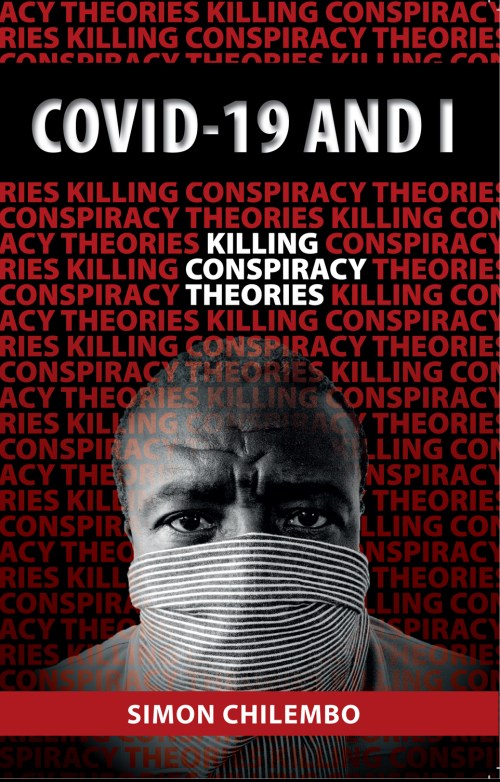
We had been warned that at midnight of that date, God would make sure that we were all going to be wiped off the face of the earth by floods greater than Noah’s in the Bible, and fires more vicious than those that didn’t break out upon Apollo 11’s landing on the moon. That was my first encounter with Conspiracy Theories. Fifty years later, 2020, I’d write and publish a book titled COVID-19 & I – Killing Conspiracy Theories.
Antivaxxers Tragedy
This time around, Conspiracy Theories pushed by anti-vaxxers lead many of their adherents to much preventable diseases suffering, if not death. God and Jesus nowhere to be seen to save humanity from itself. Measles has resurfaced in the USA. Thanks to anti-vaxxers campaigns spearheaded by MAGA Trump’s Health Secretary, Health Secretary Robert F. Kennedy Jr. Unnecessary suffering and deaths caused.
THE 1970s
1. Bitterness. Disappointment
I entered the 1970s decade very pissed off with, and disappointed with my parents. Having missed the 1969 school year due to an unplanned departure from Lesotho earlier in the year, I was looking forward to returning to my former school at Peka at the beginning of 1970. There, I’d start in Std 1/ Grade 3 afresh. And this I’d time be a boarder at the school, to be looked after by my favourite nuns there.
Plans had been made that my former nanny whilst I was staying with my grandmother’s former suicidal-murderous lover would be coming over to check on me from time to time. That was the deal my parents had presented to me and my younger brother, Thabo, sometime towards Christmas, 1969. I was truly thrilled about this.
The source of my anger and disappointment with my parents was that they didn’t keep the deal. My Uncle Mosh, who lives in my mother’s hometown, Thaba Nchu, had his wife come to spend Christmas with us in Welkom. Aunt Sacha’s first-born child, baby girl, Rakgi, was ten months old then.
My siblings and I ever happy to jump into Pappa’s car especially on the long drives to and from Thaba Nchu accompanied my parents on the drive to return Aunt Sacha home a day or two after Christmas Day. Thabo and I were told that the trip would give us the opportunity to bid farewell to other relatives before our return to school in Lesotho. Great stuff.
What felt like a lightning strike cracked in my head the following day when, upon preparing to drive back to Welkom, my parents suddenly told Thabo and I that we were going to stay and start schooling in Thaba Nchu after all. They explained that it would be too dangerous for us to return to Lesotho because, as I knew, grandmother’s ex-lover, Mr Vold, was so powerful that he could easily get to kidnap us from the school and cause us unspeakable harm.
Instead, in Thaba Nchu, our uncle Mosh and his wife Aunt Sacha would look after us well. In return, little Rakgi would return to Welkom where she’d grown up alongside our younger sister, Sisi.
What pissed me off bad was my parent’s choice not to inform Thabo and I earlier about their decision. I failed to understand why it appeared as though they didn’t trust me well enough to want to engage with me on a matter that impacted my joy and hopes that negatively. I mean, I still believe that at age 91/2, I already had a good grip of the good and the bad ongoings around me, especially in my immediate circles of existence. We could have had a good conversation on this, I believe.
2. Unruliness. Hate. Violence. Resistance
For the next two years Thabo and I would be in Thaba Nchu, 1970-71, I was an extremely egregious, petulant, and rebellious young boy-to-man at home. Much to Aunt Sacha’s bewilderment and frustration. She was also extremely angry at my domineering mother’s having taken away her baby girl Rakgi; to the extent that she on two occasions subjected me to uncalled-for brutal corporal punishment with freshly cut sticks from a peach tree. An atrociously painful experience. I could never forgive her for that.
She’s been dead over for a decade now. It doesn’t matter now, I guess. Aunt Sacha despised me all her life long. A mutual sentiment. I’ve grown up to be the kind of a fine man she never thought I could ever turn out to be.
By the time she attempted to corporally punish me the third time around, I had already resolved that I’d deny her the pleasure if she ever tried again. A neighbour girlfriend of mine had previously dissuaded me from whining like a baby after the second hiding from Aunt Sacha.
- Grew up Overnight call: YOU ARE A MAN!
“You are a man. You must show her that!”, implored the unforgettably kind and beautiful Babitjie. That was another one of those remarkable growing up overnight moments in my younger years.
Dark like myself in the milieu of majority light-skinned Barolong people of Thaba Nchu, Babitjie had eyes as beautiful as the full moon in the middle of a clear night sky as engrossingly regal as the tone of her skin. Fifty plus years on, occasional flashes of Babitjie’s image still cross my mind, fresh as if I last saw her only yesterday.
As in the previous two occasions, Aunt Sacha had gathered sticks with which to lash me when I came home from school. I don’t know how many pieces she had gathered, but I resolutely grabbed and broke each one of them each time she struck at me. After breaking and throwing away the last stick, I stood firm and looked her hard in the eyes.
Had Aunt Sacha reached out to man-handle me, I would have hit back. I could already throw a punch then. I guess she quickly understood that her luck had run out. So, to save face, she instead chose to verbally demean me in front of people for my ugly face of a bull, with expletives expressing the wish that her God showers upon me all the misfortunes he could. Amen.
But then again, nearly two decades later, I’d end up in the Diaspora. God couldn’t catch me. My subsequent success and power rocked Aunt Sacha’s world until her death. God nowhere to be seen. As usual. Works for me. Isolated to the relationship with the late aunt, 1970-71 remain the angriest years of my life so far. The anger and frustration towards my parent’s betrayal dissolved here.
3. Joy amidst turmoil. Anger management. School fun.
The two years in Thaba Nchu taught me how to isolate my anger and joy from each other in my daily life. Whereas I’m THE HAPPIEST MAN IN THE WORLD by default, I learned how to focus my anger and its manifestations to specific targets.
I don’t know how to be angry with the world in general. The world doesn’t have to detect my anger if the world has not upset me. I’m able to celebrate life when necessary despite disconnected anger burning inside of me.
School continued to be an awesome space for the play out and experience of joy. I quickly became popular amongst the teachers for my smartness and out-going nature. Still standing out for my differentness (very black and short) amongst my fellow school pupils, I recall only love, care, and understanding from all at Namanyane Primary School, Thaba Nchu.
That I shone in the playing of an informal, very rough kind of football in which the goal was to chop-off one another’s ankles did not dim my popularity. Almost everyone but me sustained minor to serious injuries requiring medical attention.
I even had my first school girlfriend here. Sadly, I treated her badly. I never forget the hurt in her eyes the day I decided to leave her. From that point on, I made a personal vow to never ever again dump a girl in such an overtly heartless manner. That was the beginning of profound personal vows I’d make in the 1970s decade. These vows continue to shape, sustain, and guide my life principles to this day.
4. Diaspora preparation
In many ways, I’ve with time concluded that, because I for the first time had to learn how to solitarily handle hostilities around me here and now, and externally live my life as if nothing negative is happening elsewhere or at home, the Thaba Nchu experience was the prime, unconscious preparatory ground for my later life survival strategies in Zambia, and the Diaspora thereafter.
5. Karate
Also, it was in Thaba Nchu that, in a street fight, I spontaneously performed a never-before-seen self-defence technique against a potentially dangerous stone projectile aimed at my head from behind. I turned around, saw the attacker, and ran three steps perhaps towards the assailant. I then flew to kick him on the face with my right foot. He fell to the ground; the stone falling away to the side.
I left him there dazed. Never saw him again afterwards. His name was Molefi. A locally renowned skilled workhorse rider. Little did I know that that incident would mark the starting point of my subsequent Karate martial arts training and teaching career. This would help me carve an own outwardly safe, mentally challenging, emotionally and spiritually gratifying, legacy creation space for thirteen years in Zambia, and twenty-five years in the Diaspora, Norway.
The Karate Warrior Ethos, Bushido, has elevated my capacity to blossom in, and share joy and peace wherever I am. Although I don’t publicly practice Karate anymore, the Warrior Ethos continues to be my light in dark moments of my life when my demons seek to take me down, if not out altogether.
If I have a survival superpower in the Diaspora and everywhere else, it is Bushido. Beyond physical fighting skills, Bushido as a life philosophy expounds virtues of, amongst others, courage, loyalty, moral-ethical awareness, and trust. That’s all I need for a closed-loop virtuous life, be it in the Diaspora, or back home in Africa.
6. Welkom return. Vows
With the relationship between Aunt Sacha and I as bad as it could get, and with her understandably wanting her baby girl child, Rakgi, back, Thabo and I had to leave Thaba Nchu at the end of the school year 1972. Christmas 1972 in Welkom was the best. My instinctive state of happiness became whole again.
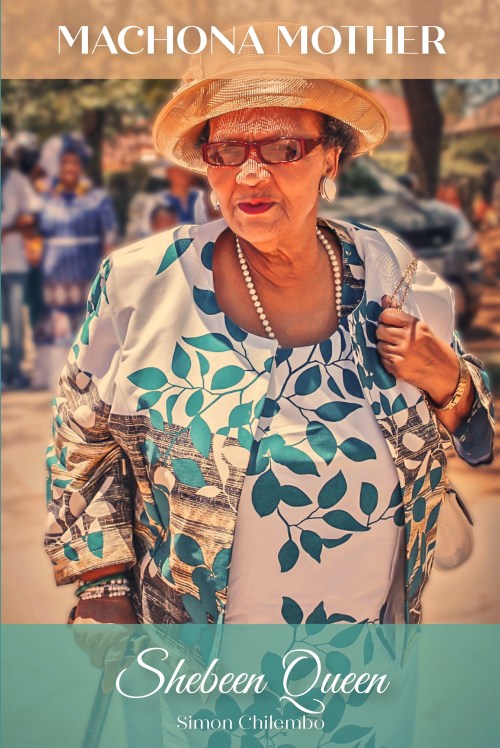
In the mix of my SHEBEEN QUEEN – MACHONA MOTHER’s thriving business, life was fast-paced but full of generousity and love. ‘Ma had already taught Thabo and I the ethos of working for our own money if we wanted to have more money in our pockets. We sold oranges. Life was good.
The following year, 1973, I started school holidays work as a junior waiter at Welkom’s Caponero Restaurant, a then Whites Only set up. This went on until December 1974, just before my family would leave South Africa for Zambia. My earning potential then shot to the roof.
It gave me a lasting good feeling to have my own money which I could use as I wished. A powerful, liberatory experience impacting my life to this day. By the then underprivileged Black South African standards, I relatively early learned and saw first-hand the life-changing and supportive nature of sustainable family and individual economic might.
7. Vows
There were much poverty and suffering around us in my township, Thabong. It especially struck me how rough life could be for poor, unemployed family fathers. At my shebeen home, I’d hear stories of horrific things economically crushed men did to their wives and children in utter frustration and anger with the unjustness of life. I’d also see the terrible things some of these men did when drunk at the shebeen.
In a big precious stones dealing scam that came close to costing him his life, my father lost all his money. Big money. He never recovered from that loss. He’d live with a cloud of depression hanging over his head until his last days in 1998. From once a powerful, monied man in the 1960s, it was sad to see him endure much dishonour amongst his contemporaries both in South Africa and, later, Zambia.
- That’s how I came to vow to myself that I’d never want to get married and have children until my personal economy is strong and durable enough.
- After a brief period of being bullied for my physical appearance and family opulence, I stood firm one day against an older guy that had unexpectedly violently brutalized me sometime in the latter part of 1973. He chickened out. From that time on, I vowed to never allow anybody to bully me and get away with it.
- In reaction to tribalistic slurs and ethnicity-based segregation towards me given my father’s foreignness, I vowed that I’d be stronger and a better person by far compared to these detractors. My academic performance had already shown that I was more intelligent than them, anyway.
- Karate training fortified the vow to never give up in hard times. If I fall, I shall seek to rise again. Always. Until my last breath.
- Having had to endure much unfair, unjustifiable destructive crap as a foreigner individual and as a foreigner family member in both South Africa and Zambia, I vowed never to forgive for free and forget. I don’t forgive. I don’t forget. However, my High Priestess grandmother taught me very early in life that: ask, and you shall be (for-)given.
- Seeing how my parents struggled to make ends meet in Zambia, I vowed to do all I could within my powers to help them look after my siblings. This entailed that I never could be part of the normal Lusaka teenage groove scene throughout the 1970s. At times it feels like when my family arrived in Lusaka in 1975, I closed my eyes. Upon the eyes opening again, I found that I had turned twenty-one years old. This probably helped me to keep it together, and, thus, saved my life.
The vows above have heavily impacted the extent of my successes or lack of in the Diaspora. They will weigh heavily still in my absolute final decision as to whether I’ll want to continue being in the Diaspora permanently when my retirement is set in motion in 2027. Essentially, these vows highlight my identity and seminal values, which the 1970s decade honed for me from my pubertal age in the first to third years of the decade.
THE 1980s
Thanks to Karate and academic excellence, by the beginning of the decade I was on a non-stoppable cruise to sports Rockstardom in Zambia. Family and personal ill-wishers didn’t know what to do with me. I became untouchable, unbeatable when it came to direct personal confrontations. The only thing those that were more powerful by virtue of age, family connections, material endowments, or career status could do was to subtly sabotage my potential access to certain opportunities.
For what social Rockstardom traction I lacked, which isn’t beyond anybody, really, I would attain enduring national acclaim as a top sports performer, teacher, and leader in Karate. This is a path travelled not by many. And it gave me leverage in the two ruthlessly judgemental age groups I found myself caught up in between in Lusaka.
- Olympia Primary School: Grd. 7
Sixteen years old in 1976 I continued with my school career in Grade 7 at Olympia Primary School, Lusaka. I had by then lost at least five of my normal schooling years since start in 1965. Being classmates with eleven to twelve-year olds didn’t bother me too much that year because I had become so numbed to things due to the initial rude shock of settling hardships my family encountered in Zambia. I had lost interest in school, really.
- Bully Teacher
I did have a problem with what I concluded was a disapproving teacher with bully tendencies; a mountain of a man we can call Mr Littlebholz. My class teacher, Mrs Milaso, was a kind lady who helped me pull through that emotionally tough year. I remain eternally grateful for her understanding and support then.
- Kamwala Secondary School: Grd. 8-12
Things took a different turn upon commencement of Form 1/ Grade 8 studies at Kamwala Secondary School in 1977. This was a bigger institution with many more students of diverse backgrounds and social strata. The at least five-years age difference between the youngest students and I would begin to openly and relentlessly be used against me by those that were never fond of me, fellow students and teachers alike.
The youngest and smallest guy in my Form 1A class, Prakash Parmer, had just recently turned eleven years old. Next was my unknowingly soon-to-be lasting best friend in the world, Anele Malumo, who had just turned twelve years old. I was a big seventeen-year-old that had already begun to shave “three times a day”.
- Connecting with Children and Youth
It has always been the least of my challenges to quickly connect with younger people wherever I find myself. That’s because, my hometown being a relatively new mining and industrial town, I grew up amongst and together with many, many children and youth during my formative years in both South Africa and Lesotho. My instinctive goal being to protect those younger and weaker than me against bullies and other grown-ups with bad intentions.
Unfortunately, the detractors that didn’t know much about me would be extremely ugly towards me, them having decided I was perverted. That hurt me much.
- Ridicule
Another factor was that many used to ridicule me for being dumb if I was in Grade 8 at age seventeen years old. My agemates were already done with secondary/ high school, awaiting commencement of university or college studies later on in the year. It was especially people in this category that used to be outright rude towards me for being retarded, according to them. Some even came close to being physically violent but held back at the last moments.
Good for them because, my South African Black township street-fighting instincts having become razor sharp and on high alert, I’d have beaten the “S” out of those fools. That would have caused more trouble for my then already severely crushed parents.
Two Exceptions: Stephen, Abraham
I never forget two senior guys who were the exception and were respectful and nice to me in the beginning of the 1977 school year at Kamwala. Stephen Mulenga welcomed me to join the school’s drama club, while Abraham took me into the school’s debating society. I didn’t thrive much in the latter. Too much hostility from four big guys the seemed to think that they were sons of God, or something like that.
Drama Club: Stage, administrative performance
In the drama club, Stephen, calm and resolute chairperson, bulldozed me into playing alongside Edith Kuku the leading male role of a guy called Jeff in a play called “Fusani’s Trial”.
Our single staged performance at the school was well-received despite the bad chemistry that prevailed between the younger Edith and I; she was in Grade 10. However, the young lady and I would eventually end up as great friends a few years later.
I’d in no time become Drama Club Secretary in charge of administration matters. I got to facilitate two club external performances, one at Lusaka Girls Primary School; and the other at Lusaka Playhouse in front of some top UK who actors adjudicators whose names I don’t recall.
Kamwala Drama Club qualified for entry to the national secondary schools finals in Kabwe in August 1977. Ours came amongst the top three performances at the nationals, where I led the group. A great moment. It had become clear that I wasn’t that stupid, after all.
Bully Teacher-Club Power Struggle
Meanwhile, there had on the sidelines been an ongoing power struggle between the club teacher-in-charge, Mr Ricky Moonga-or-Something, and the club leadership to unseat me. Not because I was not performing beyond expectations. The man just couldn’t stand my guts.
He was not alone. Several of the younger newly qualified teachers of either sex were either about my age or were not much older than me. To save the situation, and because I had also begun to train Karate seriously, I decided to quit the Kamwala Drama Club. Karate guided me with grace into the 1980s.
- Karate
Karate consolidated my name; it made me somebody in Zambia. In the spirit of the Bushido/ Warrior ethos of Bunbufuki, which espouses the value of academic education and mind-body-power going hand-in-hand, Karate yet again gracefully sailed me through undergraduate studies at the University of Zambia (UNZA), Lusaka, 1992-1996.
- Bank of Zambia
Soon after graduation from UNZA in 1996, I went into fulltime employment at the Central Bank of Zambia (BOZ). I, of course, encountered worse hostilities from middle-to-senior management officers that were about my age or just a little older here.
My Karate fighting ferocity reputation shielded me in an also intensely competitive environment. Despite everything else, and because I had some powerful alliances in spaces that mattered here and there, I knew that I had a bright future in the bank. All I had to do was to be good and do my job well
- Grass is Greener on the Other Side Myth Crushed
When the opportunity to come to Norway for MBA studies in 1988 showed up, therefore, I was not leaving Zambia in search for greener pastures in the Diaspora. At that time, my pastures were already green for me and, I dare say, many others of my university educated generation in employment in the Zambian State, the Para-Statal, or the Private sectors. In those days, it was as clear as daylight under the Zambian sun that education worked for the smart and, yes, the well-connected in the country.
I found it ever so fascinating to see how guys would return home with Ivy League universities Masters and PhD degrees. Some would appear on national TV in white suits reminiscent of John Travolta’s in Saturday Night Fever, make noise talking university Economics tutorials classes crap, and end up landing top-flight jobs in the government, if not some multilateral aid agency or something in those lines.
- Academic/ Professional Miscalculation: No Regrets
Moreover, as things were, I also walked away from potentially lucrative by far private sector job offers. So, looking back, coming to Norway was an academic and professional career development miscalculation of grotesque proportions. I have no regrets. Given what I knew or didn’t know in 1988, choosing to come Norway was the best option available for me there and then. It is what it is.
- “What if?”, though
I can’t help but wonder, though, how far I’d have come, how high I’d have risen had I stayed on in Zambia. Some of my surviving former colleagues and schoolmates from my time in the country have done rather well for themselves and their own. I’m ever so happy for them. They inspire me.
I write books. I sing poetry. I’m happy. But I had to run full circle through the 1990s first, propelled by the all-round personal high-volt energy I had amassed in the 1980s. Oh, yeah, what could go wrong? When things go wrong, high-volt energy burns.
THE 1990s
I entered the decade with a bang. Miraculously effortlessly combining school with five par-time jobs, teaching at my two Karate schools in Oslo and the environs, and Rock & Roll. Celebration of my thirtieth birthday in June 1990 was a big banger. Life was really good.
In 1992 I fell in love. That, combined with the ever-growing Karate teaching and leadership commitments of mine, got to affix me solid in the Diaspora to this day.
The ensuing major imperative transformations I had to make in my life entailed me making huge sacrifices on many fronts. To have my student residential status changed to normal residence permit presented numerous practical challenges. Personal high-volt energy short-circuited.
In 1998 my father died. I took up my elevated family responsibilities with stoicism learned from the late. The 1990s became the least productive, least glamourous years of my adult life. Nonetheless, I somehow managed to surge into year 2000 exuding power in an imposing Mercedes Benz power car.
- Power Car
I had bought the car to suit the pressures of a new high paying job that involved much long-distance driving assignments. Contrary to the uninitiated’s critiques, purchased on the spur of the moment, I needed the luxury for comfort and safety, not for prestige.
It’s not an easy task to eliminate the prestige tag on the Mercedes Benz brand, though. The car changed my life in a significant way:
- Logistical efficiency – speed, geography
- More availability
- Effective quantitative and qualitative performance in the delivery of goods and services
- Higher income generation
- Visibility – status elevation in the eyes of others. Not too important for me personally. But it is what it is.
I’d take the 2000s decade by storm.
THE 2000s
Five days into the new decade, I walked out of the love of my life for whom I got stuck in Norway. It had long been coming. I said my last goodbye. After closing the door to her house behind me, I made another durably impactful personal vow: I’d never ever allow myself to enter into a romantic relationship in which I am an underdog! Neither do I want to have a perceptual or actual underdog to come into my life romantically.
I then set out to work hard and exploit maximally the returned and stronger earning potential in the high wealth creation mode I was cruising with my Mercedes Benz power aura. Along the way, a Rolex watch entered the scene.
Moving house into the then Oslo’s most exclusive residential address complex, the invisible Norwegian Black African immigrant middle class tag got plastered squarely onto my forehead. Made many envious people of everywhere uncomfortable.
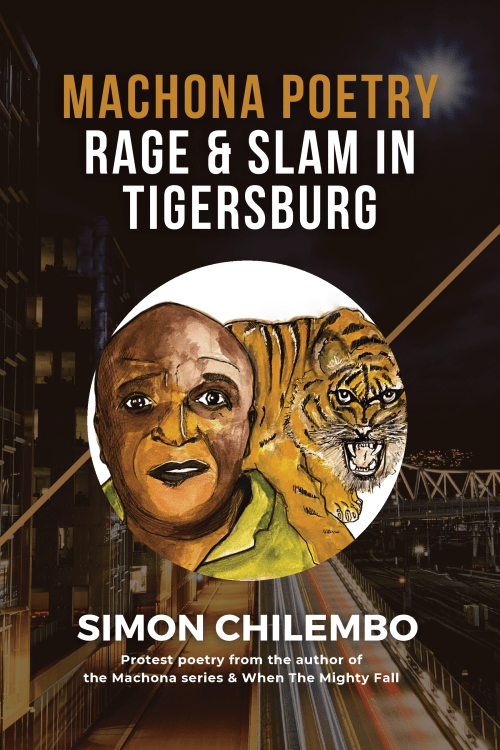
Not that the middle-class tag was of any particular significance for my ego. I knew that crap from before. I was raised to take it for granted that, for the resourceful in the right space and time, it’s a natural living state to be and to aspire for and more.
But it opened up many doors into rare opportunities for a Black African immigrant in the country. All I wanted to do was to work, make money, and live happily ever after.
Noticing the exponential growth of my numbers, my bankers invited me to a Private Banking meeting at some point. My finance investment profile was restructured. During the high conjecture years preceding the 2008 Global Finance Crisis, the returns on my investments were phenomenal.
- Sharing Bounty
That’s how I was able to extend the benefits of my bounty to my immediate and extended families, as well as close friends and others in South Africa. That, particularly including the purchase of family Real Estate, consolidated my position of powerful Vice Head of the Family next to my mother after her husband’s death.
To the extent that the wealth held, I did all I did for the family with nothing but love; neither demanding nor expecting anything in return. I lived in the richest country in the world, then. I’d be fine in both good and bad times, anyway. Norway does take of its own.
My intention was to help my siblings and kindred have a better life. I wanted to instil in them a sense of hope and faith that everything would be alright in the long run. We only had to work together towards the same goal, with all performing their respective duties to their best abilities. In my head, I would be returning home from the Diaspora soon.
I didn’t want to find my people still living in poverty. Poverty is poisonous; it’s infectious. I not only abhor poverty with passion; poverty frightens me. The continuing endemic abject poverty of the majority of the majority South African Black people unsettles me to the core of my being.
Towards the end of the 2000s decade, a series of health issues, big business dreams sabotage encounters at several different levels, and the already mentioned Global Finance Crisis above would spell yet another round of my personal economic crash. Not before I’d celebrate my fiftieth birth in grand style in 2010, however.
- Premier Living
If the 1990s were my golden years, the 2000s were of premier living standard of roses, Champagne, Italian red wines, and multicultural epicurean extravaganzas at home and abroad. Next level Rock & Roll lifestyle. Without guns and drugs, I must hasten to emphasize.
A truly amazing phase of my life I could never replicate. Which is just as well. I live by a new set of values these days, enjoying a self-imposed semi-secluded life of an author.
The work towards fulfilling the dream of writing a thousand books before I’m a hundred years old is in full swing. The authorship urge had distantly been buzzing in my bones since my early teens. Thanks to events of the 2010s decade, at some point in the middle of the decade, feeling low in a dark space considering the self-reinvention options I had for rising again, the buzz in my bones became a surprise rapture.
A volcano erupted in my head. I saw the light. Sometimes when I’m in deep writing trances, I see texts on lava flowing down a volcano. Then I’m on fire. I can sit and write non-stop for hours on end.
THE 2010-2020 DECADE
The magic of 2010 FIFA World Cup in South Africa ushered me into the TV studios of the Norwegian State Television and the commercial TV2 station in Oslo. I had been invited to speak about the all-round significance of the event in South Africa and Africa as a whole. It was great fun. I was in my element.
Having already made Norwegian TV appearances on several variable occasions, including a Reality TV feature on TV3, as well as being a known 15 minutes of fame freak in my circles in Oslo, I was the natural choice to represent South Africa on that momentous occasion. It was an honour.
Some people said I was a natural on TV, wondering how I managed to be so cool in front of the cameras in the studios. What they didn’t know was that by the time I came to Norway in 1988, I had already had much experience with TV and radio appearances from Zambia. YouTube content creation is, then, an extension of my previous mass media appearances experience.
The funfair of the football World Cup 2010 and the celebration of my fiftieth birthday on the weekend immediately preceding the former’s commencement, reality soon came home. The drastically continually falling revenue in my business was unabated, as was the rising hip of unsettled bills: big monies reflective of high earning profile I had had in the previous decade.
In South Africa, building projects and other familial expenses, including school fees for a few children were also eating into my past savings. I sold things to no avail. I was getting very exhausted. The eternal optimist warrior in me kept the faith that I’d salvage the situation somehow.
But the post-Global Finance Crisis 2008 market dynamics and customer behaviour had changed just too drastically. All the business strategic adaptive changes I made failed. The financial damage I had incurred was too brutal.
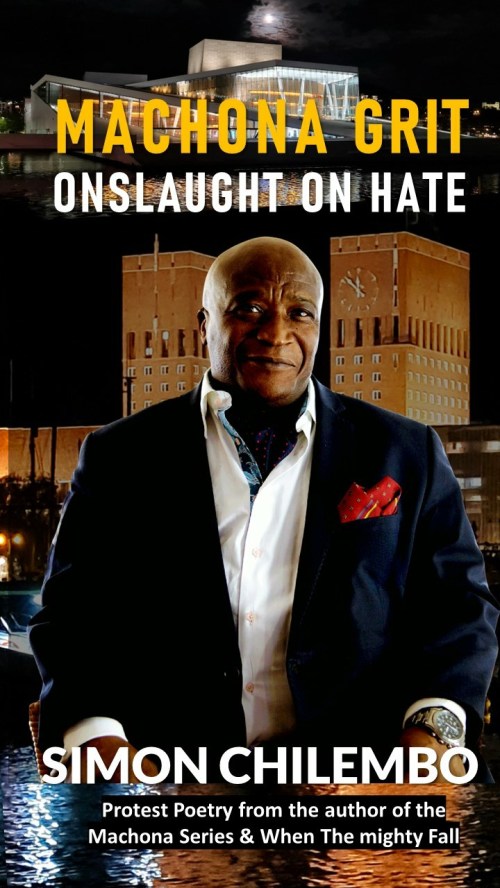
On June 30, 2013, I closed shop; went to South Africa. The original plan was that I’d take a six-months’ leave of absence to rest and regroup. If business, or even job opportunities arose in South Africa, I’d surely give them a short as soon I’d have recovered.
None of that happened. Instead, a back-and-forth hassle with my creditors in Norway took a heavy toll on me.
New negative vibes also emerging in the family owing to my diminished economic might made matters worse. Depression hit me hard. With the judicial insolvency declaration in June 2015, the last nail on the coffin was hammered in. My world came to a standstill.
An oppressive dark cloud hoovered over my head. Until one August morning in 2015 when the volcano mentioned above erupted in my head. I saw the light. Ran into my house. Opened my computer. Pounded the keyboard like computers were going out of fashion.
Fourteen days later I had written and finished the manuscript of my first book, WHEN THE MIGHTY FALL – Rise Again Mindgames. A fantasy memoir about my life in, and my relationship with Norway from 1988 to 2015. I’ve written and published nine more books since then. The book saved and has changed my life in a way defying even my wildest fantasies.
It has made me fierce enemies I don’t know lurking in the dark tarnished my name without substance but by finding themselves confronting their own demons created by their prerogative to choose to misinterpret my narrative and intentions with my book. My fans outnumber the enemies by far. And the fans aren’t the stupidest people I know.
Whereas book writing rekindled my joy of life at the time of the first book to the commencement of the sixth one in 2018, material conditions were still hard. With a little help from a few really good friend-brothers and friend-sisters, I survived on the barest minimum supply of essentials until October 2018, when I got a chance to return to Norway. Grieved. Broke. Homeless. Businessless. Jobless.
The sixth book, MACHONA MOTHER – Shebeen Queen, is inspired by mother’s life. She died two weeks before I was scheduled to travel back to Norway. I had received her blessings. I chose to not share with her the contents of the book. She was not too curious about the book either; just pleased with and proud of the honour. But she liked and approved the book cover. It charmed her big time to hear that the cover was designed by one of my original Karate Kids Superstars in Norway, Toril.
Getting back to Norway in the last week of October 2018, it soon became clear that re-establishing my Health & Wellness business and other lines was non-viable. Covid-19 happened in 2020 and totally crushed everything.
THE 2020s: The Diaspora Retirement Decade
Ever willing to try out new opportunities when they present themselves and they make sense to me; I accepted an offer to start work in the security industry. And that’s probably the harshest lesson of the Diaspora: when you lose control of the narrative of your academic and/ or professional ambitions, you do what you gotta do to survive until further notice.
Passing an obligatory certification course would eventually enable me to get a security officer job stationing me at Oslo’s new National Museum of Art, Architecture, and Design/ Nasjonalmuseet (Nam), starting June 2021.
Seen with the eyes of a formerly high-flying entrepreneur and vastly experienced grown-up man of the world, and in view of its demands, this was the lowest-paying job I had ever done in Norway. But what the Nam experience gave me by way of creative inspiration for my poetry writing cannot be measured in monetary value. My 10th book, MACHONA PEN- My Weapon. Defiant Poetry is the outcome of the Nam work experience. I am eternally grateful for the opportunity.
With the impending Diaspora retirement in focus, I had to be very hard on myself regarding financial discipline given the low salary I was getting for working at Nam. It was critically important for me to do everything possible to clear my outstanding debts from the bankruptcy fallout of 2015.
I also sought to make small investments in some Mutual Funds I still had access to from my 1990s golden years. Four years late, I had paid off the biggest debts due to the State. I began to breathe easy. Too easy, perhaps. Fell into the comfort zone. Dropped my defenses. Lost focus. Pensioner economic worries? What’s that? Dude, I got this. Morena is back!
Hindsight has just reminded me that Diasporant-focused predators, call them scammers too, are ever so observant of the returnee Diasporant already back at home, or one that has definitely committed to returning home at an already locked time.
The predators know exactly when and how to attack with irresistible honey-sweet coated, platinum-anchored, diamond-studded, investment propositions in any one of high value land-based or marine enterprises, such as:
- Real Estate
- Agribusiness
- Mining
- Tourism/ Hospitality
- Fishing
- International Trade at different levels of consumer or industrial products
I’ve recently fallen into and got caught in the trap again. I’ll retire and die in the Diaspora. I’m happy for those African Diasporants who get to successfully return home upon retirement. Very happy. I wish good luck to those that are yet to retire and return home. As for me, unless some miracle happens, I cannot return home to poverty and misery that I know deep in my heart that I made a conscious and sincere effort to alleviate when I could.
As a Diasporant that’s not been so fortunate with these return-back-home-to-Africa things, the worst thing I just cannot stand about predators back home is the lies. That a man can break bread with me, even in the name of God, tell me a scamming lie looking me straight in the eye, take my money with humility and gratitude of Mother Theresa looking me straight in the eye, promise to deliver as committed looking me straight in the eye, and then disappear as if into thin air never to deliver as committed, is just too much for me. You can have your Africa!
©Simon Chilembo 04.02.2026
SIMON CHILEMBO
February 15, 2026

𝗧𝗛𝗘 𝗥𝗨𝗧𝗛𝗟𝗘𝗦𝗦 𝗥𝗨𝗟𝗘, 𝗣𝗮𝗿𝘁 𝟮
𝗠𝗔𝗚𝗔 𝗔𝗠𝗘𝗥𝗜𝗖𝗔 𝗦𝗔𝗠𝗘 𝗔𝗦 𝗗𝗔𝗥𝗞 𝗔𝗙𝗥𝗜𝗖𝗔: 𝗧𝗵𝗲 𝗕𝗹𝗮𝗰𝗸 𝗦𝗼𝘂𝘁𝗵 𝗔𝗳𝗿𝗶𝗰𝗮 𝗖𝗮𝘀𝗲
I’m ever so fascinated by the USA. At first, it was the illusion of the Dream of America. This Dream of America still lures poor, mostly involuntary wretched souls of the earth hoping to taste heaven on earth before they die. Some get to believe that they have secured a better future for their offspring, just from the first step on the soil of the land of dreamers. Going down on their knees, they kiss the Dream of America’s Mother Earth in deep felt gratitude.
The poor souls will have survived atrocities-extreme and/ or natural calamities in their original homelands in various parts of the world – elimination hole countries, as one elimination munching American mouth has called them. The stench of America emanating from the mouth nauseating the world. Like they’d be anywhere else in the world for they are human too, vile fortune hunters who’d eat their own mothers are also in the Dream of America rat race, abusing the poor hopefuls in all sorts of abhorrent ways.
The vile hustlers get to the land of Lady Liberty. They ride on the American Nightmare blood train, amassing the Green Back by any means. With the Dollar might, they burn and turn the land and the world red with their relentless destructive ways of relating to and managing society, to say the least of Mother Earth. Just hear them crap-talk Global Warming as a concept and reality. Sometimes I wonder if these cognitively inadequate people have their filthy elimination holes as the abodes for their brains. Scum of humanity.
My continuing fascination with the USA is about the elimination holes brains personalities fronting the American Nightmare discourse and social engineering efforts. I throw their supporters in the same boat of inherent or wilful ignorance and bigotry: dim-witted charlatans.
Between 1960 and 1975, I was born and raised in a systemically racist, self-encaged, media-repressive, stifled African people’s education, international relations pariah then-Apartheid South Africa. Elimination holes brains personalities fronting the American Nightmare want to establish a 21st Century Apartheid Dream of America state. A messy, costly, bloody lost cause.

From my childhood days in the 1960s to the mid-teens in the 1970s, the American Dream of heaven on earth was fed into my eyes through beautiful pictures of American life in carefully state-selected and censored magazines and movies. There were, of course, glimpses of pictures of violence on Black people here and there; also, those of gruesome assassinations of politicians and entertainers. Pictures of homeless people languishing on city street pavements, if not under bridges appeared here and there too.
But, the pictures of the glamorous Dream of America were overwhelming; from Miss World-type girls to style, automobiles, and New York City night neon lights, amongst others. The visual impact was accentuated by the sound of music. Some of them aware or not, Mega Stars across the musical genres sold the Dream of America more effectively than any other propaganda agents. In the South Africa of my childhood days, all the adult Jazz and Soul music lovers that I knew dreamt of going to America to see their favourite stars. Many believed that, given the apparent success of big names like Duke Ellington, John Coltrane, Louis Armstrong, Sam Cooke, James Brown, Ella Fitzgerald, and Aretha Franklin, to name but a few, America sure was Black people’s The Promised Land. Little did my music-loving South African aunts and uncles know about the history of Black African people’s slavery in the making of the American Dream economic might.
On the radio, jingles accompanying adverts of consumer items from cornflakes to tobacco always left me giddy in the head in their sweetness of melodies and painting of America as the epitome of high living. I couldn’t wait to get to America to enjoy all these amazing products from the source. Man, imagine me drinking Coca-Cola sitting in the Waldorf Astoria New York in the company of an American Miss World! That used to be a truly compelling dream.
And there was sport. Muhammad Ali’s boxing prowess notwithstanding, his political outspokenness in the Civil Rights sphere painted the path for my journey to The Promised Land someday. Post-the-Apollo 11 moon landing of 1969, I would for many years in wonder gaze long at the full moon. I never had ambitions of flying to the moon, but I used to think that if America could send men to the moon and back, then, in America, I could be all the great things I dreamt of being when I grew up.
In reality, though, I only wanted to be a medical doctor so that I could operate on people’s hearts like Dr Chris Barnard had done in Grooteschuur Hospital, Cape Town, on the 3rd December 1967. And I wanted to be rich and famous like the flashy heart surgeon. I was seven-and-half years old, then, and was already beginning to read newspaper headlines. Living in a highly politically charged environment whilst going to school in Lesotho at that time, I had already become an aspiring avid radio news listener. Therefore, I understood early that since I was not White, I could but with difficulty, perhaps, be a heart doctor in then-Apartheid South Africa. Instead, America would make me a great doctor, I earnestly believed.
From South Africa, via Zambia, I would end up in Norway 21 years later. I became a jack of many trades, but not a doctor. It is what it is. No worries. I have become an author; I write books. I am happy. I look at the USA with mixed emotions: feeling lied to, but not crushed. I am disappointed and appalled by the inhumane, parochial, and degenerative side of America that nearly half of the country’s population not only exhibits with impunity but strives to expand and perpetuate. All spearheaded by the insular, living-in-the-past racist White Supremacist MAGA America movement bent on establishing an Apartheid Dream of America state in the 21st Century.

As I write and think, and think and write, I find that the sociology of the American Nightmare half of America is not in any way divergent from that which I left behind in my Black South African township, Thabong, Welkom. This is transferable to urban South Africa across the board from Apartheid days to the present.
South Africa is a perfect USA microcosm match in more ways than one. In that sense, it’s just as well that I’ve ended up in Norway; a country by far better run than both South Africa and the USA. If the then-Apartheid South Africa came close to crushing my soul, the USA would have killed me already, I suspect. By the numbers, and by the guns, vicious MAGA America is more lethal than the pre-1994 South African township at any time, like-minded as they may be.
The regressive nature of American MAGA power relations dynamics is not different from that prevalent in Black South African townships. I’ll shortly demonstrate this in an exposé of the Township Nightmare power relations personality traits. In the same vein, I’ll implicitly demonstrate that human personality traits are driven by inherent internal biological structures and processes that supersede race and ethnicity theories.
For example, a human heart as an organ is a human heart whether it’s in the body of a male or female White, Black, or whatever colour of the spectrum person. Similarly, adrenaline is adrenaline; the nervous system is the nervous system. A certain neuro-hormonal imbalance will cause universally predictable behavioural outcomes cutting across race and ethnicity. That is how MAGA America can be understood in the context of the dark side of South African Black township culture. After all, South Africans and Americans are all human. Any human disease will similarly kill them if no necessary and recommended conventional medical preventive measures or curative treatments are given and adhered to. Needless to say, the recent COVID-19 pandemic caused havoc in much the same it did in South Africa as in the USA, including the rest of the world, of course.
The underlying guiding idea in my exposé is the consideration of psychopathy as an observable antisocial behavioural tendency amongst many MAGA America and South African Township Nightmare types.
Reacting to the strange, destructive behavioural tendencies exhibited by prominent American MAGA proponents, I, on October 13th, 2020, posted a comment on my Facebook feed. I have edited and expanded on the original text for this talk. And it goes as follows:
The hassle about psychopaths is that they cannot listen to reason; it’s beyond their cognitive capacities. For a psychopath, it’s their worldview or nothing. Conventional Ethics (right v/s wrong) and Morals (good v/s bad) are irrelevant concepts to psychopaths.
Depending on where in the world you live, are you on the ‘nothing’ side of a psychopath, they are likely to eliminate you in various ways. You’ll hear threatening expressions like, “We are coming for you!”. So, “… if you fuck around with us, if you do something bad to us, we are going to do things to you that have never been done before,” Guess Who.
As history documents over and over again, a dead opponent to a psychopath is the preference. Nevertheless, history is full of examples of how psychopaths in leadership roles across the board tend to have tragic demises. Google ‘world despots’, please! It’s free.
Despite its imperfections, where democracy works comparatively kind of okay, people shall seek to talk issues over through various established governance platforms, no matter how challenging or futile the exercise may be. In the end, votes are taken. Assuming a perfect world, outcomes are acknowledged. And the winner takes it all. Life goes on.
Democracy allows for election outcomes to be challenged when irregularities have been observed at any point during the process. Or even when the losing side just wants to be a nuisance. Democracy in practice can stand a lot of crap. Psychopaths thrive on the latter fact.
As current history unfolding shows somewhere in the world, when psychopaths win, humanity gets ever closer to thresholds of self-annihilation. Therefore, be ever so careful about who you elect to power in your land. Don’t allow yourself to be charmed by the cheap-feelgood-chronic-diarrhoea-like buffoonery antics of psychopaths.
If you don’t know how to identify a psychopath, call my number. For I’m not a medical doctor, I’ll guide you through an illuminating philosophical discourse that works all the time. It’s all about, amongst others, a solid academic and professional training background. Go to school. Acquire knowledge for human progress. Take your children to school. Read much and well. Pass exams clean; don’t cheat. Don’t burn books.
Ultimately, the reality is, though, there is a psychopath in all of us. Summarizing my philosophical discourse on what attributes to look out for in deciding, after analyzing a person’s socio-behavioural incongruencies, whether they exhibit psychopathic tendencies or not, a close brother-confidant of mine once said, “So, a psychopath need not be a raving mad personality in our midst?”
Yours truly, “Yepp, that’s right!”
Brother-confidant, “It means, then, that a psychopath may be the everyday smart-looking person sitting next to, or in front of you right now at any place?”
Yours truly, “Sure thing! But it’s all about relativism, see? Know thyself!

Whether or not I have a personal or some other human aspects relationship with the concerned, my labelling of a person as a psychopath is my pre-emptive self-preservation measure. This also helps me to put into perspective events in my immediate and distant worlds given who the dominant actors are in the different parts of the world, them sharing or not sharing common interests.
In my private survival instincts world, I don’t need to have a medical doctor to declare for me whether I am dealing with or am observing a psychopath in my immediate spaces or far out in the wide, wide world. Descriptively, I know a psychopath when I see one. I then behave accordingly to protect myself and my own in the face of actual or potential psychopathic onslaughts upon us. It’s a doctor’s job to diagnose and treat the patient accordingly. They can take all the time they need.
And, talking about personal survival instincts, I had on an earlier Facebook post declared that “Uncivility is an effective manner of attaining some degree of civilized talks with psychopaths. Communication leads to mutually desired outcomes to the extent that involved parties apply the same language and familiar terms of references.
“Failure to break through psychopaths’ noise and deficient knowledge barriers should lead to withdrawal from talks, if feasible.
“Otherwise, the fools must be isolated, if not excluded from civilized social interactions. In the worst-case scenario, it may be necessary to eliminate them. Diplomacy has to have limits even in the free world.
“Democracy is designed to neutralize our passions in common human relations interaction spaces and circumstances. Wars and societal collapse are direct outcomes of lunatics being allowed too generous opportunities to play out their antics for far too long.”
Any reasonably intelligent person who’s gone to school and can read, think, see knowledge linkages, and can thus synthesize functional, universally applicable explanatory models towards understanding how life works on earth, can read many a professional text and make sense of it. If they don’t understand, they ask as a matter of course; they actively seek more information from relevantly knowledgeable human sources or books and other information storage and distribution facilities to debunk or confirm initial conclusions made. This is called research.
Through my various learning pursuits in my time, my private operational definition of what constitutes psychopathy or not is based on readings of publicly available subject literature that is written and wilfully published by qualified medical personnel of various specializations and levels of academic and professional standing across the globe. This includes literature publicized by a plethora of international human behavioural sciences professionals. Google this shit!
Don’t let yourself be intimidated by the arrogance of power from doctors, psychologists, and others whose professional literary works we all, with much admiration, flock to in our efforts to study and better understand the overall complexities of human nature. If they don’t want us free spirits to speak about human wellbeing issues, then, they must withdraw their publications. They must cease making their expertise publicly available reference materials in libraries and social media.
Simon Chilembo
Oslo
12.10.2020
I wrote the exposé essay of the South African Black Township Nightmare power relations personality traits on May 29th, 2021. Posted in my blog on the same date, the exposé bears the title:
THE RUTHLESS RULE
Kassie Jungle Law: Only the Strong Survive
In my never-ending attempt at seeking to make sense of events in the world today, I, as a reflex, regularly look back at the first fourteen-and-half years of my life in South Africa, 1960 June – 1975 January. Growing up in the then-racist apartheid state has profoundly impacted my life. Day-to-day living was ever so dramatically charged. Such that, on the one hand, one could but choose to numb oneself to the volatility of emotions, if not traumas arising, and live on disenchanted and detached from the gruesome, disenfranchised reality.
On the other hand, one could look at, hop onto the intricate traumatic feelings and thoughts bandwagon, learn survival ropes, and hope for the best; longevity being a remote idea. Wishful thinking. Although the OPEC oil crunch of the early 1970s had already begun to make its mark globally, this period could easily be seen as the golden years of the apartheid regime’s economic might. The oppressed Black population segment was subjected to extremes of state security agencies’ violence.
Oppression is some costly business. It curtails human resources’ productive potential growth and manifestation. Atrocious. Oppression will last to the extent that the oppressors’ financial base remains sufficiently robust to sustain the oiling of the oppressive state machinery at all levels. Money talks. Money rules.
As it is with South Africa, a country’s endowment with a variety of natural resources that the world is willing to pay generously for is of crucial importance. Oppressors maximize their hold by capturing the wealth of their nations, therefore. They personalize their wealth, becoming super-rich individually and along with their family members, as well as their power clique hounds: oligarchs’ fangs drooling kleptocracy and nepotism poison in everything they touch. At the same time, their nations get caught in quagmires of long-term poverty and international indebtedness.

The Soweto Students’ Uprising of June 16, 1976, would not only change the liberation struggle course. It changed the political landscape of South Africa as well; further weakening the oppressive state’s capital base. Apartheid had to ultimately collapse. Not because somebody woke up one morning and suddenly discovered that the system was diabolic. The fact is that it simply was no longer economically viable. And prospects of any meaningful bounce back were bleak. Added pressure from the international trade sanctions had brought the country down to its knees.
The effective brutality of the apartheid regime reproduced itself across the entire Black populace by default – in the home; at absolutely all levels of social interaction. That is visible to such an extent that the nature of fundamental survival power relations dynamics cultivated then amongst Black people themselves have endured. It is manifest at even more sophisticated, grander scale, and more destructive levels in keeping with societal management complexities and technological advancements of the times in the 21st Century.
During the apartheid domination years, many a Black South African exile carried along with them these survival power relations dynamics into the Diaspora. Not that it helped the concerned exiles much from the point of view of applying the same survival strategies as generally functional in the township, or kassie culture in Black South Africa. Kassie is a corruption of the Afrikaans language word, lokasie; which means location. Observing, establishing, and maintaining links with fellow South African exiles has kept my fascination with the Black people’s fundamental survival power relations dynamics alive during all these years.
Post-1994 South Africa has also been accessible to me. It’s the land of my birth, the land of my family’s maternal-side ancestry, after all. Thirty-eight-and-half years since living abroad, I returned to stay in the country for five years, 2013-18. As such, I have been in touch with the trends in the land all along. Much had changed drastically at about all levels. However, characteristic personal survival attitudinal attributes have remained constant. I shall dwell on these later on in this essay as I unravel prerequisites for the workings of the ruthlessness of kassie jungle law rule.
Kassie is a funky catchphrase these days. But originally, it essentially implied a slum; not much unlike Brazilian favelas, for example. In practice, the meaning hasn’t changed in any big way. From the colonial era, peaking during the apartheid years, and stretching into contemporary times, tens of thousands-upon-thousands-to-millions of Black South Africans were dumped here. It initially was predominantly male labourers working in the mines and the agro-industrial complex.
There would be a few state functionaries and even fewer professionals in various vocational categories here and there. Much as there would be numerous fortune hunters engaged in all kinds of illicit endeavours; from petty crimes to large-scale organized crime activities involving alcohol, drugs, precious stones and metals smuggling, human trafficking, prostitution, and more. Family units would eventually emerge as a natural human development process, of course. Children would be born, raised, become adults, lead miserable lives, and subsequently die; the indignity of poverty accompanying them to the grave. Causes of death varying, from murder to illness, if not natural causes.
Prevalent land conditions are far from prime in the townships. This makes the construction of decent domiciles a daunting challenge for impoverished people. Sustainable subsistence food production from the land is near impossible. Minimal to total lack of functional social amenities comes with the package here. If there was anything prime about the original townships, it was the potential to induce and generationally perpetuate poverty with all its attendant maladies: disease, moral decay, ignorance. All that to facilitate self-annihilation amongst Black people: kill them; let them kill themselves; create space for more European trash to come to work, settle, and add to the growth of the white population in the country.
Conditions are even worse these days, taking into consideration, since 1994, the influx of millions of refugees and fortune hunters from war-torn, dysfunctional African states to the north. Others come from other parts of the world, especially Asia. Competition for limited resources and liveable spaces in the townships has spiked exponentially, apparently in favour of the new immigrants.
Many of the new immigrants come into South Africa with more by far international hustling experience: higher academic qualifications and vocational experience in both the social and natural sciences, military or guerilla warfare experience, and all that it entails – daring nature, PTSD, and other related outcomes. They also have investment capital for entrepreneurial ventures in various fields, often starting with small-scale grocery stores called spaza shops.
The latter attributes above are often accompanied by extreme manifestations of arrogance of power towards the locals, who are considered to be intellectually lacking, lazy, and fearful of White people, who still own the land, anyway. It’s hardly surprising, therefore, that strong anti-immigrant sentiments have mushroomed across the country, culminating in several outbursts of brutal xenophobia-inspired violence in recent years.Afro-xenophobia expression is ascribed to South African Black-on-African Black violence. In keeping with characteristic basal kassie culture, violence is the first instinctual option to eradicating conflict. Tragedy is ever the outcome that never brings forth solutions for a peaceful co-existence for all in the country.
The reality of the matter is that, much like the Ununited States of America, South Africa owes much of its economic might to the historical inflow of migrants from all corners of the world. As I’ve already implied above, these people bring into the country a wide diversity of creative/ intellectual/ academic, productive, and entrepreneurial skills that contribute to the robustness of the country’s vibrant economic and social advancement in the long run.
There’ll always be a few bad apples here and there. But assuming a functional justice system prevailing in the land, relevant policing and legal institutions are there to deal with lawbreakers. South Africa is truly a multi-cultural melting pot. Bishop Desmond Tutu’s broadly embraced Rainbow Nation nickname for the country supersedes discrimination neither based on race nor origin of the people that call South Africa their home, either by birth or immigration.
From an epistemological perspective, it is clear that the concept of township/ location/ kassie in South Africa was never meant to create ideal, conducive conditions for Black people to thrive and propagate themselves; neither to attain ever higher standards of living in time, in pace with national economic growth prospects.
The rise of apartheid economic might was at the expense of the lives of Black people, both at the hands of the apartheid state security machinery, and intra-Black violence across mainly urban South Africa. Many other Black lives were also lost through fatal accidents and occupational diseases in the agro-industrial-mining complex. Functionally concerning apartheid intentions, townships were supposed to provide temporary shelter for lives destined to be “… solitary, poore, nasty, brutish, and short.”
But then again, survival instincts abode in all humanity. People can remain wretched only for so long. If they are not wiped off from the face of the earth, they shall engage in all sorts of means to prolong their existence. Perhaps fate can change for someone, someday: break the bonds of subjugation, rise and liberate the people, and, ideally, live happily ever after in boundless abundance.
In the meantime, at the individual level in the South African kassie context, survival was and still is about ruthless “semphete ke o fete” (Sesotho: don’t overtake me, I overtake you – the rat race) tendencies. Here, the strong survive. The ruthless rule; applying cruelty as their claim to prosperity and longevity.
Brought forth, elaborated in my Black South African context, and set in alphabetical order below are personal dispositions I’ve identified as being cardinal for relative individual survival and ruling potential in the South African kassie culture of violence. That as a tool for understanding the nature of human relations power dynamics, and consequences thereof, at all levels of contemporary society, both locally and globally (In the latter, i.e., globally, the USA fits in like a glove). The respective attributes may be understood regarding the identification of the individual as to who they are, and what their social standing is concerning behavioural phenomena observed of them. In essence, this is the making of despots ekassie, a microcosm of the Dream of America nightmare:
- Bodomo (street parlance – Setsotsi) is derived from the Afrikaans word dom. Alternatively bokwala (Sesotho), it means stupidity; downright idiocy. Amidst events, act like you don’t know what’s going on. Go about your daily business indifferent as to whether or not you cause others harm in your endeavours; you lack empathy. You are not interested in reason; you are obstinate like hell. You are a denialist. You are a revisionist.
- Bokhopo (Sesotho) is cruelty. When it is deep-seated, merciless, non-benevolent, and non-repentant it is called khohlahalo in the same language. Rule by absolute iron-fisted fearsomeness. Without exception, anybody transgressing you in any way shall suffer the full ruthlessness of your wrath in line with the nature of the offence and the choice of punishment you dim fit. The line between life and death is often very thin here. This tends to elicit baffling loyalty from your cohorts. Much to the bewilderment of your detractors.
- Ho tella (Sesotho)/ ukudelela (isiZulu) is an uninhibited show of lack of respect. Total disdain. You are brazen. You bulldoze your way through towards the attainment of your power or material acquisitions, and other egocentric ambitions. In your interpersonal and other relations in the community, it’s your rules or no rules at all.
- Lenyatso (Sesotho) is the root of ho tella and leqhoko, immediately above and below respectively. It means to undermine, to belittle other people. Tools applied include patronization, ridicule, insults, unjust criticism, passive aggression, isolation or exclusion, subjugation; all propelled by jealousy and/ or feelings of threat irrationally perceived or real because the victim may, indeed, be the better person in many respects. The idea is to crush the victim, cut them to size, and put them in their place of insignificance. This is pure mental and emotional abuse that often easily degenerates to physical abuse.
- Leqhoko (Sesotho) is provocativeness. Be agitative even out of nothingness just so your presence is noticed, is not forgotten. Be relentlessly disruptive. Cause havoc; be an ass. Instigate and sustain fear. Use all means at your disposal: bully, defame, riot, vandalize, pillage, depose, fight, maim, kill. Ultimately, emerge as the leader of the pack; level-headed and solution-oriented, if only to cow and manipulate the terrorized towards aiding to secure attained dominant safe position.
- Mamello (Sesotho)/ Qinisela (isiXhosa/ isiZulu) refers to tolerance capacity; endurance in both hard and good times, depending. Good times are generally no big deal. But in hard times, practice self-preservation by keeping to yourself and your own. Hang in there. Stay away from trouble. Be invisible. Make no noise. Cultivate hope. Keep the faith because everything is going to be alright someday. Persevere.
For the mighty, though, mamello/ ukuqinisela means staying the course no matter what: keep on pushing; stand tall, don’t fall. Never, never, never give up! Never change the course of action once commitment to act in a certain manner is made. Here, mamello/ ukuqinisela becomes an interplay of bodomo, bokhopo, ho tella, leqhoko, and manganga in variable doses and combinations according to the circumstances prevailing at any one time and space. - Manganga (Sesotho)/ Inkani (isiZulu) is absolute stubbornness. Take a stand, be resolute to the very end, whatever the cost. Whether or not original intended goals are attained is not the essence. You are defiant to the extreme. Stay rock-steady as a matter of principle because you cannot be wrong, or you cannot be denied your demands. You are the truth. You are the light. If you are not the son of God, then you ARE God! Your opponents shall declare you as deranged, delusional; but that doesn’t bother you at all. You are mmampodi (Sesotho)/ champion; you rule. You live above the law. You own your followers through and through. Each one of them understands that you are their life saviour.
A street parlance (Setsotsi) adage goes like this, “Maziwaziwe, maz’bidlikaz’bidlike! (isiZulu)/ If they (e.g. towers) fall, they fall; if they collapse, they collapse!”
It is what it is.
Tyrants, hard-core conspiracy theorists, and charlatans fall under this category. So, in the USA, Coronavirus is just the common flu; “… it’ll disappear just like a miracle!”
Not forgetting The Big Lie that Joe Biden and the Democrats stole the presidential elections of November, 2020. And then supporters of The Big Lie insurrect The Capitol peacefully like tourists, leaving destruction and carnage behind. Very special people that The Big Lie spinner loves.
You can also do an egotistical, parochial, typically false premises pushed brexshit and pull your country out of a body of international solidarity in the Western world.
Neither does State Capture exist in South Africa. You know none in your family that has contracted AIDS in South Africa. Therefore, it doesn’t exist. Step aside rule in the ANC? What’s that? If you are indeed going to fall, you don’t go alone. You are vindictive. - Sebete is a Sesotho word for liver.The liver is considered to be an organ of courage in my part of Black South African culture. A courageous person is said to “have a liver”/ O sebete. Courage is a common thread linking all survival, or power attributes in kassie.
Ho sa (Sesotho, noun), lumps together the attributes above into one virulent trait: petulance as gross as only an extremely spoiled brat can display. The descriptive form of ho sa is “O sele!”, meaning “He/ she is petulant!”
People of all ages manifesting ho sa as a characteristic social interaction trait are some of the most dangerous a community can have. Makings of despots emerge here.
Underpinning the relative kassie individual survival and ruling potential laid out above is the question: O tshepile mang (Sesotho)? Which directly translates as, “Who is it you trust?”
Who’s covering your back?
Simple as the question might seem, it is not necessarily a daily conversation question posed in my original part of Black South Africa. The question is profound to the extent that it is asked a person directly, or others are asked about a particular individual when the latter’s negative behaviour defies not only mainstream social protocols across the board, but sheer common sense as well. It is believed that there must be some extra-ordinary qualities, some mystic about these kinds of people. For example:
- What gives them the guts? What makes them tick?
- Whose progeny are they? What are their lineages?
- Do they have some guardian angels, perhaps? In that case, who are the latter? Where are they?
- What do they have that ordinary people do not have?
- Are they working for somebody even more powerful than themselves? Who are these people?
- Are they protected by God? Ancestral spirits? Wizards and witches?
- Or are they just raving mad, sick in their heads? Are they bewitched?
- Do they have magical powers themselves? If so, from where do the powers derive?
- Are they members of some organized crime gangs? Or some secret societies? The Illuminati?
- Is it just because they are too rich? But where does their wealth come from?
It’s only if and when sufficient knowledge about these treacherous people is gathered that concerned individuals or the community can effectively react to get rid of them in one way or another. It’s not unusual that the former fall from glory in the most dramatic and humiliating fashions; those who lived by the sword dying exactly as they lived. Such is kassie life. The ruthless rule but momentarily.
The strong are often the smart with senses of moral and ethical awareness. They tend to survive, break out of the mould of kassie misery and ignorance, and live longer. Some in this category will in time even travel wide and see the world, permanently breaking the spell of kassie anti-life attributes. Expressing themselves through diverse media and creative and performance forms, they may also become proponents of liberty, justice, and equality as fundamental Human Rights tenets all of humanity on earth is entitled to.
Meanwhile, South Africa has yet to cleanse itself of the kassie anti-life attributes spell, to the extent that it’s possible. However, given the current display of elite kassie mentality antics in various judicial and organizational platforms in the country, it is clear that much more work remains to be done at this rate. Well, cumulatively from the onset of contemporary European colonialism in the 17th Century up to the apartheid era in the 20th Century, the mechanizations that facilitated their imposition had at least four hundred years to dehumanize my people and screw up our psyche. The Rainbow Nation is only twenty-seven years old.
Khotso is a common Sesotho name for South African males. It means peace. The female version is Mma-Khotso both as a formal name and may denote that the woman is a mother of a boychild called Khotso. The name has significant connotations. In practice and conceptually, peace is a universal prerequisite for progressive human co-existence. That making for harnessing humanity’s creative potential towards a sustainable, infinitely fulfilling life for all. The South African national anthem, Nkosi Sikelel’ iAfrika! (Nkosi Sikelela) is essentially a cry for peace, captured in the Sesotho text:
Morena boloka sechaba sa heso/ Lord Almighty, save my nation
O fedisa dintwa le matshwenyeho/ Bring an end to strife and suffering
Were the ruthless and the smart kassie people of South Africa and beyond to realign their attitudes and heed the message of Nkosi Sikelela, the future would be bright for all. I want to be here in four hundred years to gloss in the glory of the heaven on earth that South Africa and the rest of the world will have become. I sit here in a space of relative peace. I breathe. I dream. I write. I make YouTube videos. Ever conscious of the lasting impact that my kassie life background has had on me, I have every reason to want to choose to be hopeful.
I can be hopeful about the future because I am happy all the time. Watch this video here to see how you can be happy all the time, and make somebody’s day every day into the future.
SIMON CHILEMBO
OSLO
NORWAY
May 29, 2021

𝐑𝐄𝐏𝐋𝐀𝐂𝐄𝐌𝐄𝐍𝐓 𝐓𝐇𝐄𝐎𝐑𝐘 𝐓𝐔𝐑𝐍𝐄𝐃 𝐀𝐑𝐎𝐔𝐍𝐃
𝐖𝐡𝐢𝐭𝐞 𝐒𝐮𝐩𝐫𝐞𝐦𝐚𝐜𝐲 𝐒𝐥𝐚𝐩𝐩𝐞𝐝 𝐢𝐧 𝐭𝐡𝐞 𝐅𝐚𝐜𝐞
Look to Ukraine War 2022
To see
Ukraine people tearing
Replacement Theory apart
In practice
The last of
European fascistic scum falling apart
Replacement assumes plunder
Predicates
Displacement carnage
Genocide
The last of
European American fascistic scum
Daily murder Black descendants
Ancestors of whom
Got displaced from Africa
Got placed into slavery in the Americas
Thirteen million of them
Two million of whom
Became meals for
Sharks of the Atlantic
African prosperity halted
With the gap of the loss of
Bodies and brains
Replaced forever by
Poverty and misery
Disease scaling the cake
Dysfunctional states
A legacy
The Democratic Republic of the Congo
But one case in point
Gory Leopold of Belgium
Exterminated ten million people
As if they were flies here
Numerous others left with
Amputated limbs
Setting standard for
Sierra Leone’s Charles Taylor
Decades later
Rwanda genocide
Shocked the world
Historically objectively viewed
Replacement Theory
In practice
Gave us colonialism
Gave me Apartheid
As welcome to earth present
In South Africa
Displaced
My mother’s people
From their land
Subjected us to
Poverty-driven subservience
Decimated us
Denied us the living
Opportunities for
Human potential maximization attainment
Replacing our human worth
With
Systemic racism oppression untold
Supremacist repressive methodologies
Blue prints perfected here
Apartheid a fascist catchphrase
These days
If you ask me
Five-hundred years later
I’m in Europe
Begging bowl
In my hands
“𝘏𝘢𝘯𝘨 𝘔𝘪𝘬𝘦 𝘗𝘦𝘯𝘤𝘦!” noose
Around my neck
Waiting for me
To take just one misstep
To lynch me
Survived
Have I already
Several a
Direct killer attempts
Me simply doing
What I gotta do
To be a decent human being
Everyday
Tailing after bounty
Stolen from my ancestors
Meanwhile
Hangmen-in-waiting
Scandalize my name
Already stabbed me in the back
That notwithstanding
Still standing
Stepping forth up-and-up
I can breathe
In America
Survivor posterity of my ancestral roots
Defy the highest odds
Living from day to day
Ever in search in the heavens
For reasons why
The colour of our skin
Is such an abomination
If there is a God
It is not for
People of colours
Children of the indigenous
Inhabitants of the
Americas land masses
Daily decry
Genocide of
Tens upon tens of millions of their ancestors
Fifty-six million perished
In the first one hundred years
At the hands of European scum settlers
Next time you see
The pre-match Haka
Do discern All Blacks
Souls of the Māori bemoaning
Replacement from their ancestral lands
In New Zealand
The Wallabies are no consolation
For the Aborigines
Replaced from their
Ancestral procreative spaces
To make room for replenishment of
Australian white supremacist
Grooming endeavours
Christchurch slaughters didn’t just happen
Beyond Pele’s legendary fecundity
On the soccer pitch
Millions more of
Survivor posterity of my ancestral roots
Languish
Displaced in
Brazilian favelas
And the hinterland
In Argentina
History just as dreadful for
Survivor posterity of my ancestral roots
Displace
Debase
Excruciate
Exclude
Incapacitate
Isolate
Replace
Discard
Eliminate
That’s the way of
Replacement Theory peddlers
In practice for real
Playing itself out
With impunity
With the right hand of God
Unbeknown to compassion
Jesus’ civility defiled
Today
Fleeing ravages of wars
Inseparable from
Ways of original global masters of
Replacement by murder: Imperialists
People of the world
Run to modern Europe unchanged
Steam to
United States of America the cursed un-united
Resurface in
The land down under
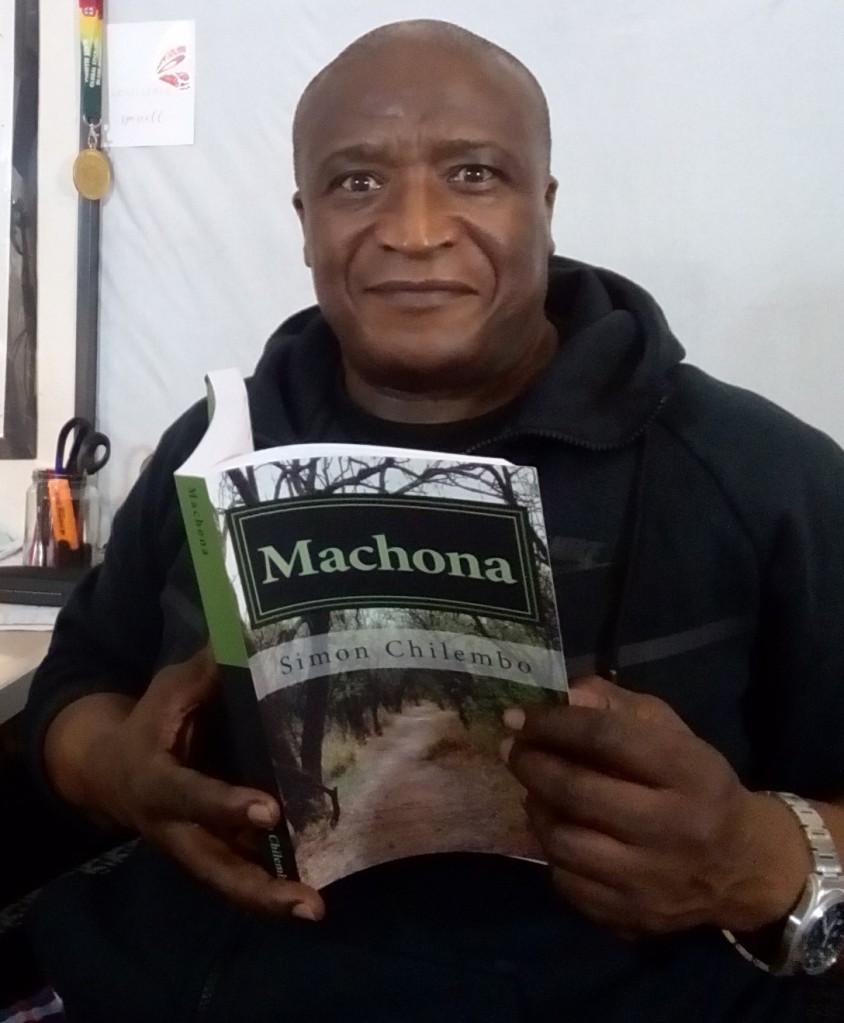
Traumatized
World emigrants
𝘓𝘦𝘴 𝘪𝘮𝘮𝘪𝘨𝘳é𝘴 𝘥𝘶 𝘮𝘰𝘯𝘥𝘦
𝘝𝘦𝘳𝘥𝘦𝘯𝘴 𝘶𝘵𝘷𝘢𝘯𝘥𝘳𝘦𝘳𝘦
𝘉𝘢𝘵𝘴𝘢𝘮𝘢𝘪 𝘣𝘢 𝘭𝘦𝘧𝘢𝘵𝘴𝘩𝘦
𝘈𝘮𝘢𝘨𝘰𝘥𝘶𝘬𝘢
𝘖𝘮𝘢𝘤𝘩𝘰𝘯𝘢
Want not to kill anybody
Want not to rape anybody
Want not to plunder anybody’s land
They only ask for
Shelter, food, and love
Hopefully
Packaged in something called
Human dignity
Ukraine War 2022 style
In our times
White Supremacists
Scared shitless of
Self-created myths
Of non-white people of the world
Wanting to eat
White people
Off the face of America
My foot
We are better than that by far
Oh, come on
If racist whites
Have failed to eliminate
People of colours
From black to magenta
For more than half a millennium
What makes
Hot-nutted
Small White American men
With guns in hands
As in
Buffalo shooting
Think that they can
Eradicate us now
We define resilience, dudes
Black don’t crack
Goes the rap
Let’s all live together in harmony
Now
Oh, by the way
In the 21st Century
And years pushing on ahead
Monoethnics are dying breeds
Multiculturalism is
The future of humanity
United in diversity today
Grow up
And
Get used to it, y’all bigots
Wash your damn bloody hands
Stay clean
For human solidarity
For love
Abound in the world
Despite the mess
You ever
So relentlessly strive
To sustain
How dum
Can a human being be
𝘑𝘦𝘦𝘦𝘻𝘶𝘻𝘻𝘻
END
©Simon Chilembo 22/05-2022
SIMON CHILEMBO
OSLO
NORWAY
TEL.: +4792525032
June 02, 2022
PS
The pandemic is still in our midst. Fears and factual untruths haven’t abated. In my 7th book, Covid-19 and I: Killing Conspiracy Theories, I highlight fallacies red lights and how to identify them. Order the book, read, and be inspired by my philosophical exposition on the matter. It might save yours and your loved ones’ lives.
DISCLAIMER: I neither offer nor suggest any cures or remedies. I promote fearless, independent thought and inclination towards pursuing science-based knowledge in times of, indeed, frightening, life-threatening phenomena in the world.

RECOMMENDATION: Do you want to start writing own blog or website? Try WordPress!

CRITICAL RACE THEORY SENSE
DISSECTING RACISM WITH THE LAW
Simplified in everyday but clean language, Critical Race Theory applies law principles to expose and to deconstruct the historical foundations upon which the illegalities of legalizing racism stand.
In broad terms, the law represents, to the extent that the prevalent, universally acknowledged status quo remains unchanged, a constellation of fundamental guiding principles and values held dear by a group of a diversity of members (henceforth a nation, for purposes of this essay) brought and held together by a need to sustainably safeguard their common existential imperatives, perceived and real.
The latter above as dictated by encountered natural conditions, or as conceptually defined by the group with respect to ways and means of organizing settlements, food production, provision of health and other essential social services, defence and security. Ideally, the law is supposed to serve as both a reference and applicatory tool for establishment and maintenance of order in society. Society being a human, conceptual and material institutions construct that constitutes the totality of a nation. A nation is by default a multifaceted functional collective entity working towards the attainments of certain predetermined goals for the survival of the nation as a unit, and the individual as the essential part of the entity.
The Constitution of a nation is, then, a sacred documentation of the core laws of the land upon which a nation exists. A constitution in its current form is a living document that, with consensus, may be subject to amendments in order to suit changing local and international material and conceptual paradigms with time. If and when a constitution is hijacked and changed by force, or at worst suspended altogether by disgruntled elements defiant of the laws of the land, that process is called a coup d’état. More often than not, coup d’états impose unpopular, draconian laws for the instigators to stay in power. This is how dictatorships emerge world-wide. Dictatorships cause hardships.
The legal system is the working arm of the law. It comprises numerous branches requiring specialized education and training in the various aspects of the law, from the interpretation of the laws and their ramifications across the entire spectrum of societal existence, to enforcement of, and compliance with specific laws in given contexts. The judiciary administers the court system, where disputes are litigated, and criminal cases are tried, with punitive measures of the law determined and imposed where and when applicable.
Judges and magistrates preside in the courts. They weigh merits and demerits of cases as argued by defence lawyers and prosecutors. Defence lawyers represent aggrieved parties, or those facing criminal charges upon having been accused of breaking certain aspects of the law. Prosecutors’ job is to prove beyond reasonable doubt the guilt of the criminally accused.
Laws are made, modified, or repealed by the legislative arm in parliament. In functional parliamentary states, Members of Parliament (MPs) are elected officials representing national citizens through their various political parties which have variable demands as to their political orientations. This is in response to, or may lead to protracted inequities in society, where one or several groups will seek to dominate others through a variety of overt and subtle abuses of power in the state machinery. The idea being to, as much and as long as it is possible, exclude the subdued from enjoying the freedoms and all-round benefits of the bounty of their lands.
Through hook or crook, setting ludicrous, outrageous prerequisites for qualification to participate in the elective processes determining composition of the legislature, the dominant forces can manipulate the legislative procedures to institute laws that will inhibit or even totally exclude the dominated from participating fully in the developmental processes of their nations.
To pass an idea into law is to legalize it. The piece of law passed shall have a name and number, with reference to the relevant part of the constitution where and when applicable. It shall, amongst others, state its purpose, justification, extent and implications, as well as punitive levels and nature according to degree of contraventions, including circumstances prevailing at the time of offence execution. For example, in 1913, the then White dominated legislature in South Africa introduced a lastingly catastrophic Native Land Act for Black people of the land.
“THE NATIVE LAND ACT (NO. 27 OF 1913): The natives land act was specifically created for the control of black access to land. This act had a profound effect on the African population across the country and fundamentally still maintains that same effect on black people today. The Act’s most devastating condition for Africans was the exclusion from buying or hiring land in 93% of South Africa.
“Africans, despite being higher in population numbers were only allocated 7% of land ownership and were only allowed to remain on white owned land as labourers and servants, which forced independent black farmers into the labour market by denying them the rights to purchase land,” AWCI Property.
It goes without saying that the above law legalized preclusion of South African Black people from benefitting from the bounty of their land. The law acutely skewed economic and political power to the Whites. This law was a decisive precursor to the inception of the subsequent racist South African Apartheid state, 1948-1994.
Apartheid was not just. Because it was not just, it was illegal. Because it was illegal, the struggle for the freedom and enfranchisement of Black people of South Africa had to continue. Enfranchisement gives the legal right to vote and influence societal progress in one’s country. Throughout all the various legislations pursued in order to enhance White power during the Apartheid years, the condition of Black People in the country only but worsened. This was despite that the Apartheid regimes kept shooting themselves in the foot all the time.
The post-1994 South Africa of Nelson Mandela inherited a massively broken society. Critical Race Theory offers an analytical and explanatory model for understanding the realities of South African socio-political discourse today. It’s applicable to Zimbabwe. It’s applicable to the entire global post-colonial society, actually. That a stratum of USA society is so anti-Critical Race Theory is just a reflection of how really detrimental racist White Privilege has been for the intellectual and cultural sophistication growth of these people, together with their Black and Brown people cohorts. Shame.
From the South African example given above, it is clear that Critical Race Theory is not just an empty theoretical postulate. It lays bare the historical facts to explain contemporary racism as it plays itself out with impunity right in front of our eyes on a daily basis; we be in the USA, Europe, South Africa, Australia, or anywhere else in the world.
Critical analysis of any phenomenon entails not only studying the phenomenon in isolation, but also in relation to other relevant dynamics around it. We compare, we contrast, we interpolate, we extrapolate, we synthesize, we hypothesize, we weigh pros and cons, we test, before we arrive at what we know are well-thought-out and structured conclusions.
It’s naïve and ignorant to want to dismiss Critical Race Theory as divisive, and promoting anti-White racism and hate. What can be more divisive than the White Supremacist racism has already been for at least four-hundred years? Black people’s struggle for freedom, justice, and equality is exactly as the three concepts say: free from malice, seeks fairness and the prerogative to reclaim their right to exist with human dignity on par with everyone else the world over.
I have yet to meet a serious Black liberation warrior that is pre-occupied with vindictive oppression, subjugation, and annihilation of the White race. Honestly, the entire world would have long gone down under had Black and Brown people risen in vengeance against the obtrusively documented White Supremacy barbarism all over the world
But in order to fully appreciate where we are coming from with our demands and fears, Black and White people have to embrace facts of their history:
- White Supremacy and its roots in the global colonial and capitalist expansion owes its economic might to the raw exploitation and destruction of Black and Brown societies of the world. It’s an absolute fact that has nothing to do with sowing seeds of hate and all that bull. Racism justified and sustained the cross-Atlantic slave trade. Enslaved African labour unequivocally facilitated the documented historical exponential growth and consolidation of American capitalism, with inevitable spillovers to Europe.
- Whereas technological advancements in the 17th Century onwards would render large-scale agro-industrial slavery redundant, racism continues to live on. Racism is both a philosophical and practical tool used by White Supremacists to exclude and eliminate Black and Brown people from equal and just participation in the collective determination of their own destiny in their lands. Existing economic inequalities in the USA, South Africa, and similar countries have indisputable racistic undertones.
- Demands for reparations in the USA and Europe are as justifiable as can be, therefore. These demands are never going to die some natural death. They have to be addressed one way or another. These demands are no declaration of hate or war. If and when people talk about fighting for reparations, they are not talking about any martial warfare, they are talking about legal battles in the courts. That’s all. No blood was shed in the case of Bruce’s Beach, California, property being returned to its rightful owners.
- Successful Black and Brown people aligning themselves with White Supremacists must know that the latter don’t really see them as genuine blood compatriots. In the slave-owner tradition, White Supremacists simply use these lost Black and Brown souls to further their (WS) goals of perpetual global hegemony. A lost cause.
Indeed, experientially, racism may be reducible to the inevitable variable individual (in-)sensitivities. But as a system, White Supremacist systemic racism makes no individual exceptions: from the outset, when you are Black or Brown or Yellow, you are exactly that. In WS eyes, you are, as per God’s design, inherently inferior and destined to permanent White Supremacist servitude. As shown below, the latter postulation is blatantly fallacious, of course:
1. America abounds with examples of Black people who have demonstrated sustainable superior competence – Black Excellence – across the board in the advancement of the society.
2. A Nigerian mathematics genius has made global headlines in Japan.
3. Four computer brains Black women sent NASA to space and back.
4. Global Black excellence in all areas of human endeavour is documented across the entire sphere of modern mass media platforms. But all this is of no use if people are illiterate and incapable of exhibiting any critical thinking skills, or even inclination for thinking about the big questions of life and being. For the intellectually dysfunctional, their ignorance is ever exacerbated by their paying attention to purveyors of conspiracy theories, often with dire outcomes.
5. Yours truly is a one man intellectual and creative power house of reckoning. He treads upon intellectual landmines where few dare to venture into.
All children must be taught Critical Race Theory uncoated. Knowledge is power. Truth liberates. The future of humanity may be secured by children growing up into adulthood equipped with the knowledge of what human behavioural attributes have led the world to the existential mess we find ourselves in today.
It is only through the teaching of facing plain truths about the mistakes and injustices committed in the past and the present that future people can make informed choices about what kind of a world they want to live in. Herein lies the essence of critical thinking skills and attitudes inculcation in the minds of children. Devoid of critical thinking skills faculties, children grow up as fertile grounds for sowing seeds of living with fears of the unknown. Fears of the unknown breed and feed irrationality. Irrational people are a curse to humanity.
Appreciation of Critical Race Theory today is a remedy for potential racial wars arising in the future. It should encourage atonement as a means for facilitating peaceful co-existence. That founded on the principles of knowledge of who we, humanity, are and what we are capable of achieving for both the good and the bad of our being humans on earth.
I rest my case.
SIMON CHILEMBO
OSLO
NORWAY
October 20, 2021
Tel.: +4792525032
RECOMMENDATION: Do you want to start writing own blog or website? Try WordPress!
PS
Order, read, and be inspired by my 7th book, Covid-19 and I: Killing Conspiracy Theories.


THE RUTHLESS RULE
Kassie Jungle Law: Only the Strong Survive
In my never-ending attempt at seeking to make sense of events in the world today, I, as a reflex, regularly look back at the first fourteen-and-half years of my life in South Africa, 1960 June – 1975 January. Growing up in the then racist apartheid state has profoundly impacted my life. Day-to-day living was ever so dramatically charged. Such that, on the one hand, one could but choose to numb oneself to the volatility of emotions, if not traumas arising, and live on disenchanted and detached from the gruesome, disenfranchised reality.
On the other hand, one could look at, hop onto the intricate traumatic feelings and thoughts bandwagon, learn survival ropes, and hope for the best; longevity being a remote idea. Wishful thinking. Although the OPEC oil crunch of the early 1970s had already begun to make its mark globally, this period could easily be seen as the golden years of the apartheid regime’s economic might. The oppressed Black population segment was subjected to extremes of state security agencies’ violence.
Oppression is some costly business. It curtails human resources productive potential growth and manifestation. Atrocious. Oppression will last to the extent that the oppressors’ financial base remains sufficiently robust to sustain the oiling of the oppressive state machinery at all levels. Money talks. Money rules. As it is with South Africa, a country’s endowment with a variety of natural resources that the world is willing to pay generously for is of crucial importance. Oppressors maximize their hold by capturing the wealth of their nations, therefore. They personalize the wealth, becoming super-rich individually and along with their family members, as well as their power clique hounds: oligarchs’ fangs drooling kleptocracy and nepotism poison in everything they touch. At the same time, their nations get caught in quagmires of long-term poverty and international indebtedness.
The Soweto Students’ Uprising of June 16, 1976, would not only change the liberation struggle course. It changed the political landscape of South Africa as well; further weakening the oppressive state’s capital base. Apartheid had to ultimately collapse. Not because somebody woke up one morning and suddenly discovered that the system was in fact diabolic. The fact is that it simply was no longer economically viable. And prospects of any meaningful bounce back were bleak. Added pressure from the international trade sanctions had brought the country down on its knees.
The effective brutality of the apartheid regime reproduced itself across the entire Black populace by default – in the home; at absolutely all levels of social interaction. That to the extent that the nature of fundamental survival power relations dynamics cultivated then amongst Black people themselves have endured. Albeit manifest at even more sophisticated, grander scale, and more destructive levels in keeping with societal management complexities and technological advancements of the times in the 21st Century.
During the apartheid domination years, many a Black South African exile carried along with them these survival power relations dynamics into the Diaspora. Not that it helped the concerned exiles much from the point of view of applying the same survival strategies as generally functional in the township, or kassie culture in Black South Africa. Kassie is a corruption of the Afrikaans language word, lokasie; which means location. Observing, establishing, and maintaining links with fellow South African exiles has kept my fascination with the Black people’s fundamental survival power relations dynamics alive during all these years.
Post-1994 South Africa has also been accessible to me. It’s the land of my birth, the land of my family’s maternal-side ancestry, after all. Thirty-eight-and-half years since living abroad, I returned to stay in the country for five years, 2013-18. As such, I have been in touch with the trends in the land all along. Much had changed drastically at about all levels. However, characteristic personal survival attitudinal attributes have remained constant. I shall dwell on these later on in this essay as I unravel prerequisites for the workings of the ruthlessness of kassie jungle law rule.
Kassie is a funky catchphrase these days. But originally, it essentially implied a slum; not much unlike Brazilian favelas, for example. In practice, the meaning hasn’t changed in any big way. From the colonial era, peaking during the apartheid years, and stretching into contemporary times, tens of thousands-upon-thousands-to-millions of Black South Africans were dumped here. It initially was predominantly male labourers working in the mines and the agro-industrial complex.
There would be a few state functionaries and even fewer professionals in various vocational categories here and there. Much as there would be numerous fortune hunters engaged in all kinds of illicit endeavours; from petty crimes to large-scale organized crime activities involving alcohol, drugs, precious stones and metals smuggling, human trafficking, prostitution, and more. Family units would eventually emerge as a natural human development process, of course. Children would be born, raised, become adults, lead miserable lives, and subsequently die; the indignity of poverty accompanying them to the grave. Causes of death variable, from murder to illness, if not natural causes.
Prevalent land conditions are far from prime in the townships. This makes the construction of decent domiciles a daunting challenge for impoverished people. Sustainable subsistence food production from the land is near impossible. Minimal to total lack of functional social amenities comes with the package here. If there was anything prime about the original townships, it was the potential to induce and generationally perpetuate poverty with all its attendant maladies: disease, moral decay, ignorance. All that to facilitate self-annihilation amongst Black people: kill them; let them kill themselves; create space for more European trash to come to work, settle, and add to the growth of the white population in the country.
Conditions are even worse these days, taking into consideration, since 1994, the influx of millions of refugees and fortune hunters from war-torn, dysfunctional African states to the north. Others come from other parts of the world, especially Asia. Competition for limited resources and livable spaces in the townships has spiked exponentially, apparently in favour of the new immigrants. Many of the latter come into South Africa with more by far international hustling experience: higher academic qualifications and vocational experience in both the social and natural sciences, military or guerilla warfare experience, and all that it entails – daring nature, PTSD, and other related outcomes. Also, investment capital for entrepreneurial ventures in various fields, often starting with small-scale grocery stores called spaza shops.
The latter attributes above are often accompanied by extreme manifestations of arrogance of power towards the locals, who are considered to be intellectually lacking, lazy, and fearful of White people, who still own the land, anyway. It’s hardly surprising, therefore, that strong anti-immigrant sentiments have mushroomed across the country, culminating in several outbursts of brutal xenophobia-inspired violence in recent years. Afro-xenophobia expression is ascribed to South African Black-on-African Black violence. In keeping with characteristic basal kassie culture, violence is the first instinctual option to eradicating conflict. Tragedy is ever the outcome that never brings forth solutions for a peaceful co-existence for all in the country.
The reality of the matter is that, much like the Ununited States of America, South Africa owes much of its economic might to the historical inflow of migrants from all corners of the world. As I’ve already implied above, these people bring into the country a wide diversity of creative/ intellectual/ academic, productive, and entrepreneurial skills that contribute to the robustness of the country’s vibrant economic and social advancement in the long run.
There’ll always be a few bad apples here and there. But assuming a functional justice system prevailing in the land, relevant policing and legal institutions are there to deal with lawbreakers. South Africa is truly a multi-cultural melting pot. Bishop Desmond Tutu’s broadly embraced Rainbow Nation nickname for the country supersedes discrimination neither based on race nor origin of the people that call South Africa their home, either by birth or immigration.
From an epistemological perspective, it is clear that the concept of township/ location/ kassie in South Africa was never meant to create ideal, conducive conditions for Black people to thrive and propagate themselves; neither to attain ever higher standards of living in time, in pace with national economic growth prospects.
The rise of apartheid economic might was at the expense of the lives of Black people, both at the hands of the apartheid state security machinery, and intra-Black violence across mainly urban South Africa. Many other Black lives were also lost through fatal accidents and occupational diseases in the agro-industrial-mining complex. Functionally concerning apartheid intentions, townships were supposed to provide temporary shelter for lives destined to be “… solitary, poore, nasty, brutish, and short.”
But then again, survival instincts abode in all humanity. People can remain wretched only for so long. If they are not wiped off from the face of the earth, they shall engage in all sorts of means to prolong their existence. Perhaps fate can change for someone, someday: break the bonds of subjugation, rise and liberate the people, and, ideally, live happily ever after in boundless abundance.
In the meantime, at the individual level in the South African kassie context, survival was and still is about ruthless “semphete ke o fete” (Sesotho: don’t overtake me, I overtake you) tendencies. Here, the strong survive. The ruthless rule; applying cruelty as their claim to prosperity and longevity.
Brought forth, elaborated in my Black South African context, and set in alphabetical order below are personal dispositions I’ve identified as being cardinal for relative individual survival and ruling potential in the South African kassie culture of violence. That as a tool for understanding the nature of human relations power dynamics, and consequences thereof, at all levels of contemporary society, both locally and globally (In the latter, i.e., globally, the USA fits in like a glove). The respective attributes may be understood regarding the identification of the individual as to who they are, and what their social standing is concerning behavioural phenomena observed of them. In essence, this is the making of despots ekassie, a microcosm of the Dream of America nightmare:
- Bodomo (street parlance – Setsotsi) is derived from the Afrikaans word dom. Alternatively bokwala (Sesotho), it means stupidity; downright idiocy. Amidst events, act like you don’t know what’s going on. Go about your daily business indifferent as to whether or not you cause others harm in your endeavours; you lack empathy. You are not interested in reason. You are a denialist. You are a revisionist.
- Bokhopo (Sesotho) is cruelty. When it is deep-seated, merciless, non-benevolent, and non-repentant it is called khohlahalo in the same language. Rule by absolute iron-fisted fearsomeness. Without exception, anybody transgressing you in any way shall suffer the full ruthlessness of your wrath in line with the nature of the offence and the choice of punishment you dim fit. The line between life and death is often very thin here. This tends to elicit baffling loyalty from your cohorts. Much to the bewilderment of your detractors.
- Ho tella (Sesotho)/ ukudelela (isiZulu) is an uninhibited show of lack of respect. Total disdain. You are brazen. You bulldoze your way through towards the attainment of your power or material acquisitions, and other egocentric ambitions. In your interpersonal and other relations in the community, it’s your rules or no rules at all.
- Lenyatso (Sesotho) is the root of ho tella and leqhoko, immediately above and below respectively. It means to undermine, to belittle other people. Tools applied include patronization, ridicule, insults, unjust criticism, passive aggression, isolation or exclusion, subjugation; all propelled by jealousy and/ or feelings of threat irrationally perceived or real because the victim may, indeed, be the better person in many respects. The idea is to crush the victim, cut them to size, and put them in their place of insignificance. This is pure mental and emotional abuse that often easily degenerates to physical abuse.
- Leqhoko (Sesotho) is provocativeness. Be agitative even out of nothingness just so your presence is noticed, is not forgotten. Be relentlessly disruptive. Cause havoc; be an ass. Instigate and sustain fear. Use all means at your disposal: bully, defame, riot, vandalize, pillage, depose, fight, maim, kill. Ultimately, emerge as the leader of the pack; level-headed and solution-oriented, if only to cow and manipulate the terrorized towards aiding to secure attained dominant safe position.
- Mamello (Sesotho)/ Qinisela (isiXhosa/ isiZulu) refers to tolerance capacity; endurance in both hard and good times, depending. Good times are generally no big deal. But in hard times, practice self-preservation by keeping to yourself and your own. Hang in there. Stay away from trouble. Be invisible. Make no noise. Cultivate hope. Keep the faith because everything is going to be alright someday. Persevere.
For the mighty, though, mamello/ ukuqinisela means staying the course no matter what: keep on pushing; stand tall, don’t fall. Never, never, never give up! Never change the course of action once commitment to act in a certain manner is made. Here, mamello/ ukuqinisela becomes an interplay of bodomo, bokhopo, ho tella, leqhoko, and manganga in variable doses and combinations according to the circumstances prevailing at any one time and space. - Manganga (Sesotho)/ Inkani (isiZulu) is absolute stubbornness. Take a stand, be resolute to the very end, whatever the cost. Whether or not original intended goals are attained is not the essence. You are defiant to the extreme. Stay rock-steady as a matter of principle because you cannot be wrong, or you cannot be denied your demands. You are the truth. You are the light. If you are not the son of God, then you ARE God! Your opponents shall declare you as deranged, delusional; but that doesn’t bother you at all. You are mmampodi (Sesotho)/ champion; you rule. You live above the law. You own your followers through and through. Each one of them understands that you are their life saviour.
A street parlance (Setsotsi) adage goes like this, “Maziwaziwe, maz’bidlikaz’bidlike! (isiZulu)/ If they (e.g. towers) fall, they fall; if they collapse, they collapse!”
It is what it is.
Tyrants, hard-core conspiracy theorists, and charlatans fall under this category. So, in the USA, Coronavirus is just the common flu; “… it’ll disappear just like a miracle!”
Not forgetting The Big Lie that Joe Biden and the Democrats stole the presidential elections of November, 2020. And then supporters of The Big Lie insurrect The Capitol peacefully like tourists, leaving destruction and carnage behind. Very special people that The Big Lie spinner loves.
You can also do an egotistical, parochial, typically falls premises pushed brexshit and pull your country out of a body of international solidarity in the Western world.
Neither does State Capture exist in South Africa. You know none in your family that has contracted AIDS in South Africa. Therefore, it doesn’t exist. Step aside rule in the ANC? What’s that? If you are indeed going to fall, you don’t go alone. You are vindictive. - Sebete is a Sesotho word for liver.The liver is considered to be an organ of courage in my part of Black South African culture. A courageous person is said to “have a liver”/ O sebete. Courage is a common thread linking all survival, or power attributes in kassie.
Ho sa (Sesotho, noun), lumps together the attributes above into one virulent trait: petulance as gross as only an extremely spoiled brat can display. The descriptive form of ho sa is “O sele!”, meaning “He/ she is petulant!”
People of all ages manifesting ho sa as a characteristic social interaction trait are some of the most dangerous a community can have. Makings of despots emerge here.
Underpinning the relative kassie individual survival and ruling potential laid out above is the question: O tshepile mang (Sesotho)? Which directly translates as, “Who is it you trust?”
Who’s covering your back?
Simple as the question might seem, it is not necessarily a daily conversation question posed in my original part of Black South Africa. The question is profound to the extent that it is asked a person directly, or others are asked about a particular individual when the latter’s negative behaviour defies not only mainstream social protocols across the board, but sheer common sense as well. It is believed that there must be some extra-ordinary qualities, some mystic about these kinds of people. For example:
- What gives them the guts? What makes them tick?
- Whose progeny are they? What are their lineages?
- Do they have some guardian angels, perhaps? In that case, who are the latter? Where are they?
- What do they have that ordinary people do not have?
- Are they working for somebody even more powerful than themselves? Who are these people?
- Are they protected by God? Ancestral spirits? Wizards and witches?
- Or are they just raving mad, sick in their heads? Are they bewitched?
- Do they have magical powers themselves? If so, from where do the powers derive?
- Are they members of some organized crime gangs? Or some secret societies? The Illuminati?
- Is it just because they are too rich? But where does their wealth come from?
It’s only if and when sufficient knowledge about these treacherous people is gathered that concerned individuals or the community can effectively react to get rid of them in one way or another. It’s not unusual that the former fall from glory in the most dramatic and humiliating fashions; those who lived by the sword dying exactly as they lived. Such is kassie life. The ruthless rule but momentarily.
The strong are often the smart with senses of moral and ethical awareness. They tend to survive, break out of the mould of kassie misery and ignorance, and live longer. Some in this category will in time even travel wide and see the world, permanently breaking the spell of kassie anti-life attributes. Expressing themselves through diverse media and creative and performance forms, they may also become proponents of liberty, justice, and equality as fundamental Human Rights tenets all of humanity on earth is entitled to.
Meanwhile, South Africa has yet to cleanse itself of the kassie anti-life attributes spell, to the extent that it’s possible. However, given the current display of elite kassie mentality antics in various judicial and organizational platforms in the country, it is clear that much more work remains to be done at this rate. Well, cumulatively from the onset of contemporary European colonialism in the 17th Century up to the apartheid era in the 20th Century, the mechanizations that facilitated their imposition had at least four hundred years to dehumanize my people and screw up our psyche. The Rainbow Nation is only twenty-seven years old.
Khotso is a common Sesotho name for South African males. It means peace. The female version is Mma-Khotso both as a formal name and may denote that the woman is a mother of a boychild called Khotso. The name has significant connotations. In practice and conceptually, peace is a universal prerequisite for progressive human co-existence. That making for harnessing humanity’s creative potential towards a sustainable, infinitely fulfilling life for all. The South African national anthem, Nkosi Sikelel’ iAfrika! (Nkosi Sikelela) is essentially a cry for peace, captured in the Sesotho text:
Morena boloka sechaba sa heso/ Lord Almighty, save my nation
O fedisa dintwa le matshwenyeho/ Bring an end to strife and suffering
Were the ruthless and the smart kassie people of South Africa and beyond to realign their attitudes and heed the message of Nkosi Sikelela, the future would be bright for all. I want to be here in four hundred years to gloss in the glory of the heaven on earth that South Africa and the rest of the world will have become. I sit here in a space of relative peace. I breathe. I dream. I write. Ever conscious of the lasting impact that my kassie life background has had on me, I have every reason to want to choose to be hopeful.
SIMON CHILEMBO
OSLO
NORWAY
May 29, 2021
RECOMMENDATION: Do you want to start writing own blog or website? Try WordPress!
PS
Order, read, and be inspired by my latest book, Covid-19 and I: Killing Conspiracy Theories.
STORY OF MOTHERS AND WIVES
WHAT MOTHERS AND WIVES DO
The little I know about my mother’s life inspires my forthcoming fourth novel, which will be my sixth book. As I progress with the work, I get to appreciate more and more that a wife and mother will do what they have to do for the good of their children and the honour of their husbands. At the same time, wives and mothers are also made of flesh and blood; they are human too, just like everyone else.
They shall slip and fall, gather dirt like everyone else. They shall rise, shake themselves from the dust, and fail to erase the stains; just like everyone else. If the good they did for their children, and the honour they bestowed their husbands is greater than the outcomes of their fallibilities, then, who is anybody to judge?
 ODE TO WINNIE MANDELA:
Courage personified
Defiance personified
Endurance personified
Grace personified
Humanity personified
Inspiration personified
Longevity personified
Loyalty personified
Mystique personified
Resurrection personified
Motherhood dignified
Phum’la ka kuhle, Mamma
Should they seek
To blow out
The torch of your legacy
I will be there
They’ll have to first
Take me out
A luta continua
For the love of Mothers
Amandla ngawethu!!!
SIMON CHILEMBO
RIBEECKSTAD
WELKOM
SOUTH AFRICA
APRIL 13, 2018
TEL.: +4792525032
FOR SYRIAN WAR CHILDREN: A POEM
CANNOT BE RIGHT

Buy book on link. All rights reserved. Simon Chilembo, 2016.
At this very moment
In Aleppo City of Syria
Putin’s bombs
Have just rained down
In claimed pursuit of Daesh
Little Sarah’s body
Is shred to pieces
Little Abdullah’s body
Is by waves of fire
Charred to ashes
And goes up
With smoke and bloody dusts of war
Parents wanting
To believe
It’s all hallucinations
Curse Allah
If this is his willing
Then
He’s not so great anymore
May the next bomb
Land on us
Insha’Allah
Please, please, please
Allahu Akbar
They with soundless voices
Wail in agonized helplessness
With tearless ducts like Madiba’s
Wishing there were
Wi-Fi broadband to Allah
At this very moment
Little Maryam
And
Little Mustafa
Clutched
In parents’ arms
Are searching
In vain
For Western freedom and peace
At the bed
Of the Mediterranean Sea
Dead
The bombs had missed them
So
Allah’s willing
Overloaded their escape boat
It capsized
They failed
To breathe under water
More horrified by
The sound of
Tonnes of sea water
Pressing densely into their ears
Than any bombing’s
It’s just as well
There’s no
Wi-Fi broadband to God
Ever cried under water
At this very moment
I cry with grief
‘Cause I’m broke
As in Bankrupt
Valentine’s Day tomorrow
I’ll lose yet another woman I love
‘Cause I don’t have any money
To call her on the phone
Let alone
Buy her a romantic present
I don’t have money
To call my mother
To say, ‘I love you!’
For like to Allah
There’s no
Wi-Fi broadband into my father’s grave
If I had money
I’d call my younger father
To also say, ‘I love you, Dad!’
I’m wearing
Old, faded, tattered clothes
On my body
‘Cause I haven’t had any money
To buy new clothes
Since
The start of
The Syrian war
At that time
Somebody said to me
Tsk, tsk, tsk, ignorant you
Conflict is healthy
Conflict is the essence of human progress
And I said to him
Does Assad really think
He’ll ever crush the opposition
The ill-informed wise man
Told me
I’m a fool
So, it’s okay
I can stay broke
Till there are
No more people
Till there’s nothing left
To genocide for
In Syria
So much
For conflict
For human progress
At this very moment
I cry Europe
Little Farrah
And
Little Ali
Have defied the bombs
Have defied the seas
Have arrived alive
At your shores
Show them what humanity is all about
Independent of what Allah wills
It can’t be right
To deny them
The sweet taste of
Liberty and peace
It can’t be right
That I stand here
And cry for money
For telephones and new clothes
When
Little Maryams
And
Little Mustafas
Clutched
In parents’ arms
Cry for life
At the bottom
Of the sea
At this very moment
I cry for hope
Fuck the money
Fuck the war
God
Amen
END
©Simon Chilembo, 13/ 02- 2016
SIMON CHILEMBO
Riebeeckstad
Welkom
South Africa
February 13, 2016
38 YEARS AN EXILE: XXX
HOME AT LAST! Part 30
OWN TURF IN THE DIASPORA

Simon Chilembo. All rights reserved, 2015
Because I was not born with a silver spoon in my mouth, the notion that I must be happy with what I have here and now, no matter how little, was ingrained in my head from a very early age. If I could get more by doing what is acknowledged as good and acceptable practices, well and good. However, if it doesn’t work, too bad. Try something, or go for something else, and/ or simply wait.
Waiting never meant for me to just rest on my laurels, hoping for some miracle to happen for the more of that which I want to materialize somehow, without any effort from me, though. If I have to pray, it will be more to introspect and find peace of mind so I can think more clearly, but not for God to deliver it all for free just because I believe in her … (Continued in the book: “MACHONA AWAKENING – home in grey matter”. Order book on Amazon).
Simon Chilembo
Riebeeckstad
Welkom
South Africa
Telephone: +4792525032
November 23, 2015 (more…)
38 YEARS AN EXILE: XXIX
HOME AT LAST! Part 29
RACISM IN THE DIASPORA
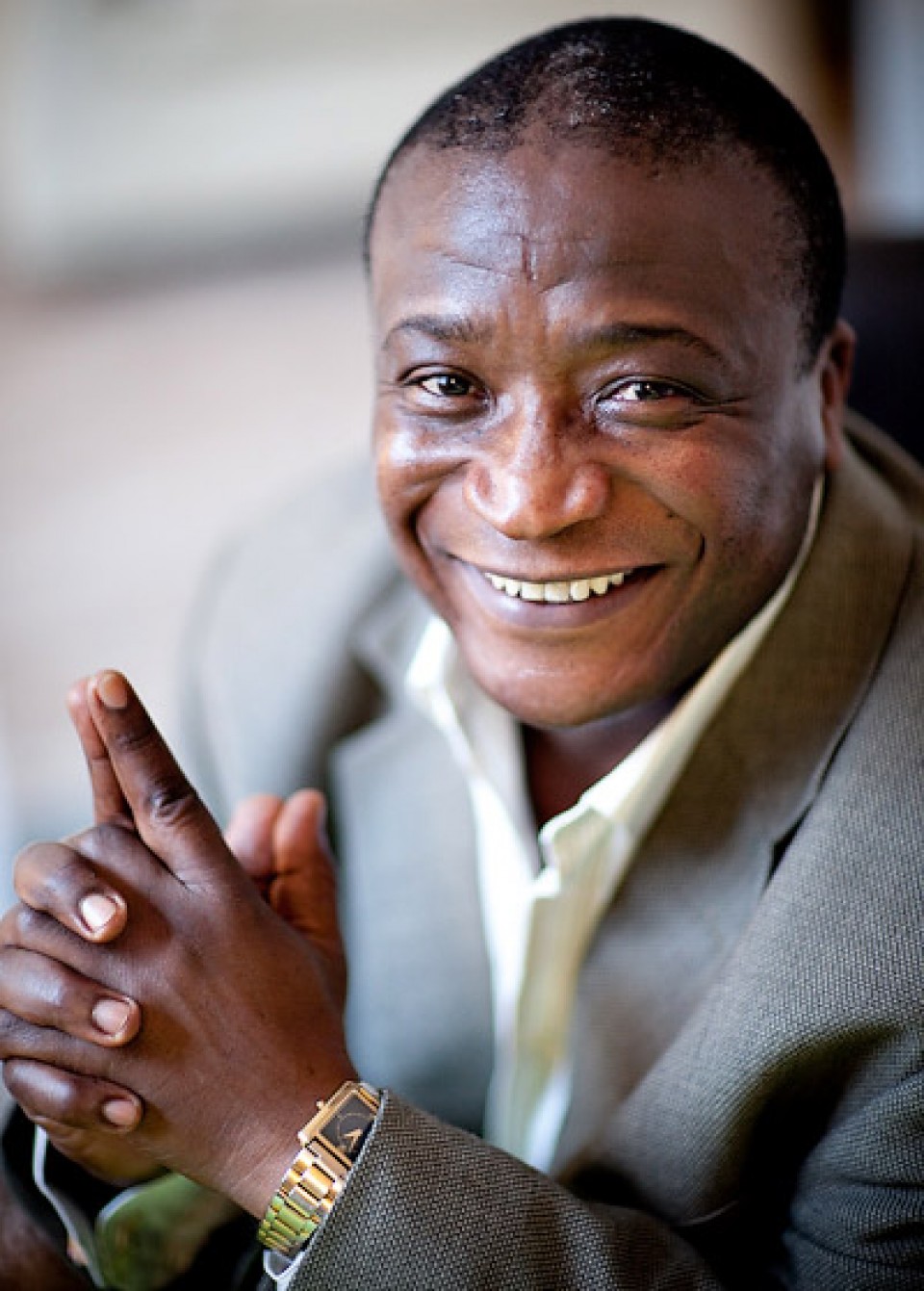
©Simon Chilembo, 2014
Racism is a constant. Racism does not change colour with location, or time. Racism is not some figment of the imagination. Racism is as real as day and night. Racism cannot be explained away; it is neither an intellectual nor academic exercise. Racism is unidirectional like an arrow in flight. Its objective is to demean, use, abuse, exploit, hurt, dehumanize, destroy, and obliterate; nothing in between. The ultimate goal of racism is genocide.
Racism is a systematized, institutionalized mind-set of false superiority, entitlement, and privilege … (Continued in the book: “MACHONA AWAKENING – home in grey matter”. Order book on Amazon).
Simon Chilembo
Welkom
South Africa
+4792525032
September 14, 2015
38 YEARS AN EXILE: XXVIII
HOME AT LAST! Part 28
New Job Application:
Change, Win, Adapt, or Jump in The Lake in The Diaspora

Simon Chilembo, Founder/ President ©Simon Chilembo, 2015
How old I was then was of no concern to me. At that age I saw things in terms of physical appearances relative to other objects in the immediate environment. People were adults because they were far bigger, and stronger than me. When I first became consciously aware of where I was in my surroundings, it was of no concern to me as to whether I was coming or going; I was just there where I found myself, having the time of my life discovering wonders of the world … (Continued in the book: “MACHONA AWAKENING – home in grey matter”. Order book on Amazon).
Simon Chilembo
Riebeeckstad
Welkom
9469
South Africa
August 24, 2015
 Simon Chilembo