Home » Posts tagged 'Atlas Mountains'
Tag Archives: Atlas Mountains

𝗦𝗢𝗨𝗧𝗛 𝗔𝗙𝗥𝗜𝗖𝗔’𝗦 𝗔𝗙𝗥𝗢-𝗫𝗘𝗡𝗢𝗣𝗛𝗢𝗕𝗜𝗔-𝗙𝗨𝗘𝗟𝗟𝗘𝗗 𝗗𝗘𝗣𝗢𝗥𝗧𝗔𝗧𝗜𝗢𝗡 𝗢𝗙 𝗠𝗔𝗖𝗛𝗢𝗡𝗔 𝗘𝗠𝗜𝗚𝗥𝗔𝗡𝗧𝗦 𝗙𝗨𝗧𝗜𝗟𝗘
𝗧𝗛𝗘𝗬’𝗟𝗟 𝗕𝗘 𝗕𝗔𝗖𝗞!
Your deported foreigner Black African neighbours shall be back, Black South African, you being Afro-xenophobic or not. Nothing, no one can stop the tide. More and more Black Africans will keep finding their way into South Africa, one way or another. They ARE coming! Just like they’ve been flowing into the country for four-hundred years and more.
Send them back!!! process is only effective in the now, the moment of execution; providing short-term victory laps to ruthless, envious, ill-advised, myopic, ignorant, insecure, Apartheid malice intoxicated, corrupt, culturally vain, self-hating, tribalist, regionalist, non-patriotic, petty, egocentric Black South Africans.
What do you think would happen to Black South Africans if, hypothetically, all the unwanted Black African immigrants were to go away, never to return? Well, Black South Africans would be left with only themselves to confront with their centuries-long anger and frustration over the deprivation of enjoyment of the fruits of the mighty post-1994 South African economy. What next, then? Let’s hear your thoughts in the “Comments below”.
Isolated to Black South Africans for purposes of this presentation, the globally acknowledged endemic violent nature of the South African society is deeply embedded in the long-time Black South Africans tribal divisions faults. It may be plausible to argue that in reality, Afro-xenophobia may, for now, be a diversionary tool off the power relations tensions ever pulsating both in the undercurrents and crevices of Black South African ethnic divisions.
STATISTICS
Without a structured medium to long-term empirical research exercise, it’ll currently be difficult to state categorically that a certain percentage of the recently June 30, 2026, South African Afro-xenophobia deportees will return to the country after a while. It could take only a few days to several years depending on a plethora of variabilities amongst the concerned individuals or particular social constellations from anywhere in Africa.
According to the South African government information services online platform, 109 344 deportations were carried out during the 2024 and 2025 financial years. Various news media, including The Associated Press (AP) estimate that at least 53 000 were deported on June 30, 2026. This brings the approximate grand total to 162 344.
Granted illnesses and other incapacitating misfortunes, death, or outright disappearances without traces, even simply successfully resettling once back home, I’ll bet that about half of these deportees will return, or will make concerted efforts to return to South Africa over the next few years. In time, some may not return in the first person but through their foreign-born progeny, relatives, and friends. In the minds of the people, South Africa is the next best thing to heaven. They’ll do anything to get to South Africa, and stay there for as long as possible, if not forever; no matter what it takes. To them, the bad of South Africa, if at all, is a seeing is believing matter.
IGNORANCE
Many South Africans have limited knowledge of the world and history, as well as how the progressive part of humanity functions in the world today. That includes those South Africans that may be well-educated and have travelled the world but remain analytically base, ignorant, and myopic. How the ruthless rule and destroy South Africa in front of our eyes!
Colonial-to-Apartheid oppression intergenerationally traumatized cognitively impaired South Africans have no clue as to how profoundly attractive South Africa is in the heads of fellow Africans to the north. This is a lingering colonial implanted mindset amongst the people. Because many militant nationalist Black South Africans are ignorant of history, they have no clue as to how the illusion of heaven-on-earth South Africa was ever so intensely inculcated in the minds of former colonial subjects, especially in the Southern African region.
DIVIDE AND RULE

That was done so as to both induce and coerce then African colonial subjects to come and sell their labour cheaply in South Africa; that way alienating Black South Africans from the bounty of their land – effectively terribly curtailing the potentially higher growth of liberation struggle forces. Oppressed, disjointed, poverty-stricken people are easier to dominate, manipulate, and, subsequently, annihilate. Start with the English divide-and-rule strategy from the colonial days. That’s the story of Black South Africans, even more brutalized and antagonized against one another during the Apartheid years, 1947-94.
South African divisional tribal stereotypes that emerged from the divide and rule colonial applied strategy were taught at school and church. With a Bible in hand. The divisional tribal stereotypes were further planted with violence on the streets, and stratified in work places, by predetermining accessibility to which jobs for which African ethnic groups, where in the country.
I personally experienced that whilst growing up as a child in South Africa in the 1960s and the early 1970s. For example, following the earliest 19th Century dramatic encounters between European settlers and the African people of the now KwaZulu Natal, the Zulus have since been institutionalized into an impressionable, non-rational, impulsive, brutal warrior class. King Shaka and others’ successful war prowess and strategies were trivialized in the European settlers’ subsequent domination manipulatory strategies.
These days, as portrayed in diverse visual media platforms whenever social upheavals occur in especially urban South Africa, ibeshu, the Zulu warrior outfit, has been diminished into a street violence brand. Pathetic. The original impi must be turning in their graves.
The Xhosa were classified as the cleverest Blacks of South Africa; the learned that spoke Fort Hare University Shakespeare English to claim superiority to other Blacks, such as the supposedly cowardly Basotho that ran up Thaba Bosiu fleeing the White man. That Basotho saved their kingdom doesn’t matter; nxargh, they are still poor, mos.
Labelled as weak and timid, the Batswana withdrew north-westwards into the Kgalagadi Desert. They later found diamonds in the 20th Century. National economic success owing to this discovery has boosted Batswana’s sense of pride. Who’s laughing now?
It’s not as if African immigrants came into the country only with the advent of the post-1994 South Africa. Historically migratorily speaking, Africans have always been in South Africa. The history of contemporary South African economic might growing with, and consequent upon the European Industrial Revolution during and post the Age of Enlightenment from the 16th Century onwards is written upon the backs and bones of African migrant labourers and slaves. Of course, yes, the colonialists brought slaves from everywhere in the former colonies. We, for now, dwell on the plight of Black Africans in the context of this presentation.
EVERYONE IS A FOREIGNER
The Khoisan will tell you that everyone, including Black South Africans, is a foreigner in South Africa. Scientific sociological research documents that South Africa’s oldest people are the Khoisan. These people have been in the country for more than a hundred thousand years. From my mother’s side, I’ve inherited a hybrid of Khoisan-Bantu-European genetic legacy. I can feel it in my whole being. Yet, with my non-typical Black South African physical appearance taken after my pedigree African Zambian father, I risk getting killed on the streets of South Africa for being tagged as a foreigner. At home and abroad in the Diaspora, I have lived with South African anti-Black African hostility overtly and subtly directed towards me all my life, actually.
CHANGE THE NARRATIVE
The magnitude of the impact of the historical presence of Black African migrant labourers and other modern hustlers across the entire South African society and economic endeavours is enormous. It far outweighs the argument of Africa having accommodated South African refugees during the latter’s liberation struggle days.
That Grand Old Mother Africa stood with and for now-spoilt, apparently ungrateful liberated South Africa has become an impotent point of contention because it, indeed, is the truth that much of independent Africa stood by the then South African anti-Apartheid struggle. No Black South African in their right frame of mind can deny that. Done and dusted deal.
Looking at it from a tit for tat perspective in that regard, I have yet to come across any credible estimate that places the number of South African refugees above 100 000 people globally. If anybody can come up with any more substantive input here, please comment and give references in “Comments” below. The low number of South Africans that were hosted by African states during the anti-Apartheid struggle days nullifies the arrogance of power and the sense of entitlement to things often exhibited by some African immigrants in the country.
I’ve further argued elsewhere that Black Africans must be clear as to whether they expected Mandela to, in meek gratitude, annex the rest of the continent after the fall of Apartheid. As a sovereign state, South Africa is under no obligation to succumb to unreasonable demands and unbecoming social conduct from continental Africans seeking protection and opportunities as refugees and ordinary migrants in the country.
Let’s get this straight once and for all in the 21st Century and beyond: Black Africans are not in any way superior to Black South Africans. Black South Africans owe Black Africans no crap. People will be as unique and as special as to how they relate to the inherently variable earthly environments in which they find themselves against challenges of propagation, longevity, and immortality.
In the Norwegian language, a reflection (speilbilde) is directly translated as “mirror picture”. As it ought to be for all humanity, Black Africans and Black South Africans are one another’s mirror pictures everywhere they meet. They all gotta learn to live together in both the good and the bad times. They gotta learn to amicably solve challenges that threaten all our common existence and legitimate claims to the right to live on and love the planet.
Yeah, love thy neighbour, mothers, nxhh! What say Yee, God-fearing Christians and other like-minded uppity, fake people of fake faiths of the world?
The South African constitution does not give ordinary citizens the right to take the law into their hands and apply violent vigilante militancy against Black African, or any other, immigrants irrespective of the latter’s official status in the country. It’s the job of the police and other mandated national security and safety organizations to deal with those that break the law of the land, including the so-called illegal immigrants.

In our time, talk about the dynamics that are firing up Black South African Afro-xenophobia contra what I call the RAINBOW BROADBAND: Atlas-to-Cape Exodus. Perhaps the Millennials will understand you when you speak the language of reality today. The future is shaped by younger generations of today walking into the outcomes of choices made today. That informed, amongst others, by the guidance of older generations not ever glossing in glories of past solutions to outdated challenges.
Africa’s biggest challenge today is the need for applied unified action towards continental developmental growth. Paranoidal Afro-xenophobia is indicative of an acutely broken sense of mutual trust and dependency amongst Black Africans across the continent. Divide and rule is alive and well in Africa. As is the continental lack of capacity or willingness to learn and apply necessary skills imperative to successful governance of modern states in the face of overwhelming competing global econo-politico and theological hegemony interests.
MIGRATION POEM TO THE SOUTH
RAINBOW BROADBAND: Atlas-to-Cape Exodus is a poem I wrote on December 28, 2021, following the violent South African Afro-xenophobia events of the year. I’ll read some stanzas from the middle of the piece (the poem is on p. 111 of the second poetry collection book of mine called MACHONA GRIT – onslaught on hate):
[…]
Revolutionary Africa
Been at war
With itself from during
Anti-colonial struggle days
Civil wars continued upon
Independence attainment
Free at last to play out
White man’s burden
Transgenerational trauma
Self-annihilatory black curse games
To this day
Freedom is a relative state
In all African states
Basest result of state dysfunctionality
In Africa
As elsewhere
Is a constant
Including America
Staying alive
Feeding on
Murder in all its execution variabilities
Survivors rot in jail
People endure suffering
In all its construction variables
People dream of life-supportive
Freedoms elsewhere
Since Mandela’s
Betrayal of
The African self-determination cause
Twenty-seven years ago [32 years ago now!]
Mzansi fo sho
Has yet
To degenerate to levels
Of truly liberated
When free Mother Africa’s people
Give up on the miseries
Of their tyrannical
War-torn lands
Of once upon a time
Ancient Mega Star Warrior Kings
As accessible to today as
The horizon of history
Choose to rather not
Get roasted walking the Sahara
Drown treading the Mediterranean
There’s a rainbow broadband
Linking the poles of Africa
Making a joke of
Cecil Rhode’s Cape-to-Cairo
Highway dream
Following this rainbow
Many an African soul
Crushed under own meaning
Of true self-annihilatory African liberation
Land in awesome Gauteng
Cradle of Humankind grounds
City of gold
Mystical
Below as above
The ground
People begin to breathe here
People of Black America know this here
People get no knees on necks here
People grow wings here
People reach all corners of Mzansi fo sho from here
People’s dreams come true here
The rest is magic
Argh, cxh
Afro-xenophobia
Comes and goes
Now and then
Mzansi fo sho
Playing out its own version of
White man’s burden
Transgenerational trauma
Self-annihilatory black curses
Call it divide and rule devices
I’ve asked before
Who’s better
Who’s worse
Same difference
[…]
IMMIGRATION STATUS IN SOUTH AFRICA
The current number of African immigrants in South Africa is around 3-million people by several accounts. The 162 344 deported above is 5.4% of the number, a mere 0.25% of the overall South African population of approximately 65 million people. How such a relatively small number of people could cause so much havoc in mighty South Africa boggles my mind.
Both South Africa and the rest of other African countries have yet to get their governance right. On the one hand, and on the surface, South Africa has kept its act together and has yet to collapse as a functional modern society. All things considered, as a land of hope in contemporary Africa, the South African state machinery has sustained that old paradise myth about the land. That’s how Black Africans and others will keep streaming to the country for protection and work by all means possible; by all means necessary, if you will. All continuing, and all major wars breaking out in the world today mean ever more refugees seeking protection all across the world, including South Africa.
The challenge is for the South African immigration authorities to streamline and patch up loopholes in the processing of entry visas, residence and work permits, political asylum issuances, as well as such other relevant bureaucratic measures to ensure the integrity of the system and all the people concerned.
On the other hand, the dysfunctionalities of the 30-50 years earlier independent, self-governing African states continue unabated. Destructive conflicts and wars of all extents in time and space go on unabated in much of Africa. Strife and disease prevail – Ebola is rocking the DRC right now. Provision of social amenities is an unknown phenomenon in some regions. Lack of food and essential commodities are the order of the day.
Abuse of state police and military powers is rife in Africa. People are oppressed by their own in their homelands; even where there, on the surface, is peace, order, stability, and productivity. People live in subjugating fear not unlike in tyrannical states, where Human Rights is a concept spoken about by traitors against the state. Once identified, the traitors must be punished in the extreme, if not eliminated altogether.
Under the conditions above, the historical, colonial-inculcated beckoning of South Africa is ever relentless. Pragmatic, resourceful people would rather be in South Africa than endure the kind of suffering they find in their homelands. Therefore, as soon as opportunity arises, the people head back to South Africa, hoping for the best. That regardless of whether the return entry into South Africa will be legal or not. When their homelands fail them, Afro-xenophobia plagued South Africa is the lesser evil. How many more Black Africans will South African gangster Afro-xenophobes kill with impunity? It’s important to bear in mind that Afro-xenophobia is not state-sanctioned in South Africa.

“But why is the South African state not doing anything convincing to protect the Afro-xenophobes’ brutalized immigrants?” people ask, often with much hostility, upon hearing that I come from South Africa originally.
“Why do the concerned African states not protect their people against murders perpetrated by their own home-grown Boko Haram, Al-Shabaab, and the M23 group, where applicable respectively, to name but three, for example?” I retort.
Samme fæn! as we say in Norwegian.
Yet, as a fundamental principle, states, whether opulent or poverty-stricken, have the duty to ensure that their citizens are durably sufficiently provided with the most basic of human needs: education, food, health, protection, and shelter. People’s choices of unilaterally migrating to South Africa in search of a better life must be looked at in the broader context.
Without condoning or justifying the South African Afro-xenophobia violent and inhumane practices tendencies, I ask: what is better or worse off – desperate African youth getting roasted on the vast braai earth that is the Sahara Desert, or drowning in the Mediterranean Sea in their futile attempts to get to anticipated illusory opulent living in Europe? Or suffering unspeakable indignities at the hands of human traffickers in Libya?
UBUNTU HIJACKED
Regarding South Africa, if we acknowledge the suffering that the African immigrants are running away from in their countries of origin, what happened to the concept of Ubuntu? I’ve argued before that Ubuntu has been defiled. Which, for me, explains the degenerate Afro-xenophobia movement in South Africa. Ubuntu in its simplest form means humanity living itself with humaneness. Humaneness manifest and sustained through acts of ceaseless, boundless compassion.
At the same time Ubuntu does not negate the presence of humility on the part of those to whom Ubuntu extends its helping hand. Ubuntu implies a peaceful, progressive co-existence for all, with all playing their respective roles within the context of mutual recognition of one another’s human strengths and vulnerabilities.
When the balance amongst multi-level conflicting interests’ variable strengths and vulnerabilities breaks down, chaos seeds are planted, and phenomena like Afro-xenophobia arise. Likewise, the civil wars ravaging many a dysfunctional Black African state do not start by themselves as if they were randomly occurring calamitous forces of nature beyond man’s control. It’s not as if non-Black African states are doing any better in this regard either, so we are clear.
The moment business understood the Marketing value of Ubuntu as a concept, they bought it, branded it, and developed lucrative modern business models around it. The most prominent is South African-born Mark Shuttleworth’s global Linux-Ubuntu IT enterprise.
Business has eaten Ubuntu’s heart away. Historically ignorant, culturally inadequate, egocentric Black South Africans and their Black African immigrant guests are equally responsible for the Afro-xenophobia mess currently prevailing in the country. A solution to this has to necessarily be a joint effort by all African leaders and their people.
DEPORTATION DEHUMANIZES
Deportation is a very painful experience. Particularly so when it’s indiscriminately targeted towards certain particular groups more out of prejudice and deliberate misinterpretations of the law to justify the actions of the deporting state. Often are large sections of these groups already weak and vulnerable at the bottom of economic success ladders in society. Even worse is when people are dispatched to, and dumped at new places that they had never been to before, or they hadn’t been to for many years.
It may be a different story for the global wealthy, though. Some of these even go to the extent of wilfully deporting themselves from their own countries. Doing that often in protest against certain national economic policies that have perceived or actual negative impact on sustainable private wealth creation and management. So-called tax-havens such as British Virgin Islands are self-deportation refuge states of choice for the wealthy of the world.
For married people, the impact of deportation can have dire, lasting consequences for their families. Divorces are not uncommon. Separation of families where the husband or the wife is deported alone and never manage to reunite with their spouses and children again is another tragedy. Deportation can bring a sudden tarnishing of identity and sense of belonging especially for children.
For example, South African-born children of a Zambian man and a South African woman discovering that they neither have strong bonds with either countries can lead to challenging anti-social behaviour in some cases. In my MACHONA – emigrant series of books I explore and expound upon the theme of getting caught up in the various traps of migration, of which, I venture to say, deportation is one of the most dehumanizing.
During the last push of the former South African Apartheid regime’s Bantustans/ Homelands in the early 1970s, hundreds of thousands, if not millions of Black South Africans were stripped of their South African citizenship. People were through force and deceit internally deported and displaced from mainly urban South Africa to impoverished tribal homelands that many had no prior relationship with, or knowledge of.
Sometime in 1970-71, I witnessed a lot of suffering of thousands of people. They were dumped overnight on a rocky piece of land surrounding a hill across a road about half a kilometre from my uncle’s house in Thaba Nchu, Free State Province. Thaba Nchu fell under the then Bophuthatswana homeland. But these people represented the entire spectrum of the major Black South African tribes. I got to play with some of the children my age there; so, I know.
All were left to fend for themselves regarding creation of private spaces and the like. No law, no order existed. Needless to say, violence and abuses of all kinds were the order of the day. Recollections of those tragic times in Thaba Nchu make me cringe. How I survived all that is a miracle for me.
Although Botshabelo is today a thriving, larger, modern community lying between Thaba Nchu and Bloemfontein, its origin, structure, and demographic composition is similar to the one I’ve just described above. Human survival conditions were really bad for a long time here. Black South Africans forget these things. Or they really just don’t know the history of their land. (And this is why we write books. People must read!)
In post-1994 South Africa, the phenomenon of the under-privileged people’s rebellious establishment of informal settlements in and around major urban centres across the land is widespread and continues unabated. This follows, and is the legacy of the same pattern established by both the authorities and scammers during the displacement of the people to the Bantustans in the 1970s as narrated above.
I felt much empathy for the internally deported people dumped overnight in no-man’s land bordering my maternal uncle’s formally partitioned Bophuthatswana’s then Builtfontein No. 3 zone in Thaba Nchu. But my empathy was of a detached nature. I.e., I felt their pain, but there was nothing I could do for them. I had already begun to appreciate my own sense of non-belongingness myself as a son of a Zambian immigrant man. At my former Thaba Nchu school, Namanyane Primary School, and our neighbourhood in general, there was much talk about these people and many more others that had also recently been dumped at Botshabelo.
I recall hearing how the adults used to talk about how these displaced people deserved what they got because many of the latter were lazy drunkards that didn’t want to work, or were simply unemployable because of their backwardness – stupid villagers; wasted farm-hands! And, besides, there were there also far too many foreigners from neighbouring countries. If these foreigners didn’t want to return to their own countries such as Lesotho, Mozambique, Malawi, and Rhodesia (Zimbabwe) then, their suffering is self-inflicted. This didn’t bode well with me. But there was nothing I could do. I was only a child then.
As children anywhere would, I got to interact with the new arrival, so-called lower-class children in no time. We fetched water from the same well for our respective families. We all drank and washed with the same dirty water. Together with my neighbourhood boys about by age, 10-11 years old in 1970-71, we played competitive football with the new kids on the block. There wasn’t much talking; and playing was never so enthralling. There were too much negativity and fear around. Too much pain.
THE REAL AFRICA HARDSHIPS
It wasn’t until my parents, my three younger siblings, Thabo, Sisi, and Sono, and I got to Blantyre, Malawi, in February, 1975, that the fate of deportees came closer to home. The former South African Apartheid regime had from the mid-1960s already been deporting Malawians, (Southern) Rhodesians, Tanzanians, and Zambians on a large scale. That was mainly in reaction to the independence wind of change blowing across colonial Africa then.
Even more Zambians would subsequently be deported in retaliation to Zambia’s hardcore anti-apartheid stance. It is worth noting that almost all the deportees were middle-aged and older men that had lived and worked in South Africa since the 1940s, if not earlier in some cases. They were deported together with their South African-born wives and children.
In about all the cases, instant deportation orders would be delivered and effected there and then, often in the middle of the night. The latter as a surprise element when people would be sleep-drunk and, therefore, easier to cow into deportation trucks, and, later, trains. It was also so as not to draw too much attention from the neighbours.
That meant that the deportees would arrive in their respective countries poorly clothed, and with the barest minimum of personal effects. Money was not a thing to talk about. Many of these people were already poor in South Africa; the men would have reached pension age without having been able to save any monies. They’d have worked for years in various industries and sectors grossly under-paid. Crushing the longstanding local myths that Machonas earned tons of monies in South Africa.
There were also cases of severely ill and/ or physically handicapped unmarried and childless younger men that had survived industrial and mining accidents whilst working in South Africa. These would have been deported without any form of workman’s compensation from their former employers.
That the deported Machonas returned home tired and poor upset many in their larger family circles and the wider community.
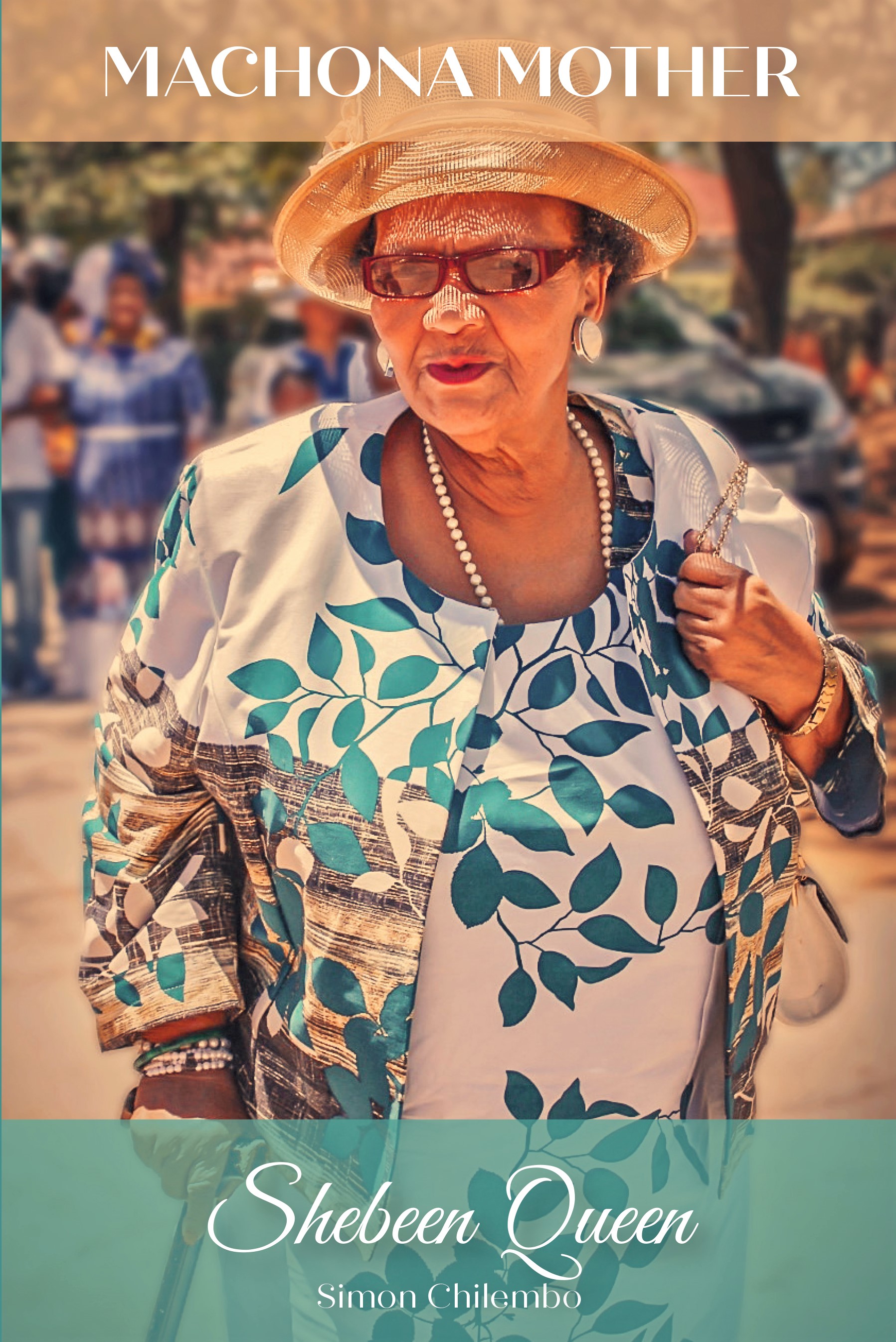
Because my father’s return to Zambia had instead been a planned affair by his wife, a successful Shebeen Queen, a female night club entrepreneur, in our former township, Thabong, my parents did have a bit of cash to carry along with. Their plan had been to take us children to school in Zambia, and they’d go back to South Africa and continue with the life they knew there. However, due to complications arising from the then intensifying anti-Apartheid liberation struggle dynamics, my parents got stuck in Zambia. In June, 1976, my mother managed to travel back to South Africa. My father’s chance would emerge ten years later.
My family encountered some hardships on the three months train and bus journey to Zambia, via Botswana, Rhodesia, Mozambique, and Malawi. But our hardships were a world apart from what some of the deportee families we found already both in Blantyre and Lusaka had to endure on the way from South Africa.
For one thing, my family travelled on the more comfortable then-2nd Class train carriages with the luxury of private compartments options of 1-person to 4-people sleeping facilities. We dined on fine food in the restaurant wagons. Except one incident on the last Beira (Mozambique)-Blantyre stretch, my father and his family were treated with deference by train staff as well as fellow passengers in the exclusive class, only below the ultra-premier Whites Only 1st Class in the then Apartheid South Africa rail travel system. At their prime, my parents were a smashing power couple.
The other families told us of harrowing experiences of over-crowded trains and buses, all-the-way harassment by officials and fellow travellers upon the discovery that the families travelling from South Africa were poor deportees; pathetic Machona losers! Worst of all were degrading racial attacks on the often light-skinned or Coloured/ mixed race Machona wives and their children. Tired, confused, ashamed, and far outnumbered by their own people, the deportee Malawian and Zambian men could only sit and absorb stoically the extreme hostilities they and their families were subjected to.
Final arrival in Blantyre and Lusaka, where applicable, presented even more degrading experiences that would traumatize some children to severe recurrent depression bouts over many years. Others got outright mental breakdowns. Some cases of suicide were reported here and there. I, for one, know that although I have now found inner peace and joy, the thirteen years I lived in Zambia, 1975-88, remain the unhappiest years of my life so far.
The hard choices on matters such as love, marriage, fatherhood, and identity that I had already made for myself as a twelve-year-old in South Africa became reinforced in Zambia. I continue to live by those principled choices: I won’t fall in love with just anything; I don’t want a wife and children to the extent that I’m economically inadequate to sustainably provide for my wife and kids. I’ve never been interested in getting involved with some rich women who’ll shower me with their monies. I create my wealth on my terms.
In Lusaka, large deportee families with as many as fifteen children had no immediate suitable accommodation available. This exposed the children to varying degrees of abuse and exploitation on the streets, as well as in ever temporary abodes that they’d get with relatives and family friends here and there. In the most extreme cases, children never even attended school; ending up languishing on the streets.
Exhausted and spiritually crushed, the semi-to-fully-illiterate fathers and mothers without any formal career skills, had problems getting into the Zambian normal employment mainstream. Life was hard for these people. It was a sad state of affairs to see. The plight of poor, unemployable, deported Machonas with little or no entrepreneurial skills or interest was projected into the Zambian popular culture by the legendary singer/ songwriter/ band leader Nashil Pichen Kazembe’s blockbuster song titled“A-Phiri Anabwera”. (I’ve provided the YouTube link for the song in the “Comments” below).
By the time I’d leave Lusaka for Oslo myself in 1988, some few South African deportee families had come under the tutelage of the African National Congress (ANC) and other liberation movements with presence in Lusaka. Through confidential personal relations with certain functionaries at various leadership and operational levels, my family served the ANC in several ways.
Through these liberation movements, either direct recruitment into combat guerilla forces or academic studies abroad were facilitated for older children. Numerous died under various circumstances in different parts of the world. Others survived and have, against the odds, made decent humans out of themselves both in the Diaspora and post-1994 South Africa.
Almost without exception, all the deportee families we met and heard of in Blantyre and Lusaka dreamt of returning to South Africa someday. And by hook or by crook several of these had, indeed, made successful returns.
The wave of the UN-guided repatriation of South African refugees in Lusaka in 1993/ 4 took with it many deportees from the 1960s and 1970s. That notwithstanding, there are still thousands of undocumented, now-grown-up South African-born children and their descendants living under various existential challenges in Malawi and Zambia.
The plight of many of these first-generation South African born children stranded in Africa has largely been shaped by their parents’ lack of resourcefulness and resilience capacities in hostile environments. The African fathers had been caught up in a vicious cycle of exploitation and impoverishment:
- Born, raised, and broken in then then British colonial administration.
- Landed in South Africa poorer than they were upon leaving their villages in Africa.
- Overwhelmed by sudden but inaccessible to opulence due to racial and capital barriers to entry, many would never break and take themselves out of the poverty conundrum. If at all in some form of formal employment, these people were paid paltry sums of money for salaries. Perpetual poverty and misery were guaranteed here, enabling continuing capital accumulation making for sustenance of the then Apartheid regime in South Africa.
- Forced to suddenly return home twenty-to-thirty years later, hard-beaten by the realities of life in the ever volatile then Apartheid and current South Africa, they find a new Africa that does not value them much either. Many men give up all hope and cease to make any efforts to find ways and means to better the lives of their imported families. They die; leave their families destitute. And the spiral of poverty and suffering goes on and on.
These are some of the peripheral outcomes that deportations subject fellow human beings to. South Africans kick foreigners out, throwing their own children into the lions’ dens at the same time. I was raised with the ethos that every Black child born in South Africa was a child of the land. At the same time, if one of the parents is a foreigner, the child is also a child of the land of the parent from abroad.
Despite everything else, then, the recognition and the love I have for both South Africa and Zambia are founded on the principle that I am both conceptually and in practice a child of these lands at any one time. Sadly, this holds to the extent that I am, as an extension of my parents’ joint legacy, resourceful, strong, and resilient. No one in the world can deny me my claim to my dual South African-Zambian heritage.
South Africans have no clue as to how strong the South African bug ever is, and how deeply the dizzying Jo’burg city lights impact plant themselves into the psyche of Africans that have sat foot in the country!
The deportees ARE coming back soon, Black South Africa. There will be more and more illegal immigrants getting into the country. How many more Afro-xenophobia killing orgies are going to take place in the country? Strengthen borders? My foot! How? Build walls? Fences? Dig trenches? This crap will never give sustainable solutions. It hasn’t worked for centuries. Solution lies in deep thinking about what Ubuntu is and what its implications are.
CORRUPTION: Incompatible with Ubuntu
To begin with, Ubuntu principles are incompatible with the corruption that underpins national leadership dysfunctions across Africa. When people are hungry, they’ll go where food is found. It goes without saying. When people are sick, they’ll go where public health care services work. If it’s in South Africa, so be it. It is what it is.
Shame on Black African states that the leadership of whom also must be accountable for the plight of their own people in primitive, selfish, ungrateful South Africa. At the same time, somebody in the global capitalist network goes laughing to the bank. The Chinese are also reaping the rewards of African chronic lack of adroitness in problem-solving nationally, regionally, continentally, and geo-politically.
Africa’s future can be saved, though. It’s in individual or collective progressive forces working with the Millennials and the following generations to teach them how to look at and appreciate reality for what it is today. And that reality is that Africa is raped, Africa is screwed. Only fresh, deeply analytical, critical thinking, forward-looking, long-term thinking leaders of the future can get things on track, facilitating the real application of African oneness ideals.
People must reset their minds in relation to wealth creation and sustenance thereof. Wealth creation endeavours, such as corruption, lacking in ethical (right v/s wrong) and moral (good v/s bad) awareness don’t often end well. When successful, corruption tends to offer instant hedonistic gratification; and nothing more and beyond.
Genuine, functional, Ubuntu fuelled African oneness can eliminate Afro-xenophobia within a short space of time. Our anti-racism struggle will never victor parallel to thriving Afro-xenophobia in South Africa. As I’ve stated above, “The future is shaped by younger generations of today walking into the outcomes of choices made today. That informed, amongst others, by guidance of older generations not ever glossing in glories of past solutions to outdated challenges.”
A viable future demands that the problems of today be solved with forward-looking solutions of today.
END
©Simon Chilembo 20.07.2026
SIMON CHILEMBO
August 31, 2026

