Home » black lives matter (Page 2)
Category Archives: black lives matter

ARE CHILDLESS MEN NOT REAL MEN?
Real Men Raise Their Children
Ever since my young adulthood years, I have been told to my face, or I’ve heard on various platforms numerous self-righteous people of various persuasions, social standings, and ages say stuff like a childless man is a worse man than a single, unmarried man. These people emphatically say that childless men, married or unmarried, deserve a worse punishment than death: they must stay alive; they must live through the worst possible suffering that God can inflict upon the living.
Furthermore, the anti-childless men people say that the fatherhood-shy men are lower than mules by social status; they are useful only as oxen are (beasts of burden), and must experience physical and mental pain unimaginable. That for failing to fulfil God’s glorious gift and obligation to man: propagation of the species. Single, unmarried men who are fathers might be forgiven, though.
Lastly, the pro-propagation people argue that humanity is the summation and manifestation of God’s ultimate creative potential. Through humanity, God defines her purpose. Humanity is the beginning and infinite expression of the power of God. Without humanity, the essence of God would cease, as would the entity herself. That would be the end of creation, the end of the universe.
I argue, however, that humanity actualizes creation and the universe for itself. Humanity exterminated would just as well render creation and the universe more relevant to other animal species. These have, or may have other terms of reference to nature beyond the comprehension of human cognitive capabilities. Therefore, God in all her multiple manifestations and interpretations across the world, and across the epochs, is but one of humanity’s self-created survival tools. Humanity created God to assist itself in making sense of the complexities of the world and its pressures on humanity’s existential challenges.
When the going gets tough, humanity prays to God, fights, murders itself, its own, and destroys the world, its home. God just loves it that way. Humanity makes weapons of destruction right under God’s nose. I’m convinced that the omnipresent God sits in every missile head fired in wars of the world. Wars must be God’s forms of a party; grooving in humanity’s idiocy into self-extinction, God’s own bloody demise.
Name any apocalyptic war anytime any place, God is there; God will have been there. We have many more wars brewing for the future. It just got worse in the Middle East. Television moving pictures showed but two missiles of multitudes colliding in mid-air over there the other day.
Reporters said that one missile was launched from one land of a star, and the other missile from another land of a star. The collision gave rise to meteoric explosions. God torn apart fell to the ground in a million stars, burning everything on their path, scorching the earth. People dying crying, “God have mercy on us!” Everyone crying murderous vengeance in the name of God in both lands of the stars. And the beat goes on for God. Oh, yes, the Gods must be crazy.
In the Ukraine war, people are killed like hunter boys burning wild pigs on Trumpland streets. In fake-border-walls Trumpland, Black death bodies get riddled with bullets for their lives that don’t matter in the eyes of White Supremacist lunatics playing war games whilst people are praying in houses of God.
The inadequate-balled killers don’t spare children either. They spray bullets on children in school classrooms; them children in there only seeking enlightenment through learning how to read, write, and count. Trumpland set for extended ignoramocracy well into the future. Humanity’s foolishness is boundless. Glory be to God. Amen.
It is in the light of my argument above that I dismiss God’ supposed works as nothing but humanity’s wishful thinking outcomes when they cannot solve their own problems, and experience their minuteness against the forces of nature. There is no God sitting somewhere above ever having sadistic fun cruelly punishing childless men.
But the childless men condemners are relentless, uneducated fools. And they continue:
Men who are not contributing to the numerical growth of humanity defy God’s divine design for man; which is to go out and make children upon children for generations to ensure endless perpetuation of God’s relevance to man, if not creation in its entirety. As if God really cares.
Childless men present a possible extintification of God, notwithstanding it being as long a shot as can be. Woe betide these men. May they burn forever in hell should they die from the pain that God inflicts upon them for their horrendous transgression, anyhow.
God and his glory are forever. That for as long as men live up to their non-negotiable duty of unfailing baby seed planting in women. Those men defying God’s plan shall and must suffer all the indignities humanity can think of and apply upon them.
Culturally, childless men are irresponsible. They are selfish. They are respectless towards their ancestors. It is the duty of every tradition-abiding man to perpetuate not only his private lineage but, above all, that of his forefathers.
Men who do not produce children disrupt the growth and might of their clans, right up to the grand level of humanity as one, big family. Ancestral spirits do not take kindly to this state of affairs. Therefore, the ancestral spirits see to it that childless men shall be isolated, ridiculed, and abused in all sorts of dehumanizing ways.
When non-child-producing men die, they must never be afforded the same ritualistic honours that good, culturally-attuned, baby-prolific men would be. Were it possible, many a childless man would be made to vanish into thin air upon their demise. It’s just as well that the latter is not the case. Otherwise, the infertile dead men would pollute the rare air that the ancestral spirits breathe. The former exacerbating their already debilitating ill-fortuned existence, thereby. Childlessness is the worst abomination a man can endure, by the look of things. This is when I dump culture and God in the same ancient pit latrine of humanity’s extremes of diabolic, psychopathic anal discharges.
If I don’t say it, or if no third party that is familiar with me says it, no one will know whether I have children or not. In fact, almost everyone that asks me about how many children I have gets surprised when I tell them that I don’t have, and neither have I ever had any children of my own that I know of.
Everyone assumes that I shall have a number of children here and there. After all, as many often state, I am a fine, good-looking, strong man oozing attributes of an honourable man. That way immediately crushing the notion that childless men are not men if child production capacity is the definition of one’s being a real man of honour.
Others even go as far as to express their dismay at my childlessness given my apparently unfettered Valentino image. So much for my outgoing personality, discerning as I might be in more ways than one. My extroverted nature feeds the fantasies and pre-conceived ideas about my observed manly socializing attributes. Therefore, to many that do not know me well, I ought to be the wildest womanizer around. Clearly, then, I don’t need to father any child in order that my manhood qualities shall exude themselves with no fuss.
In my world, the definition of a man and his good is in his deeds as an agent of positive change for the good of society at large, no matter the extent and quality of his input. Making or not of children is not a deal breaker contribution because, as is the nature of sexually reproductive species, and with all things remaining equal, sexually mature men will make children upon mating with equally sexually mature women. However, it’s not a given that every non-protected male-female sexual encounter will result in the impregnation of the woman.
It’s not a given that every pregnancy will culminate in the birth of a child either. It’s not a given that a successful birth will bring forth a healthy, safe and sound child. And it’s not a given that the child’s father will be there for them.
Were children made like bread, I’d have fathered a hundred of them already. At the least. And I’d be a good father to my children by being there for them from the time I’d know of their conception, throughout the post-natal developmental stages to adulthood until whenever I’d die.
That I’ve not had children of my own up to this point in my life has nothing to do with whether I’m a man or not by way of my fertility status. My potency as a man is known only by women who have carried my seed before. Otherwise, everyone else who doesn’t know me that way had better shut the ‘f’ up and leave me alone with my happy so-called childless way of life that causes no one any trouble.
All across the world today exist millions of fatherless children. Hundreds of thousands of children are born daily without their biological fathers in their midst. So-called real men rape and impregnate women in all sorts of circumstances, from street violence, domestic violence, to wars. So-called real men in positions of econo-politico privilege and power go on predatory rampages and take sexual advantage of and apathetically impregnate underprivileged, weak, and vulnerable women. Philanderers charm and impregnate women of all ages everywhere, every fucking day.
When the children are born, these lots of so-called real men, the children’s fathers, are nowhere to be found. Many of the children grow up enduring much emotional and physical torment. They grow up with demeaning adjectives such as bastardes applied to describe them. I cringe whenever I hear a child being described as illegitimate for their absent father.
Looking at it from a layman’s perspective, it is atrociously insulting to call a child illegitimate. That way even if the expression in man-made legal terms means that the child was conceived and born outside official wedlock. A human child born as such is a human being of flesh, bones, and blood like everyone else conceived from the mergence of human sperm and egg in a woman’s body.
Sperm-egg fertilization occurs and develops into a zygote in the fallopian tubes. The zygote then gradually grows into a full physical human expression in the mother-to-be’s womb over a nine-month period, assuming a normal, uneventful pregnancy. It’s, therefore, also grossly distasteful, and disrespectful to the woman to have her children labelled as illegitimate. This demeans motherhood, a state of being worthy of respect by all men alive.
Writing in the Morocco World News online publication of September 12, 2017, journalist 𝗔𝗺𝗮𝗹 𝗕𝗲𝗻 𝗛𝗮𝗱𝗱𝗮 posted an opinion with the title 𝗙𝗮𝘁𝗵𝗲𝗿𝗹𝗲𝘀𝘀 𝗖𝗵𝗶𝗹𝗱𝗿𝗲𝗻 𝗔𝗿𝗲 𝗡𝗼𝘁 𝗜𝗹𝗹𝗲𝗴𝗶𝘁𝗶𝗺𝗮𝘁𝗲. Citing her in part, she presented her case that “Children born out of wedlock are usually called ‘illegitimate’, ‘bastards,’ and ‘sons and daughters of adultery,’ and are often treated unfairly. They are seen as a source of shame and dishonour by traditional societies.
“Being a fatherless child in Morocco is nearly a lifelong condemnation. Article 446 of the Moroccan Jurisprudence describes ‘any person born outside marriage [as] a bastard; whether he is recognized by his biological father or not.’
“Why should innocent children suffer the consequences of an act that they did not commit? How can a justice system deprive children from their fathers only because they were conceived outside marriage?”
From a religious perspective, Amal Ben Hadda argues further that “In the Quran, fatherless children should be first assigned to their biological fathers if they are identified, otherwise society should treat them fairly as normal children, with no stigmatization or segregation.
“[…] Muslim societies should fulfil their obligations towards abandoned and fatherless children. As per the Quran, the first step that should be taken is to identify the biological father and to assign his name to his child. All kinds of discrimination and social segregation should be banned, as it is morally reprehensible to stigmatize fatherless children. The term ‘illegitimate’ is in itself a discrimination against defenceless human beings.”
The expression fatherless child is also a misnomer. This is because it linguistically cancels the presence of a male person’ sperm in the child’s conception process. Women’s eggs don’t fertilize themselves, neither in the body nor in the test tube. It’s only Maria who could be impregnated with the wind; a miracle only performed by God, who doesn’t know crap about sexual reproduction: fhhhhh…., let there be a child! And, voila, Jesus was born. No living man is God. No child is fatherless.
A normal man’s and a normal woman’s reproductive materials combine, internally or externally. That subsequently produces, all things remaining equal, a physically and physiologically normal human baby that will, hopefully, grow up normally into normal adulthood of, amongst other things, normal human sexual reproduction indulgences with the opposite sex.
This child will have the same cravings and needs for food, shelter, parental, and societal protection, as well as tender loving care, and much more; just like everyone else. These are basic Human Rights aspects we are all entitled to regardless of our parentage’s civil status at the time of our conception and eventual birth. It’s not as if children just show up from the blues unsolicited and impose themselves upon their chosen will-be parents.
Now, that’s what could be termed an illegitimate act of unilateral personal imposition by a stranger upon an innocent, unsuspecting, and/ or possibly unwilling couple. That in itself not denying the child’s legitimacy as a human being. Which further explains, for example, the prevalence of rigidities of child adoption laws in many nation states. Therefore, it defies logic that some unfortunate children are still labelled as illegitimate in the 21st Century, the age of superlative, ever expanding human knowledge that ought to inspire more empathy in the world.
As a rhetorical observation, it would be interesting to know how the often absent, extra-marital prolific so-called real men think and feel about their so-called illegitimate children out there somewhere in the world. It’s no wonder, then, that, on the other hand, there are in the world today millions of other men who consciously choose not to father any children under any circumstances, if they can help it.
Indeed, I do not have any children of my own that I know of. I truly hope that there is no child I have unknowingly fathered that is walking up and down the streets of the world bearing the abhorrent illegitimate child tag on their person. I’ve never been keen to want to have children when I’ve never been keen on marriage. I’ve never been keen on marriage to the extent that I’ve never felt emotionally, mentally, spiritually, and, most decisively, durably economically adequate for it. No wealth, no wife-and-kids for me. Simple.
I’ve more than once been in near husband-and-wife relationships in which I was relatively an economic underdog. I was, by extension, considered to be intellectually deprived and culturally inferior. Disaster. I’m not interested in being with poor women, either. It is what it is.
The difficulties of children growing up without their fathers being present in their lives, for whatever reasons, struck me already from an early age whilst growing up in South Africa in the 1960s to the mid-1970s. Much as did the rough times of those fathers that also longed to be with their absent children but, for variable and unique individual reasons, had limited, if no access at all to their children, wherever they were in the Southern African sub-continent.
By the time I got to Zambia as a mid-teenage aspirant young man in 1975, I had already long taken the personal stand that I would never want to have any children of my own if my life circumstances are that being there for them would be a complicated socio-economic matter. Such continues to be the state of my life as I live it today: a happy, economically barely surviving free man of the world with much love for women and children. Nevertheless, soon I’ll have my lasting millions back. I’ll then marry my ten-women-in-one woman, my Super Lady. We’ll make a hundred-children-in-one-to-x-number-of-children and live happily ever after as one big-together family.
I find it ironic that some of my meanest critics for my current wilful childless existence are real men who, both knowingly or unknowingly, have fathered, and unabashedly continue to father countless children all over the place. If there are dogs of war whose occupation is to travel the world, go out to shoot and bomb enemy people and leave them for the dead, these critics of mine here are dogs-of-pussy who father children everywhere, and leave them for the dead. I have little regard for these kinda fools. I have this vile thought in my head that some of these abandoned children could someday find these negligent fathers of theirs. The children should, then, castrate the men in revenge for themselves, and vengeance for their estranged mothers. Poetic justice served.
But I am more concerned about the existential conditions of children growing up without their fathers in their lives. My concern is regardless of the circumstances that lead to, or have led to the fathers’ absence. I wish that people could bang their heads against the walls more for ideas as to how to better living conditions of all children of the world, especially those that are deprived of the presence of their biological fathers in their midst.
Society has more to gain from taking care of underprivileged children of the world in need of love, care, and protection here and now. Speaking for myself, I know that I have in my time directly played a much-appreciated father figure role for many a child, so-called fatherless or not, across the world. I haven’t had a need to have a pigsty for a playing field full of piglets for children to know how to be a decent human being who understands fully the importance of adults being there for children. Particularly so their own blood children once they, the adults, have become parents themselves.
Childless as I may be, I can with confidence, pride, and dignity state that I am a good father figure and male role model for children and youth. Prove me wrong, if you can. Simple. Go and raise your own children and let me be. I have books to write. I have money to kill. There is a future mother of my children awaiting me in the horizon yonder. And that’s my case alone to deal with.
In the meantime, I absolutely do not wish to be a conscious contributor to the ever growing and infuriating statistics of the so-called fatherless, or illegitimate children of the world. The living conditions of the vast majority of these children represent an aspect of being human that I find debasing my humanity as a man.
I care profoundly about the well-being of children the world over. Therefore, when some ignoramus knowing no shit about me comes out to criticise, judge, and ridicule me for having no children of my own, I not only get upset, I hurt deep inside. The hurt is out of the apparent trivialization of the values that I hold as the upright man I strive to be always.
My values shape the stands that I take in relation to critical personal choices that I make in my never-ending aspirations and efforts to be a decent human being in a world immersed in hate and human self-annihilatory tendencies. In all this, I’m ever conscious of the confines of the generally accepted, life-supporting norms and laws of the land wherever I find myself.
A Google search of fatherless children produces tonnes of academic research, hobby or professional societal conditions commentaries, special socio-politico interests organizations findings and reports, and much more information and ideas material on the harsh realities of children growing up without their fathers present in their lives. I shall list a few select links below at the end of the presentation.
As a global phenomenon, regardless of race, colour, religion, creed, political orientation, or sexual orientation, the significance of a father in a child’s life is generally recognized by all. This is a general starting and guiding principle before the vast constellation of complications of human relations culminating in the existence of fatherless children. Argument presentational style bias according to the source’s background granted, the general consensus, for example, is that [Source: South African online newspaper Daily Maverick, June 14, 2023]:
- […] Children are at much greater risk of being victims of violence if they grow up in father-absent families. Girls in particular are more likely to get involved in abusive or exploitative relationships, and boys could go on to become perpetrators of violence, including gender-based violence, themselves. Growing up with a positively involved father, however, reduces these risks, and helps to nurture long-term violence prevention strategies.
- […] While substance abuse has many complex causes, teenagers with absent fathers have been shown to be a high-risk group — boys in particular. Children are also likely to follow in their father’s footsteps if he battles with substance abuse. With a supportive father present, these issues dissipate, and children are generally less prone to substance abuse, and the related issues of addiction, depression and suicide.
- […] Absent fathers can exacerbate depression, anxiety and mental health disorders in children, and worsen their academic performance. When fathers are involved in a positive way, on the other hand, children’s mental health improves. They have greater faith in their own value, tend to do well at school, and are able to form secure attachments as they grow.
The Daily Maverick article quoted above says further that “According to the Human Sciences Research Council, most children in South Africa — over 60% — don’t live with their biological fathers. And 20% only have contact with their biological father twice a week …”
Another South African online newspaper, IOL, reported on October 5, 2019, that “The General Household Survey 2018 by Stats SA revealed that, 43.1 percent of children lived only with their mothers while a much smaller percentage (3,3%) of children lived only with their fathers in 2018 … [Furthermore] … Research conducted by the Human Sciences Research Council (HSRC) and the South African Race Relations Institute (SARRI) over a period of 5 years showed that 60% of SA children have absent fathers. More than 40 percent of South African mothers are single parents.”
In the UK, Fathers4Justice states that “Nearly 4 million children are fatherless in the UK. (Office of National Statistics)”
Whereas in the USA, Fatherhood.org reports that “According to the U.S. Census Bureau, 18.4 million children, 1 in 4, live without a biological, step, or adoptive father in the home.*
That’s enough children to fill New York City twice or Los Angeles four times over.
Research shows that a father’s absence affects children in numerous unfortunate ways,
while a father’s presence makes a positive difference in the lives of both children and mothers.
*U.S. Census Bureau. (2022). Living arrangements of children under 18 years old: 1960 to present. Washington, D.C.: U.S. Census Bureau.)
Fathers.com presents data that shows that “… children from fatherless homes are more likely to be poor, become involved in drug and alcohol abuse, drop out of school, and suffer from health and emotional problems. Boys are more likely to become involved in crime, and girls are more likely to become pregnant as teens.”
With relevant references detailed in the article immediately above, the organization lists six of the many ills associated with fatherlessness as follows:
- POVERTY
– Children in father-absent homes are almost four times more likely to be poor. In 2011, 12 percent of children in married-couple families were living in poverty, compared to 44 percent of children in mother-only families.
– Children living in female-headed families with no spouse present had a poverty rate of 47.6 percent, over 4 times the rate in married-couple families. - DRUG AND ALCOHOL ABUSE
– […] Fatherless children are at a dramatically greater risk of drug and alcohol abuse […]
– There is significantly more drug use among children who do not live with their mother and father. - PHYSICAL AND EMOTIONAL HEALTH
– A study of 1,977 children age 3 and older living with a residential father or father figure found that children living with married biological parents had significantly fewer externalizing and internalizing behavioural problems than children living with at least one non-biological parent.
– Children of single-parent homes are more than twice as likely to commit suicide. - EDUCATIONAL ACHIEVEMENT
– Children in grades 7-12 who have lived with at least one biological parent, youth that experienced divorce, separation, or nonunion birth reported lower grade point averages than those who have always lived with both biological parents.
– Children living with their married biological father tested at a significantly higher level than those living with a nonbiological father.
– Father involvement in schools is associated with the higher likelihood of a student getting mostly A’s. This was true for fathers in biological parent families, for stepfathers, and for fathers heading single-parent families.
– 71% of high school dropouts are fatherless; fatherless children have more trouble academically, scoring poorly on tests of reading, mathematics, and thinking skills; children from father-absent homes are more likely to be truant from school, more likely to be excluded from school, more likely to leave school at age 16, and less likely to attain academic and professional qualifications in adulthood. - CRIME
– Adolescents living in intact families are less likely to engage in delinquency than their peers living in non-intact families. Compared to peers in intact families, adolescents in single-parent families and stepfamilies were more likely to engage in delinquency. This relationship appeared to be operating through differences in family processes—parental involvement, supervision, monitoring, and parent child closeness—between intact and non-intact families.
– A study using data from the National Longitudinal Study of Adolescent Health explored the relationship between family structure and risk of violent acts in neighbourhoods. The results revealed that if the number of fathers is low in a neighbourhood, then there is an increase in acts of teen violence. The statistical data showed that a 1% increase in the proportion of single-parent families in a neighbourhood is associated with a 3% increase in an adolescent’s level of violence. In other words, adolescents who live in neighbourhoods with lower proportions of single-parent families and who report higher levels of family integration commit less violence.
– Children age 10 to 17 living with two biological or adoptive parents were significantly less likely to experience sexual assault, child maltreatment, other types of major violence, and non-victimization type of adversity, and were less likely to witness violence in their families compared to peers living in single-parent families and stepfamilies.
– A study of 109 juvenile offenders indicated that family structure significantly predicts delinquency. - SEXUAL ACTIVITY AND TEEN PREGNANCY
– A study using a sample of 1409 rural southern adolescents (851 females and 558 males) aged 11 – 18 years, investigated the correlation between father absence and self-reported sexual activity. The results revealed that adolescents in father-absence homes were more likely to report being sexually active compared to adolescents living with their fathers.
– Being raised by a single mother raises the risk of teen pregnancy, marrying with less than a high school degree, and forming a marriage where both partners have less than a high school degree.
CONCLUSION
This has not been a presentation to promote a cause. Neither has it not been my intention to moralize with this presentation. Nor have I intentionally sought to hangout and/ or judge anybody. I have striven to be as objective as humanely possible in my writing this presentation; especially so given the enduring emotional abuse I’m ever subjected to as a childless man. By choice.
If I had anything I wished to address myself to, it is the pathetic ignorance, nauseating double standards, and pitiful awe towards me of my critics. Many of these shameless, psychosomatic critics of mine neatly fall under the dogs-of-pussy category I’ve mentioned earlier on in the presentation.
The idea is to inform and teach. Hoping that the reader/ listener shall know me better and, thus, be in a more enlightened state in their subsequent choice to either nail me on the cross, or celebrate me for my being who I am, living my life as I do. I am a free spirit with no fear for the unknown contra my personal integrity; I have nothing to hide. That said, other than the personally fulfilling irrepressible urge to educate, I’m under no obligation to explain, defend, and justify myself to any fool for my private life-style choices. However, I’ll happily respond to well-intended queries about how and why I live my life in the way that I do, given where in the world I live at any time.
Meanwhile, the so-called friends and relatives wishing to cancel me for my unconventional way of life as relates to having wife and kids, may do so now. Good riddance. That’s all they can do for their own good. They cannot oppress me in any way. I am not afraid of them at any level.
I know that there are many more voluntary or involuntary childless men and women everywhere. Some are afraid and voiceless because of the extremely oppressive sociocultural conditions under which they live in their respective parts of the world. Beyond my desire to inform and teach, I hereby speak some more for the tormented, the afraid, and the voiceless. This is simply because I can.
And lastly but not least, I wish, with profound humility and admiration, to acknowledge the millions of single-parent mothers of the world throughout the ages. Against the meanest odds, many of these suffering single-parent mothers manage to birth and raise children that eventually grow up to be high-bar, across-the-board decent human beings that are a joy and gift to the world.
One of these single-parent mothers gave birth to and raised a 𝐍𝐨𝐭𝐡𝐢𝐧𝐠 𝐂𝐨𝐦𝐩𝐚𝐫𝐞𝐬 𝐭𝐨 𝐘𝐨𝐮–type fine gentleman who has remained my best friend and brother-from-another-mother since we first met at school in January, 1977. He was then a 12-year-old boy-to-man with more brains and refined social skills higher than those of many a 21-year-old young man I know to this day; I was 17-years-old myself. Living in separate continents today, engaged in each our own unique vocational occupations, and living our separate lives as grown-up men, walking into the future together with Anele is a never-ending blessing. Thanks to our beloved Mimmi, the most inspiringly resilient single-parent mother I know.
Through Anele, I salute all the survivor, achiever, change-maker, ruler children of single-parent mothers of the world. One of these remarkable children, Barack Obama, broke all the barriers and prejudices of all kinds to become president of the United States of America. Despite its flaws, the country remains the most powerful nation on earth today.
Barack Obama effectively becoming the most powerful man in the world for eight years is a humongous feat that has inspired a whole generation of children and youth throughout the world. Hope, faith, love, tenacity, and the future live in those that have the capacity and will to overcome difficult life outcomes due to the absence of their biological fathers, if not any other supportive male figure in their lives. The slogan Yes, We𝐘𝐞𝐬, 𝐖𝐞 𝐂𝐚𝐧 Can rings in my head.
The so-called fatherless, illegitimate children are as legitimately children of the future as any other child. The future belongs to us all in the present. The past may have dealt us unfair hands in the form of unworthy fathers, but we all deserve a fair chance at enjoying and shaping what the future promises us all. Real men walk into the future along with theirs, and all other children of the world.
Of course, there are millions of estranged men across the world who, for various reasons the analysis of which is beyond the scope of this presentation, are directly denied the opportunities to be there for, if not with their children. I feel for these men, many of whom do genuinely yearn to be with their children but are ever hindered by circumstances they do not have control over. Even then, as I’ve already stated above, I have little empathy for libido drunk philanderers and dogs-of-pussy who care but little of whether or not they leave children behind in their sex escapades all over the world.
As for me, I continue with awaiting the future mother of my children to find me. If she can. If she wants to. The quality of my manliness transcends the need to go around making non-attached babies with anything that’s child-bearing. I live for extra-ordinary things. I’m inspired by extra-ordinary things that the arts and science do for human progress throughout the epochs, for the good and bad.
Human life in all its physical and esoteric aspects is as extra-ordinary as can be. To the extent that the extra-ordinary is defined from human experience terms, the extra-ordinary begins and ends with human life. Procreation of human life is not an extra-ordinary phenomenon, or achievement. Human life will happen, anyway; extra-ordinarily enough. In mortal human terms, the quintessentially extra-ordinary about human life and the state of being a progressively functional human being, is in the capacity and willingness to not only create life, but in the nurturing of it. Therefore, you are an ‘f’-ng real man, you make children, you raise them. Simple. I rest my case.
DEATH TO SINGLE MEN is the video I’ve posted earlier on. Watch it in order to see more how my choice to not have children connects with my views on marriage.
SIMON CHILEMBO
OSLO
NORWAY
30.08.-11.11.2023
Tel.: +4792525032

𝗘𝗡𝗘𝗠𝗜𝗘𝗦 𝗜 𝗗𝗢𝗡’𝗧 𝗞𝗡𝗢𝗪
𝗜𝗟𝗟𝗨𝗦𝗜𝗢𝗡𝗦 𝗜𝗡 𝗠𝗬 𝗪𝗢𝗥𝗟𝗗, 𝗣𝗮𝗿𝘁 𝟮
I dedicate this presentation here to my late beloved mother, who died five years ago on October 7th, 2018. May her soul continue resting in eternal power. On Monday, October 2nd, 2023, my mother would have turned 83 years old. Happy posthumous birthday, Machona Mother – Shebeen Queen dearest!
When as a child growing up in South Africa up to the age of 14½ years I was in various spaces hassled for my Blackness and other envied personal attributes, my mother instilled in me a fierce sense of pride and personal integrity. She constantly told me how beautiful I was, and that, as my academic performance demonstrated time after time at that time, I was the most intelligent kid around. I believed her, and, with humility and gratitude, I’ve aimed to live her words since then: beautiful, intelligent man that thrives amongst other beautiful, intelligent people.
August month, 2023, marked the 35th anniversary of my stay in Norway. The tangible plan I had upon leaving Zambia, my fatherland, in June, 1988, was that I’d complete the 3½ years’ post-graduate business studies programme I had privately secured for myself, with a little help from my friends. Afterwards I’d then move on out to the bigger, wide, wide world.
Twelve years was the timespan that I had given myself that when subsequently big and strong with an Economics PhD degree and international big business and global technocracy experience clutched under my armpits, I’d then return to South Africa, land of my birth, and become the country’s Reserve Bank Governor. I had the earth moving under my feet; what could stop me, then? What could go wrong?
The accompanying supportive Norwegian State Education Loan Fund scholarship offer was the first to come my way. I accepted it without second thoughts because I just had to get out of Zambia at the earliest opportunity. This was a matter of both ambition and the nearly untenable personal living conditions in extremely hard family and national survival environments at that time.
That I’d somehow ultimately stay in Norway for a longer period, not in the least permanently, was never even an iota of an idea in my head. Dream of America calling, Baby. In January, 1991, towards the end of the business studies programme, a bureaucratic glitch led to my ceasing to receive financial support from the scholarship fund. I was left with a huge debt in tuition fees and other costs to the school. Indefinite termination of my studies at the school became unavoidable. This was the beginning of my economic dire straits that would last at least five years in this first cycle. As fate would have it, I’d fall in love with a sweet Norwegian woman during this time.
In the meantime, I had opened and had been running two Karate schools in Oslo since my arrival in 1988. That’s how I got to stay in Norway to this day. Both love and Karate no longer rule my life in Norway. But I’m still here; largely because of the joys, trials, and tribulations that the love and Karate exposed me to in the country. I experienced the joys, I wanted more and more. Norway delivered; I got addicted to the land.
I having been overwhelmed by difficult circumstances beyond my control, once unleashed, the trials and tribulations were ruthless. Under the hardships of life in Norway, I’ve seen many a lesser man from the African Diaspora spiritually buckle, fall, rise, and walk dead. All faith gone, no hope, neither mental nor physical strength left, they die. Literally. I decided that if I fall, I shall fall. But I would never die. I didn’t travel more than half the world to let problems of life kill me so far away from home. One way or another I’d find a way to rise again; just I can breathe. I could never return neither to Zambia nor South Africa poor and without a business PhD degree. Never.
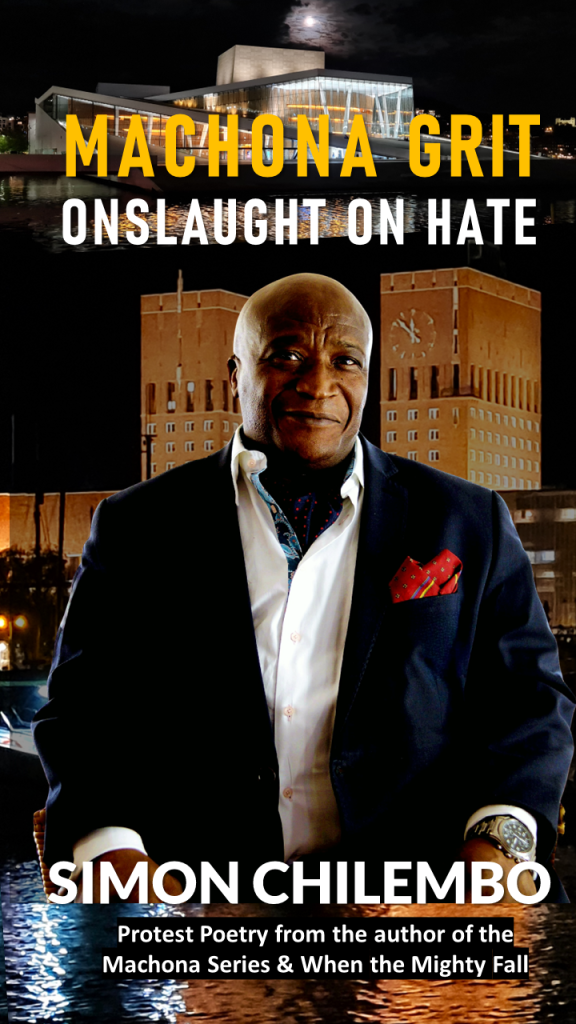
Indeed, I fell once; I fell a second time. On the third fall I lost everything, including face. My people networks collapsed. For once left alone, Rockstar popularity dissipated, I got the opportunity to be better acquainted with myself as a grown-up man. I saw clearly my dreams, my potential in life. I became my bestiest bestie. Now I know myself well. Better than ever. My self-knowledge trip gets better and better and more rewarding each and every new day that comes and goes.
I got to understand that my social survival navigator skills by way of my sellable talents may be many, but the relevant shall come forth and carry me through only specific situational needs in order to respond accordingly to given conditions in different epochs and spaces. The constant steering ethos being my personal motto of change, win, adapt, or die.
I’ve learned to change perspectives, acquire new skills sets, and adopt varying modus operandi to ensure victory in the face of adversity, no matter how long it takes. This knowledge also helps me to take to the next level what I already know and works in my favour presently. Concurrent with applicable talents, the ability to adapt to, and flow with the currents of changing or changed circumstances is a powerful tool for success for me. I have yet to die. I might talk about death on the other side, should I die.
Whilst recovering from the major fall following the devastating personal economy knock that I got from the Global Financial Crisis of 2007-2008, I had fully embraced the idea that all I had to do was to chill and wait for my next big break. I had suffered enough. I had learned more about myself and the ways of the world to know that I had to stay alert, fresh, and strong for the impending big break; whatever it would be, wherever it would take me, and whatever it would do with me.
It was a painful wait. Much reading, thinking, and writing rechannelled the emotional and mental torment to the enhancement of my creative potential as a writer. If I can read about it, I can write about it; tell a story about it in my own words.
If I can write about it, I can deconstruct it; I will better comprehend the challenges, I will see solutions. If I can write about it, I can dream. If I can dream, I can hope. My faith is shaped in the messages of my dreams. My writings tell the story that everything’s gonna be alright ahead. Keep moving.
I have been through so many personal falls and rises that I know when an opportunity for my self-reinvention is nigh. The feeling of anticipation I get in times like these is like no other. I become larger than life in my thoughts so that when the opportunity for me to rise again arrives I won’t lose control of my sensibilities.
Whilst I had visions of yet another multi-million-dollar international trade business venture, as the book writing inspiration suddenly revealed itself one fine morning in August, 2015, I knew that my real calling had finally come home. I got into a frenzy. Feeling like one possessed by the spirits of our greatest ever historical and contemporary world authors, I went on to write the first of my dream-of-one-thousand-plus books before I turn 100 years old.
The debut novel, When the Mighty Fall – rise again mindgames, I wrote in fourteen days. It became about the story of my first twenty-five years in Norway presented in a semi-autobiographical, or fantasy memoir format. Intense emotions and scenes arise in the book: boundaries are pushed and crossed; limitations are overcome, people reset themselves and their lives, stereotypes are crushed. All played out by at least equally intense and exceptional characters. The book has changed my life; it has made me a better person. It started the process by which I continue to learn and understand humanity and our universe better the more I write and think, and think and write.

Working with the book from the start, and living with the variable impacts it continues to have on its readers are a constant, in real-time steep learning curve. I guess it’s a mark of a significant book when the author gets a mixed bag of strong reactions from the readers. Acquire and read the book for yourself so that you can make your own conclusions. Love or hate me as you wish; it is your prerogative in a free world. If you wish to destroy me for your hate, I won’t take you lying on my back.
My embracing this book writing calling of mine was with a clear awareness that my works would never be appreciated by all. I’ve in my life read more than enough books to appreciate that fact well. I’ve over the years come across numerous literary critiques on various media also. What has shocked me, though, is the gross misinterpretation of my thoughts and intentions in and with the aforementioned book. This has been especially so given that it is the least expected section of my readership that has been thoroughly brutal in their condemnation of me and the book. Perhaps this makes the point for writers knowing about their actual and potential target readers. However, as for me, to the extent that I so far write personally inspired factual and fictional narratives as opposed to formal academic, or professional literature, I in principle write for myself. I could never write if I went around thinking about who my readers are, or shall be, and how they will judge my works eventually.
Working clandestinely, my aforementioned brutal critics, on utterly wrongful, naïve conjectures, have gone around tarnishing my reputation in Norway. People read my books. In their readings they come face-to-face with demons they conjure for themselves. They panic; lose it. They judge and punish me without a trial. Pathetic.
Because my conscience is clear, and because of my resolute dedication to growing and developing my creative writing talent and occupation to the 1000th book and beyond, the hurt and emotional turmoil I initially felt are gone. I’m healed. I’m strong. I’m on the rise again, destined for higher and higher heights of success than ever. I’ve written eight more books since the When the Mighty Fall publication. I’m on the roll; right on track. No one, nothing can stop me.

Travelling from Lusaka back to Oslo with Qatar Airways two weeks ago, it was on the first leg of the trip, Lusaka-Doha, that I took time to take a deep dive into reflections of my highs and lows in Norway over the years. I couldn’t help but dwell upon encounters with some really bad people that have always been there to hinder my climb to success in the things that I do by way of making a living in the country. The bad people were in total contrast to the loving and caring ones that I met during my short family matters visit in Lusaka, from August 20-29, 2023.
These bad people have striven to ever hamper my genuine efforts to work to be a decent human being with a well-intended commitment to my personal aspiration of adding value to society to the extent that I’m resourceful and productive. Some have been outright about their dislike of, and disdain for me. I can live with that.
Others have turned out to be Judases in the end. A sickening lot that once ranked high as confidants in my world. These provoke my primordial survival instincts when I consider that they are ever gathering somewhere conniving to micro-assassinate me slowly. A mission I could never allow them the pleasure of achieving. Unless I am overtly potentially or actually caused bodily harm, I am not likely to resort to violence as an immediate self-preservation recourse. However, my warrior creative spirit observes, or experiences and analyses everything.
I apply different writing styles as dictated upon by the moments when I celebrate or decry events around me, both near and distant. I do the same with uplifting or destructive actions specifically directed towards me. That way I get to vent out my frustrations and anger without spilling a drop of blood. Then I can sustain my sense of personal safety and integrity in the face of adversity; irrespective of whether the adversity is overt or discreet. My words are my armour.
The poem I’m going to read came forth during the process of thinking about the latest Judases, wolves in sheep’s clothing that have emerged with their true colours in the dark in recent years. It is a self-preservation, protest poetry piece. This poem also sets my eyes on October 24th, 2023, which will mark the fifth year of my return to Norway after a five-year creative exile in South Africa.
Aware that my enemies had already drawn their swords to slay me, I felt like I had brought myself into the mythical lions’ den at my arrival in Oslo. But I knew I was blameless contra the enemies’ smear campaign against me. I’m grandson of a Daniel, father of my mother. The Biblical Daniel was “… saved from lions by the God of Israel “because I was found blameless before him” (Daniel 6:22). So, I’m still intact; standing tall, breathing happy and free, crafting words into literary expressions in my efforts to make sense of my world.
Similar to other writings of mine addressing my personal life conditions and states of being owing to simply being who I am and the personal choices that I make all the time, I’ve written the poem not out of a need to defend, explain, or justify myself. I do not seek any validation nor accolades from some Jacks and Jills anywhere either. I listen only to my teachers, to men and women of authentic benevolence: proven mediums of global human excellence, love and peace.
I primarily write to purify my soul, ease my pains, and fortify my spirit. I write as a good-intentions, free, have-no-fear spirit with nothing to hide in a free world. I feel good about what I do; I know I’m good at it. And that’s all that matters to me. It is what it is. I am that I am. Take me, or leave me as it is your prerogative in your free world.
I publicise my works in response to what I feel to be a higher call to share my thoughts with those that want to hear my words. This call inspires me to aspire to teach and to speak for the young, the weak and vulnerable: the afraid, the oppressed, the voiceless. That from my life experiences as lived-in moments in time. Also as learned from hearing the voices of others that are much wiser than me.
The wiser than me being my teachers across the board, including some of the most impactful historical and contemporary philosophical and spiritual wells of wisdom of the world. All from one-on-one teachings and discussions with the living, or through consumption of the wise’ thoughts through the variety of multimedia platforms available in our times: from the written word in books, to sight, sound, and motion presentations in live theatres; on cinema, television, and computer screens.
Thanks to the power of the internet, we today have the said multimedia platforms compressed and collapsed into the palms of our hands via mobile telephone technology. Knowledge acquisition and dissemination of the same, verification of facts and propagation of truths, debunking of falsities and crushing of conspiracy theories, are all at the tips of our fingers these days. Therefore, those that manage and live their lives on unchecked assumptions; uninformed, factually fallacious decision-making tendencies do so at their own peril.
©Simon Chilembo 11.09.2023
𝗘𝗡𝗘𝗠𝗜𝗘𝗦 𝗜 𝗗𝗢𝗡’𝗧 𝗞𝗡𝗢𝗪 – 𝗧𝗵𝗲 𝗣𝗼𝗲𝗺
Self-made
New enemies of me
People I don’t know
Lurk in dark corners
I don’t know
Wish me dead
They don’t know
I’m a free soul of the light
I don’t know how to hide
I don’t know how to die
Darkness cannot contain me
Invincible to eyes that see
I worry but little
Of fools groping in the dark
Hoping for a lucky strike
To annihilate me
I’m not
In a state of war
I fear no drones
No stealth missiles threats to
My soul of the light
Defence system
My shield is
My words
I push back with
My voice
I sing one moment
I preach the next
I wail this moment
The moment I growl
Earth trembles under my feet
Self-made
New enemies of me
Faceless people I don’t know
Fools with reasons for
Enmity I don’t know
Duped in fake storytelling tales
Of witches in fright
Of demons of them
Confronting them
In the glow of light
Permeating
The darkest recesses of the universe
In fright
Fight
Shadows of themselves in the dark
Tumbling in muddy faeces
Of their own
Gathered in trenches
Of massless conspiracy constructs
Meant to implode
A free soul of the light
They cannot see
I could never collapse
Into myself
Squash me
Sprout me
As particles of
My flesh and bones
In deep waters
Delusionals don’t know
That’s the closest they’ll ever
Come to harming me
Envious fools don’t know me
Inconsequential fools’ll never see me
Repugnant fools embraced by
Darkness I don’t know
Darkness I don’t care about *
I cannot run away from the light
I have nothing to hide
I don’t know how to hide
I have nowhere to hide
Not even a tomb can contain me
I had to break the law
Drank and drove
For prison walls to hold me
If only for a while
You’ll never find
Remains of me
In pyramids of Egypt
In a thousand years
When I say catch me if you can
I play with words
No longer do I play with
Bloodsuckers
Stabbed me in the back
I could have bled to death
Had it not been for
The light stronger than
Enemies’ self-consuming malice
In the dark
Resilience is the name of
Dark-hearts-impervious
Light games I play
Here I am to see
For all eyes with love
I’m a soul of invictus
I breathe love
As a matter of course
I’m here to stay
Longevity is the name of
My dance for life
Immortality is the name
Of my end-game
Beat that
If you can
𝗘𝗡𝗗
©Simon Chilembo 11.08.2023
On the 24th of October, 2019, I wrote the following article on my private blog, chilembowarriormoves.com:

𝐀𝐑𝐓𝐖𝐎𝐑𝐊𝐒 𝐀𝐋𝐈𝐕𝐄
Reserve Husband in House of Beautiful Things
In my Tumbuka tribe in Zambia, a man is his brothers’ wives’ reserve husband. Traditionally, this is an informal but serious involuntary and platonic bond that commits the reserve husband to taking care of the sisters-in-law and, especially, the children, should some incapacitating or fatal misfortune visit the brother.
I am a single, never-been-married man with several wives from a few select blood brothers and bosom friends. I introduce one of the wives as I invite you on a day at my work place of beautiful things.
Our vehicle is the poem ARTWORKS ALIVE, which happens to be the very first piece in Onslaught 1 in the MACHONA GRIT poetry book.
Poems in Onslaught 1 reflect some aspects of my defiant intellectual, philosophical, and spiritual Personal Integrity Fortress against those that hate me.
𝐀𝐑𝐓𝐖𝐎𝐑𝐊𝐒 𝐀𝐋𝐈𝐕𝐄
Separated
By the pond
Wife from another husband
My Dear Brother Ricky
Son Bolokiyo’s
𝘔𝘢𝘮𝘢 𝘝𝘪𝘤𝘵𝘰𝘳𝘪𝘢 and I
Met in the face of a book
In cyberspace
Celebrating her birthday
We took mikes and sang
We Dj’d
We danced
Fell on our backs in joy and laughter
We dropped the mikes
Went our separate ways
In the perennial dollar chase
𝘈𝘮𝘢𝘭𝘶𝘮𝘦 𝘈𝘭𝘦𝘮𝘦𝘭𝘢
Blazing in my head
Yandikani Lungu’ spirit
With me in
𝘔𝘶𝘻𝘶𝘯𝘨𝘶 𝘔𝘢𝘤𝘩𝘰𝘯𝘢𝘭𝘢𝘯𝘥
In the north
From where lost souls never return
Black Diamonds
Hustling to bling
In the land of
Black gold
Got to work
I’m so happy
I feel
Artworks’ eyes
On the walls
On me
I clear my head
I see
Artworks on the walls
Dance for me
Artworks’ subjects
Come to life in the frames
[…]
𝗘𝗡𝗗
©Simon Chilembo 14/12-2022
SIMON CHILEMBO
OSLO
NORWAY
TEL.: +92525032
April 07, 2023
RECOMMENDATION: Do you want to start writing your own blog or website? Try WordPress!

𝐆𝐋𝐎𝐑𝐘 𝐃𝐀𝐘𝐒
Living in the Now
I don’t live
On past glory
Past glory is what it is
Done
Dusted
Trashed
Buried
Closed chapters
Unforgettable
Crystalized
In my songs
History
For posterity
Education
And they
Detractors
Don’t understand
How it is
That I can rule today
Despite their throwing stones
At me everyday
They thought
They knew me
During my glory days
They can’t figure out
What’s become of me
When they expected
I’d vaporize
In lustreless
Post-glory days life today
Them
Pathetic dimwits
Thinking they are
My redeemers
When even
Jesus ain’t my cuppa tea
I sing Hallelujah
Only ‘cause
It is a beautiful song
Written by a human
Out of human experience
It kindles
My glory
Which comes from within
I’m smooth
I shine
I’m glass
Reinforced
Animosity might rattle me
I won’t crack
I won’t break
I’m black
I’m bold
I glitter
I’m diamond
I’m gold fortressed
Amalgamated
I’m steel
Stainless
Dirt don’t sit on me
Animosities bullet-proofed
Stones might hit me
They won’t punch holes
Through my skin
They won’t cause me harm
Hate war machines might strike me
I won’t crack
I won’t bend
I won’t fall
Glory days might come and go
True to form
Constant
My presence shall beam
Irrespective of time and space
Indomitable
When it is
My time
To grace
My space
Which is all times
All places I stand
Glory is my gift of life
For life
And they
Haters
Will never understand
How it is that
I fear not the future
Faithful to my fate
I have nothing to hide
Never had
I’m an open book
I walk my written words
That’s my nature
True to my name
Writing’s on the wall
Expository
Glory days
Spill the beans
In more ways than one
It’s only a matter of time
Bring it on
Alert
When they appear tomorrow
Them the haters
I’ll see them from afar
Fazed
They don’t know
They don’t know me
They’ve never known me
They’ll never know me
No love lost
Resilient
I live my life today
For future glory today
That’s life worth living today
Elixir of life
Any given day
Glory
Hallelujah
Praise be to
Immortality
Living hard
Living tough
Living strong
Today
Crush me if you dare
𝐄𝐍𝐃
©Simon Chilembo 30/11-2022
𝐀𝐅𝐑𝐈𝐂𝐀 𝐒𝐂𝐑𝐄𝐖𝐄𝐃. 𝐀𝐅𝐑𝐈𝐂𝐀 𝐑𝐀𝐏𝐄𝐃.
𝗡𝗢 𝗛𝗢𝗠𝗘 𝗙𝗢𝗥 𝗕𝗥𝗜𝗚𝗛𝗧 𝗠𝗘𝗡
𝐀𝐋𝐎𝐍𝐄 𝐈𝐍 𝐍𝐎𝐑𝐖𝐀𝐘, 𝐒𝐇𝐀𝐋𝐋 𝐈 𝐑𝐄𝐓𝐔𝐑𝐍 𝐓𝐎 𝐀𝐅𝐑𝐈𝐂𝐀 𝐎𝐑 𝐍𝐎𝐓 𝐔𝐏𝐎𝐍 𝐌𝐘 𝐈𝐌𝐏𝐄𝐍𝐃𝐈𝐍𝐆 𝐑𝐄𝐓𝐈𝐑𝐄𝐌𝐄𝐍𝐓 𝐈𝐍 𝟐𝟎𝟐𝟕?
Question asked by confidants, cynics, and the disdainful alike. To the extent that the current existential reality of the world, and that of myself as an individual remain unimproved, I’ll stay in Norway. I couldn’t live in Africa. Suffering from chronic post-colonialism Post-Traumatic Stress Disorder (PTSD), Africa is a place just too messed up for me. I’ve lost all hope for the future of Africa as a progressive, equal geopolitics partner.
Acknowledging the presence of exceptional individual African minds; also, the potential of imparting good citizenry awareness to children and youth, my hope is not really totally lost. Addressing the attendant transgenerational trauma with a view to healing it is a long parallel process.
Were I to be a national political leader in Africa, I’d become a tyrant overnight as I’d be brutal against the corrupt, incompetent, and insolent ignoramuses. I rather prefer working at the grass-roots.
SIMON CHILEMBO
OSLO
NORWAY
TEL.: +4792525032
09 September, 2022

𝗨𝗦𝗦𝗥 𝗢𝗥 𝗪𝗛𝗘𝗥𝗘? – 𝗨𝗞𝗥𝗔𝗜𝗡𝗘 𝗪𝗔𝗥 𝟮𝟬𝟮𝟮
𝗘𝘅𝗶𝗹𝗲 𝗘𝗱𝘂𝗰𝗮𝘁𝗶𝗼𝗻 𝗢𝗽𝘁𝗶𝗼𝗻𝘀: 𝗬𝗼𝘂𝘁𝗵 𝗤𝘂𝗮𝗻𝗱𝗮𝗿𝘆
During my stay in Lusaka, Zambia, 1975-88, some of my most memorable social interactions involved meeting older and veteran, mostly male South African freedom fighters. These were ANC members. Then in their mid-thirties and above, some of them had travelled the world. They would have been in pursuit of various goals, which included:
- Mobilization of international support for the South African liberation struggle efforts
- Military training
- Education
About all the veterans exhibited the abhorrent traits of arrogance, tribalism, bullying, cantankerousness, outright stupidity, and violence endemic of South African kassie/ township life. Hard partying involving huge consumptions of alcohol and drugs and all that it entails were an integral part of the deal. Needless to say. Shebeen culture carried with into exile. Not that Zambians were any less of party animals.
These veterans were people of all sorts, with all sorts of familial backgrounds. They, or we, as individuals or as special-interests sub-groups were motivated and threaded together by the collective higher dream of the attainment of the liberation of South Africa from Apartheid oppression.
Much as they loved to party by default, the majority of these people took their liberation struggle work very, very seriously. They were highly knowledgeable in the various fields of Social and Natural Sciences, including Mathematics. Some had had guerrilla operations experiences within South Africa in the 1960s; also, Mozambique and Zimbabwe in conjunction with fellow freedom fighters in those countries. Others had participated in major international wars, such as the Vietnam war, and in Latin America. These were hard people.
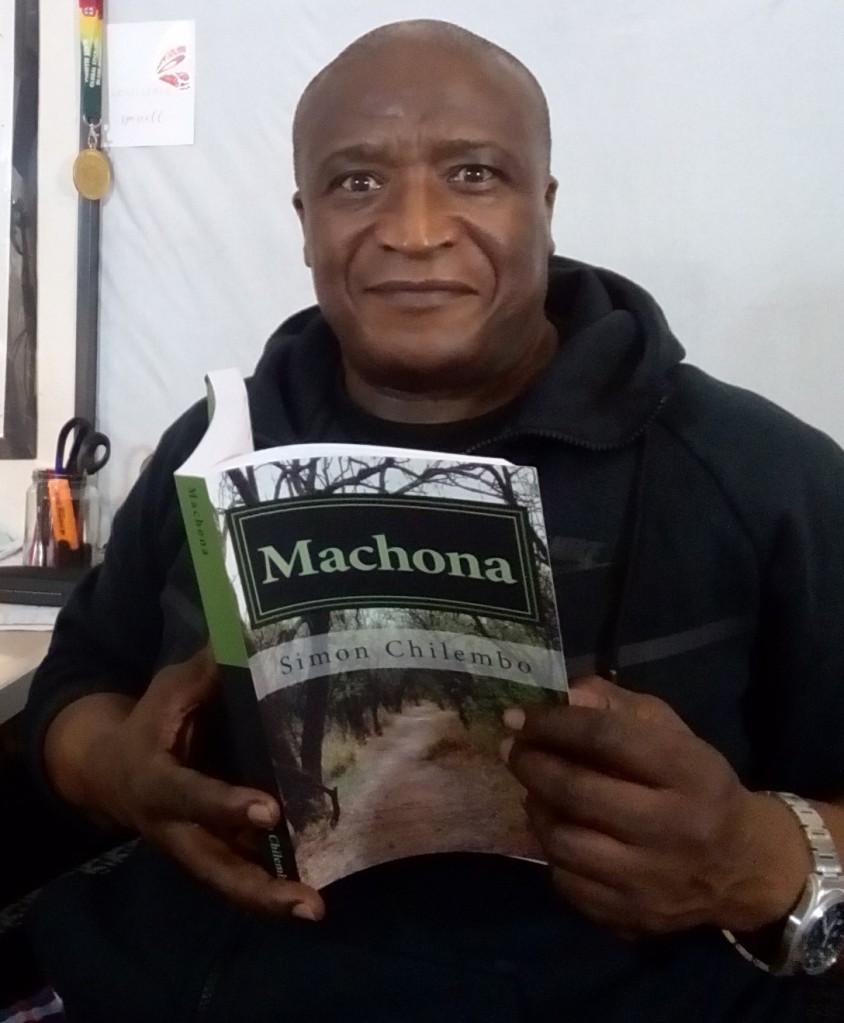
There were three distinct individuals with whom I shared intense mutual dislike for one another. Each in their own ways reminded me of some older guys and grown-up men that were generally not nice people back in my kassie, Thabong, Welkom. These horrible guys hated especially the ever vocal and visible little boys like myself then. It didn’t help my situation being son of an envied foreign man from Zambia. I had already been in Zambia for several years when I heard that, on separate occasions, five of the horrible guys got stabbed to death by younger boys on the streets. Good riddance. For the obnoxious people these men were, their souls deserve neither rest nor peace wherever they may be in after-deathland.
Regarding the three older exiles that didn’t like me very much in Lusaka, I imagine that a mortal confrontation would have ensued at some point had we been in South Africa then. The likely murdered wouldn’t have been me.
Zambia’s relatively laid-back culture had a way of dampening our wild South African township streaks. Otherwise, I got along fine with everyone; particularly those that found me “interesting to talk big struggle issues to”; their words, not mine.
My favourite was Comrade Mjaykes. He was Commander for a unit of younger, recently arrived immediate post-1976 Soweto student uprising exiles. Overriding objective here was to debrief the traumatized youth with various available and relevant medical and therapeutic methods. Intense and continuous conscientization political education was an unavoidable part of the package. And this was the fun part for me. Much of my fundamental geopolitics principles understanding was founded here.
Contrary to many a senior veteran, on the outset, Comrade Mjaykes was an unassuming personality. But he was one the most highly trained and educated around, both militarily and academically. He trained a lot, often alone late at night. He was very fit. And he read a lot too. Of his few personal possessions other than his books, he treasured a satellite radio that he had bought on one of his travels abroad. Commanding English, French, German, Russian, Spanish, and Swahili languages, the super veteran used the radio to listen to current affairs programs from all corners of the world. He was a well-informed man.
Being an exemplary leader with superior oratory skills, Comrade Mjaykes was a complete warrior in my eyes. An enduring source of inspiration that I last saw in 1981. Sadly, he was one of the earliest victims of the scourge of HIV/AIDS pandemic that began to ravage southern Africa and the rest of the world from the 1980s onwards. Comrade Mjaykes died in the newly liberated Rainbow Nation, South Africa, in December, 1994. No doubt, his soul is resting in eternal power. I can’t help but often wonder as to what he would have thought of the South Africa of today.
Acknowledging my Karate prowess already in 1977/ 78, Comrade Mjaykes said to me one day, “Much as I know you’d make a much better soldier than all these young comrades here, I’d rather you went to school first. You have the kind of brains there is a shortage of in our political leadership structures, see? We should be able to organize for you a scholarship for studies abroad. I’ll talk to your parents about this.”
“That would be nice, thank you! You know, my father’s biggest wish for my two siblings and I is that we could go and study overseas. But that’ll remain a pipedream because he could never afford the costs of an overseas education for us. Life is really hard for our family in Lusaka, as you know well.”
“Yes, I know! Your father is a good man. He deserves all the help we can afford him in that regard.”
“Thank you, Comrade! My parents would be extremely happy and grateful if mzabalazo/ the liberation movement can help.”
“It should work out for sure. But, unfortunately, currently available scholarships for full education up to university level are from Yuseserese/ the USSR (The Union of Soviet Socialist Republics). However, no, I don’t want you to go there even if you could leave tomorrow. My analysis of you and how you think tell me that you obviously are not Yuseserese material.”
“Why? How’s that? All I want is to be a doctor. A doctor is a doctor, no? There are Russian doctors at the UTH/ University Teaching Hospital, right?”
“Correct, a doctor is a doctor to the extent that he or she thinks only within the context of being a doctor and nothing else beyond.”
“I don’t understand!”
“Let me explain, Sae: you see, being a doctor, or any other modern, academically attained profession for that matter, is but just one of the multitudes of tools available for us to apply in the overall growth and development of society. You’ll, of course, recall that growth refers to the actual physical expansionary attributes of society; infrastructure, for example. Whereas development refers to the total conceptual and practical work that goes towards visualizing and realizing measurable qualitative and quantitative transformation of society.”
“Yes, growth or lack thereof is a function of ideas and tools constituting a society’s developmental visions as espoused by the incumbent national leadership.”
“Absolutely, Sae. Do remember that the developmental visions are promulgated in national development plans over specific time periods. Your brilliant explanation is further proof that sending you to Yuseserese will be a waste of what I see as one of the most promising of future leadership brains in our soon to be liberated South Africa. You must go to the West. Most of our smart ANC leaders in exile send their children to the West, anyway. There’s a good reason for that.”
In arguing his case, Comrade Mjaykes repeated a summary of standard rhetorical statements I had heard numerous times before:
- The Soviet Union is a Socialist state.
- Socialism is a transition state. Socialism puts together all the building blocks leading to Communism attainment.
- Socialism shall build a strong state designed to enhance optimal economic growth and protection of society and all that guarantees perpetuity of the imminent march to Communism.
- Communism is the highest state of existential wellbeing attainable for society. Under Communism, classes are non-existent; all are equal with equal access to all resources necessary and available for a life of non-ending abundance for all.
- The state machinery, i.e. bureaucracy, has the function of managing efficacy of Communism towards the full satisfaction of societal needs. Under Communism, given certain specific skills according to different levels of societal engineering and resources production and distribution administration, all are at the service of society first and foremost and last.
- Communism has no room for individualism, the basis for societal stratification, or classes creation. When Christianity and other religions talk about heaven, that’s another language for the perfect Communist state, actually. Only that Communism has no overbearing figures of God as portrayed in religious belief systems.
“That is the rosy picture of Communism, Sae. The reality is different. Just like the concept of heaven for the religious, Communism is utopian. The march to Communism starts and ends in the already dysfunctional Socialism, really.”
“But I thought that attainment of the Communist state was more realistic because it was based on the dialectical material world for material human beings without mythical angels and gods in even more farfetched heavens above somewhere in the distant sky.”
“Communism attainment would be more realistic had it not been for Socialism’s killing of the human spirit, Sae.”
“You are losing me now, Comrade Mjaykes!”
“I know that no one here has ever mentioned that last statement to you. I deliberately chose to prematurely take your political education to the next level now. That’s only because I really want the best for you and the future liberated, non-Communist South Africa.”
“If I may say so, you are beginning to sound like a sellout, Comrade Mjaykes. Aren’t you risking condemnation by others should they hear you talking like this to me now”
“No, my views in this regard are already known to even the highest levels of our command structures. My devotion to the struggle is known; I having been tested on many, many occasions over the years. But because we, the ANC, aren’t hard-core Socialists yet, there’ still much room allowed to hold principled divergent opinions in the on-going discourse of how to establish a unique, workable developmental model for the future South Africa.”
“I see!”
“And that is the point, Sae; behind the apparent success of Socialism in the USSR, North Korea, Cuba, and China, to name the most prominent, there are millions of robotized people whose senses of individuality have been broken to the core. Indeed, people may be provided with the best education in the natural and social sciences, producing top doctors, engineers, economists, and many more vocations. But that’s often as far as it goes.
That’s because, through various political indoctrination methods, backed by extremely brutal national security forces trained to think and act as robotically themselves, the ruling elite ensure that the people cease to think independently and critically over existential questions.”
“But I’ve thus far been made to believe that people in Russia and all these socialist places live happily ever after. Moreover, Russia’s support of ours and others’ anti-imperialist struggles were for that the world must unite against capitalism’s exploitative socio-economic relations subjecting us to lasting poverty and subjugation.”
“That’s a myth, Sae. The truth is that us South Africans we are just too free-spirited, too wild to tame for Socialism. It goes without saying that Communism isn’t even worth talking about. Our allied South African Communist Party is a good platform for training in polemics and rhetoric more than anything else. We’ll discuss higher level Capitalism issues another time.”
“I must say that this new side of Socialism has shocked me, Comrade Mjaykes.”
“You see, Socialism works for, and constructs linear thinkers; people who cannot think outside the box. People who think only in straight lines and right-angles in fixed operational spaces. Perhaps that may be one of the reasons Russians are superior chess players! I don’t know.”

It’s at about this time that my interest in chess waned. I dreaded the idea of my brains turning square! Indeed, many a South African liberation struggle veteran is a formidable chess player. If they ruled today’ South Africa as exceptionally as they mastered chess, the country would probably be in a better place. But political leadership is an infinitely open field presupposing capacity for paradigm specific, or beyond as necessary, multifaceted thinking in problem solving and application of solutions derived thereby.
“You have on many occasions demonstrated that you are a more independent and well-rounded thinker than your contemporaries here, Sae. I know that that’s why some of the older comrades here don’t favour you much. They simply hate your guts. Highly educated as they are also, these guys don’t take it kindly when they are pushed out of their intellectual comfort zones, especially by a young comrade like you. They are Soviet educated.
“I’d hate to see you stagnate or degenerate intellectually as you get older. That’s why you can’t go to Yuseserese for studies, Sae, you see? One or two young comrades of your calibre have died out there before. Some have had mental breakdowns. It would break my heart to see that happen to you. Although the truth is suppressed in our organization, racism is also rife in the USSR. Encountering racism out there is tantamount to jumping out of the South African Apartheid pan into the Soviet racism fire, if you ask me.”
At own private initiative elsewhere, the first scholarship chance I got for an overseas higher education was to Social Democratic capitalist Norway in 1988. I got stuck here. Primarily out of idealism and for love. No regrets. Norway is the richest country in the world. All things considered, life is as good as can be in Norway. Of course, never perfect, never fully satisfactory for everyone, but Norway does deliver for its people.
And the country is a leading Foreign Aid nation. Norwegian Finance Ministers have for years been megastars amongst their global colleagues. No Communism here. The few ardent Norwegian communists around are but fringe individuals or insignificant groupings with inconsequential social change impact, if any at all.
I write books now. I am what they call norsk forfatter. ‘Forfatter Simon Chilembo’ sounds ever so cool! I write without fear or favour, freely following my creative fantasies to wherever they take me. I live happily ever after in an effectively non-Communist state. If Comrade Mjaykes could see me now! All gratitude due.

USSR-Socialist trained South African national leaders across the board fail to get the Rainbow Nation out of the mess they’ve plunged it in after the fall of Apartheid in 1994. In big geopolitics questions, the USSR yoke is sitting comfortably on South Africa’s neck. Mzansi drowning with a sinking ship that is post-USSR Russia fo sho.
The USSR fall with the Berlin Wall in 1989 give rise to Russia. In essence, Russia is the ghost of the former USSR. Ghosts are no touch of reality. It’s therefore not surprising that, identical to South Africa contra Apartheid’s subsequent collapse five years later, Russia never could rise from the post Berlin Wall shambles. Oligarchs ruthlessly plundered the Russian state coffers, taking corruption to the next level.
Post-1994 South Africa created its own egregious oligarchic class through the State Capture phenomenon. This has shown many a Comrade from humble beginnings becoming millionaires to billionaires overnight. They have acutely incapacitated the South African state’s ability to optimally deliver the promise of a better life for all in a united, non-racial, non-sexist and democratic republic. The post-1994 South African oligarchic class has given the formally Apartheid state’s corruption colour. The former is living in the past. They have lost sight of the reality that Russia is not the USSR. Dismembering of the USSR is permanent.
In 2022, Russia invades Ukraine with chess moves mentality. Some things never change. It has turned out that Ukraine is not a chess board for Russia to play on as it wishes. Things have changed here. Parochial USSR legacy oblivious to this fact. Just for starters, young men of my age in the late 1970s are dying, falling like sacrificial chess pawns. The rest is a tragic war on a straight line trajectory ending potentially with a nuclear war catastrophe.
World in panic makes noise. USSR legacy ears are plugged. USSR marble eyes see imperial rebirth victory where the odds for survival are impossible to turn around. Meanwhile, Norway gives shelter and protection to Ukraine children and women running away from the ravages of Russia’s war on their country. No better place to be. Communism allergic. Progressive society as close to heavenly terrestrial opulence as can be.
SIMON CHILEMBO
OSLO
NORWAY
April 23, 2022
PS
The pandemic is still in our midst. Fears and factual untruths haven’t abated. In my 7th book, Covid-19 and I: Killing Conspiracy Theories, I highlight fallacies red lights and how to identify them. Order the book, read, and be inspired by my philosophical exposition on the matter. It might save yours and your loved ones’ lives.
DISCLAIMER: I neither offer nor suggest any cures or remedies. I promote fearless, independent thought and inclination towards pursuing science-based knowledge in times of, indeed, frightening, life-threatening phenomena in the world.

RECOMMENDATION: Do you want to start writing own blog or website? Try WordPress!
𝐆𝐈𝐕𝐄 𝐌𝐄 𝐓𝐈𝐌𝐄
𝐁𝐥𝐚𝐜𝐤 𝐄𝐱𝐜𝐞𝐥𝐥𝐞𝐧𝐜𝐞 𝐑𝐞𝐬𝐢𝐥𝐢𝐞𝐧𝐜𝐞
Please
Give me time
Walking a straight course
Is not
A given for me
Given are
Obstacles
From the first step to the last
I’ve got sores
Under my feet
I walk
Spiked metal
Carpeted roads
In my time
I’ve danced through
Landmines in my time
Bombs clapping sounds
In my ears
Don’t stop
Scars on my body
Don’t heal
I eel through
I scale
Razor wire fences
To get anywhere
My muscles are wasted
I’ve walked through fire
It’s a wonder
I can move at all
My eardrums hurt
It’s a wonder
I can hear
Birds sing
My will is intangible
It cannot be isolated
Cannot be broken
I move as I will
I get there
The elements
Give me no easy task
To set my roots in the soil

Hostility
Above and below
The ground is
A given for me
I must fight
All the time
I must fight
Absolutely
For everything
To reach the top of
The mountains
I climb
As a given
To sustain my life
Even just to serve
From a mountain top
When I’d rather
Rock and roll
Down to home base
In satisfaction
I’m ever thrust over the edge
To tumble ’n roll
Over ’n over
In pain
Hitting home base
Body twisted
A bone or two broken
I’m taken
Back in time
Back in space
More obstacles
To overcome
Another mountain climb
To the top
Where keys to
My well of joy lie waiting
If love
Blanketed the earth
I’d reach for you
My joy
Every step I take
Give me time
I cannot breathe at your pace
I carry
Weight of the world
Laden with hate
On my shoulders
I fight bigots
Hating me
For colour of my skin
They demean me
They seek to dehumanize me
Every step I take
They twist my words
Slander me
Project myths that
Colour of my skin
Facades evil in man
I get enemies for free
They muddy my paths
Spill oil over roads I walk
I slide and fall
I get up
Burn the midnight oil
Keep moving on
One step at a time
Against the clock’s
Sixty tick-tock seconds steps a minute
Sixty tick-tock minutes steps an hour
My steps have time tick-tocks
Of their own
As a given
In my precarious existence
Bigots
They seek
To break my spirits
Every step I take
I am indomitable
My spirit terrifies them
They shoot me
I die
They created Jesus’
Resurrection story
To cover their
Confoundment over
My resilience
Give me time
You’ll see in time
That I really am human too
Everything they can do
I can do better
As a given
I must work
Ten times as hard
Anytime
In my time
There are times
The agony inside
Is unbearable
My head
Wants to explode
At not only
The bigots’ cruelty
But their horrendous
Outright stupidity
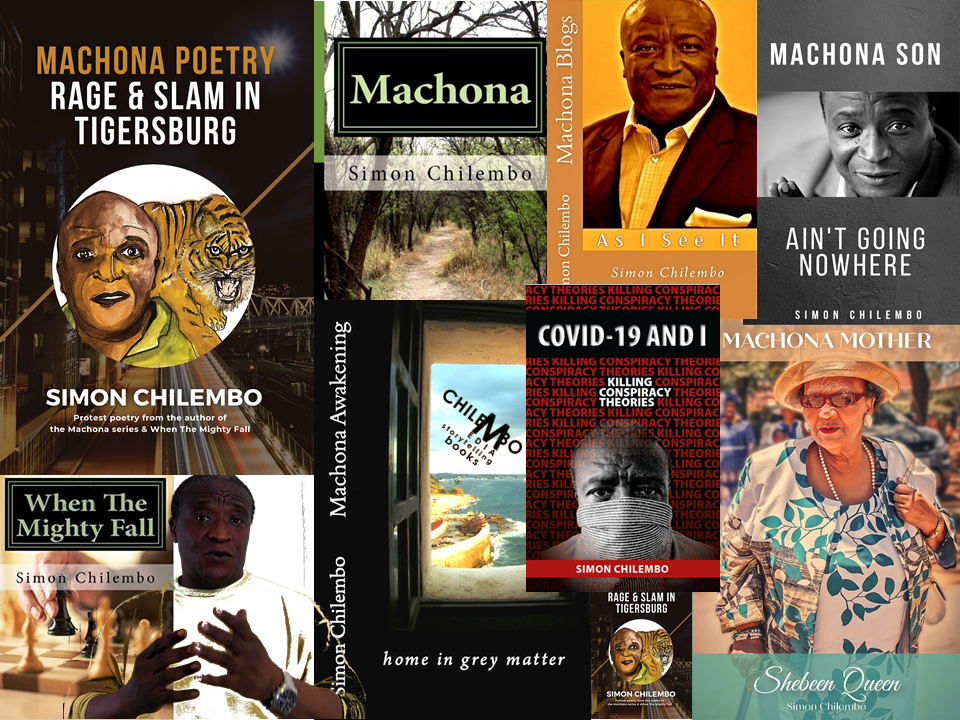
When reason doesn’t work
When prayer doesn’t work
Because their God is made
In the image of them bigots’
Collective derangement
I have to stop and cry
From time to time
Please give me time
For my tears to dry
Starting from below zero
With zero privilege
Against these meanest odds
I’ll rule the world
It ain’t for nothing
I’m the oldest
Human being on earth
They created Adam
To sideline me
Doesn’t work
I’m here
As a given
On the eve of
My victory
It’s beyond haters’ imagination
But
I shall blanket
The world with love
As a given
Some day soon
Nothing can stop me
It’s only a matter of time
Brace yourself
My love
𝘈𝘪𝘨𝘰𝘣𝘦𝘬𝘪 𝘭𝘦 𝘯𝘵𝘴𝘪𝘮𝘣𝘪
This Black don’t bend
𝘈𝘪𝘹𝘩𝘦𝘬𝘦𝘻𝘦𝘬𝘪 𝘭𝘦 𝘯𝘵𝘴𝘪𝘮𝘣𝘪
This Black don’t crack
𝐄𝐍𝐃
©Simon Chilembo 06/04-2022
SIMON CHILEMBO
OSLO
NORWAY
TEL.: +4792525032
April 13, 2022
PS
The pandemic is still in our midst. Fears and factual untruths haven’t abated. In my 7th book, Covid-19 and I: Killing Conspiracy Theories, I highlight fallacies red lights and how to identify them. Order the book, read, and be inspired by my philosophical exposition on the matter. It might save yours and your loved one’s lives.
DISCLAIMER: I neither offer nor suggest any cures or remedies. I promote fearless, independent thought and inclination towards pursuing science-based knowledge in times of, indeed, frightening, life-threatening phenomena in the world.
RECOMMENDATION: Do you want to start writing own blog or website? Try WordPress!
𝐒𝐄𝐋𝐄𝐂𝐓𝐈𝐕𝐄 𝐁𝐋𝐄𝐄𝐃𝐈𝐍𝐆
𝐑𝐚𝐜𝐢𝐬𝐦 𝐢𝐧 𝐖𝐚𝐫: 𝐓𝐡𝐞 𝐔𝐤𝐫𝐚𝐢𝐧𝐞 𝐂𝐚𝐬𝐞 𝐟𝐨𝐫 𝐀𝐦𝐞𝐫𝐢𝐜𝐚
Abused people
Adaptive people
Admirable people
Adventurous people
Alert people
Amazing people
Ambitious people
Ancient people
Appreciated people
Assertive people
Athletic people
Attractive people
Awesome people
Beautiful people
Blessed people
Blue eyes people
Boisterous people
Bravado people
Brave people
Brazen people
Bright people
Brilliant people
Capitalist people
Change people
Cheated people
Chosen people
Civilized people
Classy people
Clean people
Close to home people
Combative people
Competitive people
Confused people
Conscious people
Conservative people
Considerate people
Co-operative people
Creative people
Credible people
𝘊𝘳è𝘮𝘦 𝘥𝘦 𝘭𝘢 𝘤𝘳è𝘮𝘦 people
Critical people
Cultured people
Curious people
Daring people
Decent people
Demanding people
Democracy people
Deprived people
Deserving people
Desperate people
Determined people
Dignified people
Dominant people
Educated people
Emotive people
English speaking people
Entitled people
Eurasian people
European people
Exemplary people
Exhausted people
Faith people
Family people
Fertile people
First World people
Fleeing people
Flexible people
Free people
Freezing people
Frustrated people
Gifted people
Graceful people
Gracious people
Grateful people
Hard-working people
Hardy people
Heroic people
High tech people
Higher people
Hilarious people
Historic people
Hopeful people
Hungry people
Imperial people
Incredible people
Independent people
Industrious people
Information age people
Informed people
Innovative people
Intelligent people
Intuitive people
Leading people
Liberal people
Liberated people
Liberty people
Life-loving people
Like you and me people
Literate people
Live next-door people
Loveable people
Loyal people
Methodical people
Middle class people
Modern people
Money people
Moving people
Non-Communist people
Non-Marxist people
Non-Socialist people
Normal people
Open people
Oppressed people
Optimistic people
Our people
Palatable people
Party people
Passionate people
Patient people
Powerful people
Productive people
Prolific people
Proud people
Realistic people
Rebellious people
Refugee people
Related people
Religious people
Resilient people
Resourceful people
Responsible people
Revolution people
Robbed people
Robust people
Sacrificial people
Same people
Savvy people
Sensitive people
Separated people
Skilled people
Slavic people
Smart people
Sophisticated people
Sovereign people
Special people
Spirited people
Splendid people
Split up people
Strong people
Strong-willed people
Suffering people
Superb people
Supportive people
Survivor people
Sweet people
Talented people
Tenacious people
Terrific people
Terrified people
Thinking people
Traumatized people
Trendy people
Ukraine people
United people
Upper class people
Urbane people
Visible people
Wanderer people
Warrior people
Wealthy people
Well-off people
Well-read people
Wise people
Wonderful people
Worn out people
White people
Africans
Afro people
Arabs
Asians
Bitches
Black people
Buddhists
Christians
Coloured people
Hindus
Jews
Junkies
Latinos
LGBTQS
Muslims
People of colour
Sikhs
Weirdos
Again
Asking for a friend
Who is better
Who is worse
Who is who
To judge
My friend wants to know
Some more
Should the fascists
Have it their way
What’ll happen to
American women
American children
American weak and vulnerable
When the second civil war
Has set
America burning
Whites scrambling for supremacy
Blacks insisting that
Their lives matter
In the inferno
Onlookers denigrating
From behind the southern border wall
America on fire
Burn motherfucker
Burn
Fat lady ain’t gonna sing
Anytime soon
Who whines
𝘕𝘺𝘸𝘦-𝘯𝘺𝘸𝘦 now
As in
𝘔𝘢𝘬𝘦 𝘈𝘮𝘦𝘳𝘪𝘤𝘢 𝘎𝘳𝘦𝘢𝘵 𝘈𝘨𝘢𝘪𝘯
𝘛𝘩𝘦𝘺 𝘴𝘵𝘰𝘭𝘦 𝘵𝘩𝘦 𝘦𝘭𝘦𝘤𝘵𝘪𝘰𝘯
𝘋𝘢𝘮𝘯 𝘴𝘭𝘦𝘦𝘱𝘺 𝘑𝘰𝘦
𝘒𝘩𝘮𝘢𝘭𝘢-𝘬𝘩𝘢𝘮𝘢𝘭𝘢
𝘕𝘰𝘯-𝘴𝘦𝘦 𝘗𝘭𝘰𝘰𝘴𝘦𝘦
𝘐𝘮𝘱𝘦𝘢𝘤𝘩𝘮𝘦𝘯𝘵
𝘙𝘶𝘴𝘩𝘺𝘢-𝘳𝘶𝘴𝘩𝘺𝘢𝘢𝘢…
Keep God out of this
It’s about us
𝐄𝐍𝐃
©Simon Chilembo 07/03-2022
SIMON CHILEMBO
OSLO
NORWAY
TEL.: +4792525032
March 09, 2022

BOOKS
To Ban or Not to Burn
At eight-to-nine-years of age, 1968-69, I was too young to see the implications of not attending school for two years. My Grade 1 year at St. Rose Primary School, Peka, Lesotho, was a long one. It lasted from age four-and-half, 1965, to six-and-half years old, 1967. I, at instant notice and under dramatic circumstances, had to leave Lesotho in the earlier part of 1969. There was no time to acquire school reports and formalized school transfer documents to enable me to continue with schooling in South Africa. Not that I knew anything about such documents at that time, though. In any case, my expectation had been that I’d return to my school in Lesotho once the situation had become normal and safe again.

Author/ Storyteller/ Poet/ Publisher/ Warrior/ Machona Son
Towards the end of 1969, I had already begun to discern the bigger social dynamics around me. That applied to both in my home and with regard to the extended family relations, as well as the wider society to the extent that a nine-year-old child can make sense of their world. It hit me like a bomb, therefore, when my parents unexpectedly made it clear to me that schooling in Lesotho was over for my younger brother, Thabo, and I. We’d resume studies in my mother’s hometown, Thaba Nchu, 210km to the south of my hometown, Welkom. We had been to the former to celebrate Christmas 1969 with my uncle Moses’ new and young family.
The anger and frustration I felt towards my parents at that time hurt me so much that it felt like I had river stones in my stomach. This feeling of profound disappointment and helplessness would last the entire two years that Thabo and I stayed in Thaba Nchu. That I’d have a bad relationship with my uncle Moses’ wife didn’t help matters much. I became a bundle of mental and physical tension. Otherwise a generally happy-go-lucky child up to that point, I became unruly in my uncle’s home.
Understanding Thabo and I’s plight regarding education access given our background, Mr Justice Mmekwa facilitated Thabo and I’s resumption of schooling in Thaba Nchu. Eldest son of my uncle’s landlady, ‘Masang, he was a respected primary school Principal in a neighbouring town called Tweespruit. Without this kind man’s help, it would have been extremely difficult to find any school places for us in then Apartheid South Africa. As an independent, non-racial state, Lesotho represented values contrary to those of then anti-Black progress racist Apartheid South Africa.
I remain eternally grateful to Principal Justice Mmekwa for his assistance, support, and inspiration. He was a man of class; ever well-groomed. A fine family man exuding charisma that few of my adult male role models of the time had. Other than the traditional Barolong Chief, and Mr Ngophe the trader in the neighbourhood, the Principal was the only man with a car. The latter’s black Mercedes Benz power machine made my father’s then blue Opel Rekord car look like a toy beside the former. No doubt, the man is one of those lasting I wanna be like that when I grow up references in my life. I had already begun to be aware of my predisposition towards being there for the weak and vulnerable in times of need. Principal Mmekwa’s gesture enhanced that attribute in me.

Author/ Storyteller/ Poet/ Publisher/ Warrior/ Machona Son
A fixed image of Principal Mmekwa in my head is that of him majestically stepping out of his car each time he arrived home from work; a rolled newspaper clutched under his left armpit, with a book in the hand. On the right hand he would be carrying the most beautiful leather briefcase I’ve ever seen. In tweed outfits (never a suit), a Stetson on his head, and a smoking pipe jutting from his mouth, he was a sight to behold. His “Dumelang, bana! Hello, children!” baritone voice resonates in my head to this day. His eyes were the suns.
In January, 1970, Thabo and I were well-received by the Principal of the then newly-opened Namanyane Primary School in Selosesha Township. The Principal, whose name I’ve forgotten, was another affable man. It was advantageous that it turned out that he was homeboy with my mother and uncle Moses from their village, Paradys, about 30km from Thaba Nchu town.
Thabo and I’s respective class teachers and others were really nice to us. That made the two years at the school very enjoyable for me indeed. Whilst at school, I could forget about the unpleasant atmosphere at home with my aunt. I had already experienced the joy of choral music singing in Lesotho. However, I got the first ever taste of inter-school choral singing competitions at the new school. In my head, it is as if there was singing every day of school during the years 1970-71. The sounds of rehearsals voices of different categories of singing according to age and song vocalization skills still buzz in my head in my moments of meditative inner silence.
I got the first taste of formal competition victory when my choir, the Junior Choir, won the regional schools choral music competition in 1970. The category song was called Mmino wa Pino/ Singing of a Song. It spoke about the universal appeal of music; how it, music, defied all the prevalent artificial discriminatory practices in society. My eyes began to open to Apartheid in a critical way at about this time. My life would never be the same again.
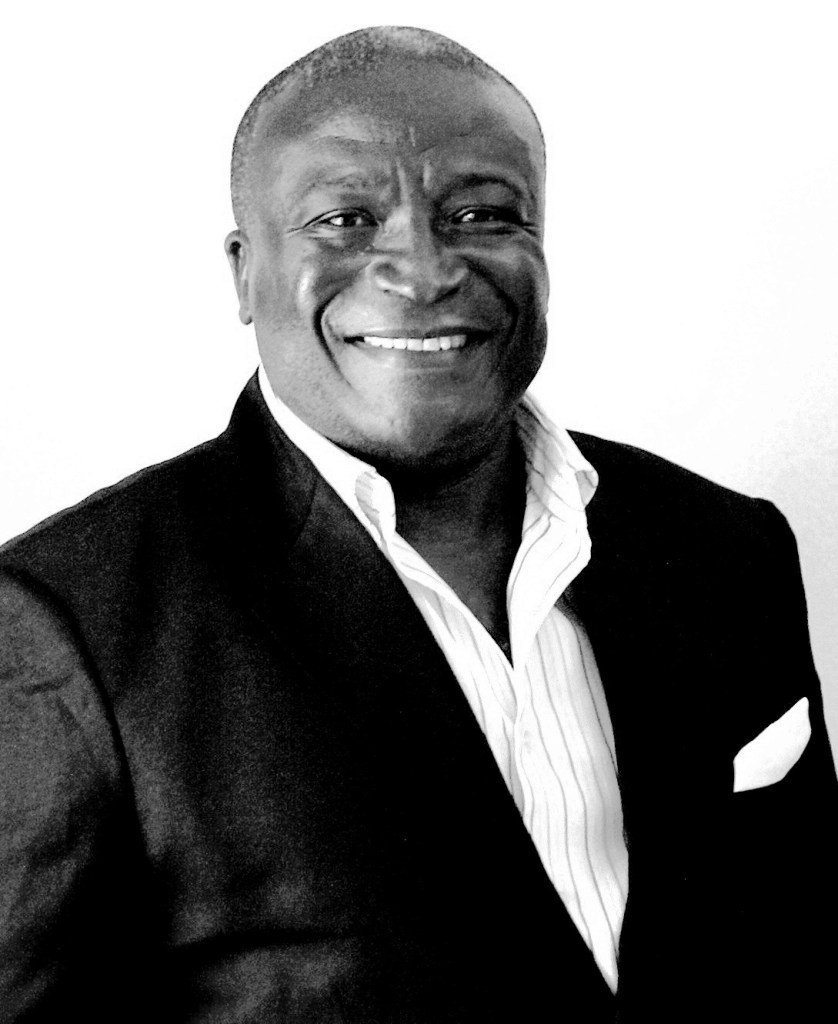
Author/ Storyteller/ Poet/ Publisher/ Warrior/ Machona Son
It is also at this time that I began to consciously think about the big questions of life around hate, love, peace, and all other tendencies reflecting inequities around me. Inspired by the Apollo 11 moon landing in the previous year, I recall one day wondering if it were possible to relocate to another place far, far away from all the evils of mankind on earth.
At the same time, I discovered that whereas I was in Grade 3 that year, 1970, several of my agemates were two to four classes ahead of me. In no time I had figured it out that the situation was due to the fact that I had lost the two school years of 1968-69. The difference would probably had not been that much had I progressed normally from Grade 1 in 1965, I reckoned.
If I ever had a sore moment at Namanyane Primary School in Thaba Nchu, it was the illumination of how much schooling time I had previously foregone due to circumstances beyond my control. The school Principal, my class teacher and some of their colleagues also found it hard to understand how I could have academically stayed that far behind my contemporaries. This enhanced my new sense of bewilderment here. I was actually a brilliant pupil. And, ideas of what I wanted to be when grown up were already crystallizing in my head. I began to wonder some more about whether there didn’t exist another place far, far away where I could get educated quickly to be a doctor without having to bother about the other kids that I felt had had an unfair lead over me. Visions of living in other worlds preoccupied my mind from then on.
Thinking about the moon was not exciting because I had already learned that normal human life was impossible out there. But the moon remained a major point of reference until in my class we began to read stories and answer questions from books. We began to read and write down our answers to the questions set in the books. This was a major leap from verbally answering questions from texts our teacher would have read to us.
I don’t recall any of the stories the teacher ever read to us. But I know that listening to them induced in me a feeling of flying away like a bird during the reading séances. This gave me a special inner peace that detached me from my frustrations with my derailed academic progress. In this state of mind, negative forces around me ceased to matter. The challenge, though, was that the reading sessions were ever so short. Nevertheless, that made me to ever want to look forward to going to school the following day. Truly happy memories.
Author/ Storyteller/ Poet/ Publisher/ Warrior/ Machona Son
We may have read more stories when the time came for us to read our recommended class text book on our own. That’s because the first two stories I remember, and got to make a lasting impression on me, were somewhere in the middle of the book. Both in appropriate condensed forms, the first story was about a man whose tragic life led him to unknowingly kill his father, and end up marrying and having four children with his own mother. The second story was about two men in an intense competition to reach the South Pole one before the other.
My class teacher made it clear that the first story was not for real. It was created a long, long, long time ago by a writer and thinker from an overseas land called Greece. Although it was a story too difficult to discuss thoroughly then, she told us that its idea was that sometimes we cannot escape what destiny had in store for us. It was therefore important to aspire to be as descent a human being as possible, despite the troubles of our world. She went on to say that we were going to read even more books as we grew older and progressed with our education.
“Books are a safe store of knowledge about who we are; just like banks keep our money safe,” she concluded.
As regards the second story, it was from reality, the teacher enlightened us. The story highlighted the importance of determination towards the achievement of our goals as we grew older. She said that books that tell real life stories teach us about what it takes to attain certain goals. The books help us to learn not to make the same mistakes that the writers shall highlight in their stories.
“Real life story books teach us how to be human in ways we should easily relate to, even if we could never replicate events of the stories as they are narrated in the books,” the teacher said. She went on to say that it was the aim of acting in the bioscope and theatre stages to seek to bring book stories close to life as much as possible. Some of us would be actors when grown up, maybe?
Two years later, I’d see for the first time a professional theatrical performance: Sikhalo, by the legendary South African playwright, Gibson Kente. This play brought home to me a clearer picture of the Black condition under Apartheid South Africa. I got a better understanding of the monster. The monster had to die, even if many of my people had to die in the process. We could cry and laugh away our troubles through the arts. Education was a crucial weapon in our struggle for freedom. If education was found in books, then I’d read and read them all.
It was one thing to hear the teacher’s philosophical discourse on the stories and the value of books. From reading and understanding the essence of the stories, what happened with me was that my mind for the first time in my life saw the existence of other worlds on earth. I could, perhaps, escape to these new places for my peace of mind. The more I read, the more the world, life, made sense to me, for better and for worse. The more I wanted to explore human nature in order that I might better understand myself and my purpose in life.
The interesting coincidence is that I have now been living in Norway, the land of Roald Amundsen, one of the two South Pole explorers mentioned above, for nearly thirty-four years. Greece was my first encounter with Europe in 1985. Talk about fate!

Author/ Storyteller/ Poet/ Publisher/ Warrior/ Machona Son
I came to Norway via Zambia, my fatherland. Landing in Zambia in March, 1975, would turn out to be a thirteen years’ enduring be careful what you ask for moment. Zambia took me down, took me up, tossed me mid-air in stormy weathers, took me up and up to finally thrust me even farther away to new lands in my pursuit of a suitable place for my peace of mind. Thanks to Zambia, upon my landing in Oslo in August, 1988, I was a mean physical fighting machine, a polished rising international intellectual powerhouse with, of course, a taste for the finer things in life. Zambia gave me tough lessons in how to be a man of the world. Such that, no, landing and eventually living in Norway has never been a culture shock trip for me.
The two years prior to my parents relocating the family to Zambia, 1972-74, presented me with a trove of pubertal-early-teens growing up thrills: consolidation of my sense of identity, winning respect from my peers, earning own cash, rock-and-roll with girls, street survival mentoring from older friends of both sexes, travelling, sport, and much more. At school I was a star by default. The vision of my being a doctor when grown up was becoming more and more real. That as talk about beginning to look for potential bursary/ scholarship sources for me had begun. I got inspired to want to read more and more intensely so as to maintain my top-of-the-class status at school.
Reading then involved a great deal of cramming, especially during examination seasons in June and November/ December every year. For homework assignments, I could in one sitting lasting perhaps an hour, read and memorize all the recommended texts for the day in all the subjects: English, Afrikaans, Maths, History/ Social Studies, General Science, and Bible Studies. That was the most natural thing for me to do at the time. However, it used to baffle me when some of my classmates used to complain about how difficult it was for them to either find time or concentration to read at home. I didn’t know how I could help them; neither was I keen to, really, because competition for academic excellence was very stiff. Only the very best of the best got access to the extremely scarce bursaries/ scholarships provided by various private business entities and rich individuals.
Extra-curricular reading during this time mainly comprised newspapers, various weekly and monthly entertainment magazines and comics. Bible stories of Moses, Samson, Kings David and Solomon captured my imagination in a huge way. So, I read the Bible a lot. Some of the best literature-induced mental travels I’ve ever had have been during this time. Reflections over the adventures of the mentioned figures have lastingly influenced my view of life.
Moses opened my eyes to the sense of devotion. Samson’s warrior heart ceases never to give me goose bumps; his wife, Delilah’s betrayal of him may just be one of the reasons I’ve yet to get hitched. I don’t know. King David and his son’s lust issues gave me a special perspective about power and sex. And, then, King Solomon’s proverbs in praise of his women paved the way for the lessons of love that I’d later read about in greater depth in The Perfumed Garden. I learned from the latter book that if I wanted to maximally enjoy physical intimacy with a woman, I must handle her with utmost tenderness, just like when I consume my favourite juicy fruit. This book broadened the mystery of misogyny and violence against women. Beats me.
After over three months on the rails and road, we arrived in Lusaka a tired family unit. The journey had been hard on us on many fronts. Our joy at having finally arrived home turned into acute disillusionment within a matter of days. Longstanding conflicts in my father’s family made it difficult for us to bond. Subsequently, at different times and under different circumstances, my parents, my two surviving younger siblings and I would leave Zambia. The youngest sibling, Dintletse, died and was buried in Lusaka in 1983. I came to Norway, whilst the others returned to South Africa.

Author/ Storyteller/ Poet/ Publisher/ Warrior/ Machona Son
Starting with my uncle, Mr OB Chilembo’s private library at home, arrival in Zambia was an introduction to a world of books like I had never seen before. In the home library, I could mentally fly away from bitterness bordering on hate in my family situation then: I’d find myself following murder investigations in the USA, falling in love with English women in London, fighting in World Wars 1 and 2, investigating human nature as a psychologist, defending criminals in courts all over the world, singing and dancing Jazz on Broadway, playing World Cup football, getting lost in the Sahara, robbing banks in Paris and Rome, escaping from Russian labour camps in Siberia, pretending to be dead in Mao Tse Tung’s China’s rice paddies, hiking across Australia, and much more.
The comfort I derived from reading books was like no other. I don’t quite exactly remember what specific books and other publications I read especially throughout the rest of 1975, when I didn’t attend school. But I know for sure that much of the reading helped me make sense of my reality. That way I could, indeed, find some peace in my inner world.
I found the reading culture in Zambia amazing both in magnitude and diversity. Even Radio Zambia had an African Literature reading hour most working day afternoons, if I recall. Zambians had no culture of displaying their book collections on shelves in living rooms. I’ve met numerous foreigners who had concluded that Zambians were not well-read for not having showy bookshelves in their houses. Quite the contrary.
Well-off Zambians like my uncle had private libraries, as I’ve already alluded to above. Otherwise, people valued their book collections so much that they kept them in their bedrooms, or such other private spaces. Others concealed the books in locked, opaque cupboards in their living spaces. Upon entering my uncle’ spacious living and dining area, including a bar, there was almost never a book to see.
Uncle OB has on more than one occasion spoken in awe about how vast a collection of exclusive books two of his contemporaries had in their private libraries. Only selected individuals could enter here. If you didn’t ask, or you didn’t get caught up in a heated debate necessitating available literary referencing, you’d not likely see your Zambian host’s book collection. Erudite or not, Zambians can be formidable debaters, if not orators, thriving on the pedantic.
Author/ Storyteller/ Poet/ Publisher/ Warrior/ Machona Son
With time, some of my paternal cousins of my age took me to the Lusaka City Library. I don’t recall ever reading or borrowing a book from there. But the picture of me walking around and around the library gazing at the books in amazement for what felt like hours on end, day after day, never leaves my mind. I had never seen that many and huge book walls anywhere.
The following year, 1976, I started schooling in Grade 7 at Lusaka’s Olympia Primary School. That a mobile clinic came to the school for pupils’ periodic medical check-ups and the like wasn’t such a big deal. But the first day a mobile library came over, I was positively shocked beyond words. It soon dawned upon me that, with such ample access to books, it was no wonder that Zambian Black people were not only doctors and nurses, they were pilots, train drivers, army commanders, and all sorts of things Black people of South Africa were not.
I’d eventually be member of both the British Council and American libraries in Lusaka. From the former, a book on running made the biggest impression on me. Such that when my Karate teacher and life mentor, Professor Stephen Chan, OBE, suggested that we, the then senior-most students at the University of Zambia Karate Club in 1983, take part in the maiden Lusaka Marathon run that year, I had long been mentally ready for it.
From the American library, the one book that made the biggest impression on me was on the freedom of speech concept. I recall its stand that whereas freedom of speech was indeed a fundamental human right, it was important to remember that there are moral and legal constraints as to how far we could say what we will on any subject, to anybody. Freedom of speech is not an entitlement to be malicious to others. In connection with the freedom of speech ideas, the book also touched the subject of truth telling. It argued that truth must be told always, but not necessarily at any cost. If currently telling the truth could cause more harm than good, then it may not be a bad idea to withhold it until conditions are more favourable, if ever.

Author/ Storyteller/ Poet/ Publisher/ Warrior/ Machona Son
And then in 1982-86, the University of Zambia Library became my books haven. Many of us students and the academic staff did our research here. This institution consolidated the intellectual foundation upon which this my new writing career stands.
During the years preceding university studies commencement, I used to have much informal political education talks with a selection of some older South African freedom fighter veterans based in Lusaka in those days.
One of the veterans, Comrade Lerumo, once said to me, “Sy, when you analyse any issue, you must always look at it from both opposing sides. When you read in your research, read books, or any other relevant form of written presentation, articulated from opposing perspectives. Do the same when you listen to world news on the radio; listen to everybody, whether you agree with them or not. That’s how we become intellectual powerhouses, able to solve problems effectively as they arise because we know how everybody thinks.”
Comrade Lerumo went on to say, “The sad situation is that surprisingly many of our leaders in exile don’t read. If they do read at all, it’ll be a book on Marxism here, Che Guevara there, and Chairman Moa there and there. They’ll recite a stanza or two of a Shakespeare and think that they are smart. Tragic!”
Author/ Storyteller/ Poet/ Publisher/ Warrior/ Machona Son
The UNZA Library provided me with all the books I ever needed for a successful university studies career. These days I have access to major world libraries in the palms of my hand, at the tips of my fingers. In principle, no one can hide from me a once formally published book. No one can absolutely hinder me from publishing a book, formally or otherwise.
From the outset I write with good intentions. I write with a pure heart, my imperfections notwithstanding. Because I’m non-cantankerous by propensity, I consciously choose to write non-offensive, uplifting books; upholding principles of freedom of speech and truth telling with responsibility. At the same time, I do not expect that my writings shall be appreciated by all. I’m not a popularity contests writer. I write as a free spirit without fear or favour, simply practicing what book reading has taught me over the years. It’s a privilege to have the opportunity to contribute to the growth of humanity’s reading material data base.
Writing books has liberated my soul. The worlds I create with my books instil in me a sense of peace and love beyond words. Each publication of any writing of mine is an attempt to portray the workings of the peace and love that I feel. Although it is for the observer to judge my deeds, inside of me I feel I’ve become a better person breathing and walking as an author. Books have outright saved my life. In more ways than one. Plain and simple.
Author/ Storyteller/ Poet/ Publisher/ Warrior/ Machona Son
If we want this our world to be a better place for all, it’s symptomatic of intellectual bankruptcy to ban books that tell and expose truths about transgressions we have historically, and continue to commit over one another. That depending on the balances of power according to race, political orientation, and other artificial human discriminatory categories and practices.
Good or bad, truthful or malicious, once a book is written and published, it’ll stand the test of time in numerous formats. That’s why we have, amongst others, national libraries and archives. Power is in writing another book to counter or falsify a book that proliferates undesirable messages. Better yet, power is in writing another book to take already existing progressive literature to ever higher levels.
Banning of books prejudicially classified by powers that be is tantamount to running away from the truth, running away from the self. Banning of books is denialism of the existence of one’s deeds tracks in history. Banning of books fakes presentation of the present as if the present begins and ends in itself. Living the present on fake presuppositions is sure a promise of a future of ignorance and non-sustainable existential premises. As it is, it is evident that a current exercise of banning of books enshrining enlightenment and wisdom is a consequence of forces of ignorance and destruction having had the upper hand in the past, distant and near.
Truth frightens the guilty. Cowards fear for life confrontations of truths about themselves. They shall ban and burn books, they shall incarcerate and murder writers, but cowards in the form of fascists shall never ever succeed in erasing the urge for truth search and expression that is at the core of being human.
In the 21st Century of unprecedented potential for making planet earth a place called heaven for all, USA (The Ununited States of America), the most powerful nation on earth, is in an orgy of banning books. As if the Coronavirus pandemic and the January 6 insurrection weren’t bad enough. Amongst others, these books lay bare the truths about one of the essential elements of the foundations upon which the economic might of the USA stands: the trans-Atlantic slave trade. This endeavour inhumanely uprooted African people to go and work in slavery the initially cotton-based American agro-industry.
Classified as inferior humans, American-enslaved Africans lived and worked under the most appalling, dehumanizing conditions. Modern day USA racism against people of African descent and others stems from the earliest days of European settlement and subsequent colonization of the north American continent. Truth as plain and undeniable as can be.
Slavery in the USA formally ended in 1865. In the Euro-USA context, though, racism as a social construct continues to seek to perpetuate artificial racial inequalities that have been developed to sustain oppression of Black and other People of Colour. This phenomenon is experienced in other parts of the world also (The Middle East, China, Eurasia), notably Australia, South Africa, and other areas of the world where Euro colonialism has had a lasting imprint. The idea being to infinitely suppress the oppressed so as to maintain them in perpetual subservience. That way forcing them, the People of Colour, to continue selling themselves cheaply for the benefit of the superior White race. Baloney, of course.
Through research and critical analysis of historical facts, books are written in order that knowledge about the truth about where the USA comes from, and what values make and break it can be disseminated as wide and durably as possible. In here is included books countering anti-Semitic literature and the anti-Jewish sentiment as a whole, both in the USA, Europe, and globally.
Author/ Storyteller/ Poet/ Publisher/ Warrior/ Machona Son
Banning and burning of books is knowledge dissemination delayed and denied. I shudder to think about the future of America when literacy rates are as low as they are today. All explicable in historical terms, of course. When some of the leading books banning proponents are Ivy League universities graduates, it may be arguable that many a student enter these institutions with but half-baked academic maturity. No wonder the country is in such a socio-politico mess spearheaded by educated fools. Unversed American children raised by conspiracy theories pregnant America can only but keep the fires of American Nightmare burning in all perpetuity. Trash begets trash. In that case, they can ban me with pleasure for my broken Dream of America.
In Africa, an educated fool emerged from anti-liberation struggle imprisonment once. He had seven university degrees to his name. Obtained from studies behind prison walls with limited access to relevant research literature, the degrees could only have been half-baked. The man brought his country to its knees. He is dead now. His country is on stumps; amputation wounds chronically infected. No school books in the country. Teachers are running away before they lose their knees. Future of intellectually bankrupt America as dire as that of country balancing on stumps that won’t heal.
SIMON CHILEMBO
OSLO
NORWAY
TEL.: +4792525032
February 05, 2022

SEBOPUA
CREATURE – The Thing
In my mother tongue, Sesotho, the verb ‘to mould’ (with clay) is ho bopa (ka letsopa). By extension, ho bopa describes ‘to form’, or ‘to create’ a tangible, inanimate object out of clay or any other similar malleable material. The objects made may be of functional, ornamental, or both values. They may also be aesthetically attractive or repulsive. And they may either be destructive or life-supporting, either by design or accident, or by intentional application. For purposes of this presentation, we shall work with the concept of ho bopa in terms of creation. In this case, creation producing a dysfunctional output, a thing, with a potential for destruction of the self and/ or its environment.
Etymologically expanding ho bopa leads us to, amongst others, the adjective sebopua. The latter approximately translates as ‘a product of creation’ – a thing, an object the existence of which is acknowledged simply because it exists as a result of creation’s infinite creative potential. Creation gets it right most times; it screws up badly sometimes.
Sebopua is thus used to describe people of various degrees of physical handicaps and intellectual disabilities; often from birth. It may be due to birthing complications, illness, inherent neurological or genetic aberrations, and many more. The expression sebopua is often applied derogatively. It may also be used in exasperation as a manifestation of grief against a condition of hopelessness, extreme suffering for the afflicted, and the next of kin as well; including national social welfare authorities, where applicable.
On the one extreme there’ll be a wholly physically disabled person of any age; drawing much sympathy from others: harmless, poor, unfortunate product of God’s creation.
On the other extreme, there’ll be a borderline, apparently normal person. But they will have all kinds of eccentricities. These render the sebopua incapable of functioning within socially conventional boundaries of human interactions. Much so in adulthood, people in this category tend to live in parallel universes contra mainstream social wisdom concerning how society is organized; from the smallest family units to the larger national entities.
Sebopua people break all the rules, either purposely or because ‘it is what it is’. They don’t know anything else but their unique ways of looking at the world. They cannot understand that others can think or act differently from them in given situations. They simply don’t know how to empathize: it’s their way or no way at all. Civility is a concept unknown here.
Some of human history’s greatest thinkers in all human endeavour the works of whom society benefits from even today can easily be drawn from the eccentrics above. These often tend not to be too much of a burden to society. It is those that are inclined to destruction that are a curse to humanity. Some of the most perilous leaders in human history have emerged from the latter category of sebopua, a freak of creation.
The thing about sebopua is that they are just a thing. They are devoid of coherent feelings and thoughts expression. Sebopua tend to be one-way-traffic communication machines. Their language skills can often leave much to be desired. Talking to one could as well be as good as talking to a clay molded human figure.
Sebopua are indifferent to the elements; they know no pain. The only form of pleasure that matters for sebopua is their staying alive at the expense of their perceived and real enemies, not understanding how anybody can be so stupid compared to their, sebopua’s superior intelligence. Sebopua brutality can be horrendous. Woe to the spineless that fall for sebopua’s deceptive charisma. Woe to non-stayer enemies of sebopua.
Another thing about sebopua is that an eccentric sebopua is a sebopua. The condition knows no colour. It knows no race. The only difference is the relative extent of power exercised and access to weapons of destruction according to their location on planet earth. This here debunks racism as an ideology that claims and pushes ideas that some races are inferior to others. In a perfect world of the free, people group in cliques not always out of racial identities solidarity. Both for the good and the bad, people are drawn to and bond with one another out of shared mental constructs; shared world views.
There’s sebopua in a cul-de-sac in America today. The walls are closing in. I wonder what they’re going to do when they can’t breathe anymore. In England, another one bites the dust. The world must now learn to stop political experiments with dibopua (sebopua plural form) if we have learned anything from the Coronavirus (Covid-19) pandemic.
In the old days, dibopua used to be hidden away. Or worse. Democracy is a wonderful thing in our times: everyone has the right to live. Whatever the cost. However, there’s a tipping point to everything in life. May the fair and just prevail in all holes and surfaces of the planet. May light reign supreme. Ultimately.
SIMON CHILEMBO
OSLO
NORWAY
TEL.: +4792525032
January 13, 2022
RECOMMENDATION: Do you want to start writing own blog or website? Try WordPress!

