Home » History (Page 6)
Category Archives: History
PEOPLE OF THE FUTURE
RACISTS CRUMBLING
If some idiots start a nuclear war, then we are doomed. Good-bye planet earth. The same is bound to happen if climate change is not given the serious attention it calls for. That will be sad because I want to be here in the 23rd Century AD.
Beyond two hundred years from now monoracials, monoethnics will be relics of the past. The future belongs to a new composite race spearheaded by multiracials, multiculturals already treading the world today. In tracing their individual origins these people of the future will have their lineage points dotted all over the globe. These will be the true citizens of the world.

I want to be there then in order to see the true brotherhood, sisterhood of humanity living as one big pluricultural race. Perhaps I’ll have made a direct contribution, or my progeny will have done so. In this new pluricultural race, only the unlikely more intellectually retarded than today’s pure races ideologues, racists, white supremacists, regionalists, and tribalists will still be looking to define skin colours and other physical features to classify and to separate people. A futile exercise. As a collective, people of the future will be a complex set of an infinite extrapolation of possible cross generational genetic permutations. Whether or not they’ll be a coherent mass living harmoniously on the planet only time will tell. I want to be there in order to see this for myself.
The world had better start preparing for the future today. Writings of the future that I predict are already on the wall. The writings are filling up aeroplanes of the world, are on the highways of the world, are guiding footsteps across deserts of the world every day. They are traversing jungles of the world. Seas and oceans of the world are also witness to the pervasiveness of these writings on the wall about the inevitable pluricultural people of the future. No one can stop the tide.
The writings are in refugee camps; in detention centres and prison walls of the world. They are on apartheid walls that are erected on the face of mother earth. Treacherous barbed wire fences cannot dissuade enlivenment of the writings either: calligraphed in blood, torn-off clothing fabrics, pieces of human flesh, if not dead bodies hanging here and there.
Every act of tyranny committed today everywhere on the face of the earth emboldens every letter on the writings about the people of the future. Every international trade deal signed at any level simply shines more light on the writings. International trade in all its forms and components across the board grows exponentially every day. It constantly shrinks the globe, whilst signals of the potential and actual birth and growth of the people of the future are as clearly readable as the brightest night stars. The modern world calls this globalization, baby.
Globalization spreads goods and services across the globe. If globalization is about econo-political might, for good or bad regardless, it is because it is essentially about people with their needs and wants. Globalization draws people to domains of opulence attributable to gains from international trade and geo-political power.
As a tool for continued inequalities obtained from colonialism and earlier epochs, globalization facilitates exploitation of natural resources at the expense of economic development of poorer countries. This tendency continues to cause social unrests often culminating in protracted brutal civil wars. These wars can border on, if not actually lead to genocide of certain categories of people in the affected countries. The latter typically breed some of the worst despots in the world at any one time in human history.
The most resourceful of survivors in these troubled lands shall escape in search for safety havens and greener pastures across the globe. They shall follow routes leading to globalization powerhouses in the western world, or any other place on earth that has the promise of a better life. Any place that helps to keep hope aglow.
Whether in torment or existing on the bright side of life, people will always fall in love and procreate wherever they may find themselves in the world. Indeed, it is not always that procreation shall be an outcome of love. There sadly is a dark side to being human too. I intentionally choose to dwell on love here. Love is the power I aspire for in my looking into the future state and endeavours of humanity. May love forever reign supreme on planet earth.
As the world gets smaller and smaller, people of the world get to interact with one another ever more rapidly in all sorts of spaces and circumstances. All this creates fertile opportunities for cross-racial, cross-ethnic, cross-cultural love and reproduction to thrive over generations. This occurring as rapidly and as infinitely as humanity manifests its diversity as a species on planet earth. In our time, it can only get better and better. With or without globalization, no barriers of any kind can stop this trend.
Driven by magnetism of love and curiosity, and that of need for peace and abundance, human beings will achieve anything; they will go anywhere, including planets many light years away from home. The walls of Jericho fell, as did that of Berlin. The Great Wall of China is but what it is today: a fascinating feat of engineering. China wants to rule the world. Fools keep building walls and fences, they keep digging trenches and canals, they shoot people down, they keep coming up with all sorts of outlandish ideas to curtail people migration across the world. Outrageous. It’ll never work.
What a wonderful world the future has in store for humanity. White supremacists and other racial purists are fighting a losing battle. Wake up and smell the coffee, people!
Of course, where there is love there is the presence or absence of God. I am convinced that it’s God’s plan that monotheism shall allow love to disentangle it in parallel with the imminent major existential transformation and paradigm shift of the state of being human in the future. If religion chooses to remain static, then God is going to be even wearier than she is today. Which could just as well be as annihilatory as a nuclear war, or climate change let loose. Heaven forbid!
If we survive, I’m curious to see the face of God too in the year 2201. Amen.
Simon Chilembo
Oslo
Norway
Tel.: +47 925 25 032
November 14, 2019
ONE YEAR LATER: ILLUSIONS IN MY WORLD
REALITY IS I AM HERE, I LIVE, I LOVE, I DANCE.
I AIN’T GOING NOWHERE
“Winter is coming now, Simon. If you have any doubts about coming back to Norway you still have a chance of returning to South Africa, you know,” said Sofia.

“Are you sure you have no regrets about coming back to Norway, Simon? You still have a home in South Africa, not so?” several others remark this way many a time.
I live with no doubts. If I have any doubts, I don’t do it. If I do it anyway and get burned as a result, too bad. What’s done is done. If I die, I die. Closed chapter. If I don’t die, no regrets. I pay the price I have to pay, and move on; assuming that I can still breathe, stand, walk, and think.
If I can think, I can contextualize my feelings. If it feels right to do so because it’s turned out that I’ve really screwed up, I’ll beg for mercy if given a chance to do so. When I’ve been unfairly screwed and the perpetrator is cool about it, exercising their own capacity not to regret unjust screwing up of other souls, I leave them where they are. I never look back. I never go back. I’ll always find new playing spaces.
I’ll always find new playmates. We might play on until our dying days. We might wear each other out in the midst of the golden years of our lives when some shit suddenly happens: somebody gets screwed up somehow, another one bites the dust, whilst the other glosses in new-found glory at the expense of the screwed. It is what it is. That’s how we roll. Falling out of glory is like milk spilling out of a glass. I never cry over either.
Exactly one year ago today, I came back to Norway more shattered than I was when I left for South Africa six years ago. At that time, I watched with dismay as the success empire that I had built came crumbling down. Getting to South Africa soon felt like I had evacuated a sinking ship without any safety equipment to wear or hang on to. Because I’m not a good swimmer, I knew that the only thing I could do was to let go and allow the ocean to take me where it pleased.
If any creature of the oceans came to eat me, I prayed it would be a shark: agile, precise, in perpetual motion straight on ahead. In my naked least-to-no-resistance state of mind in the middle of the waters, I decided to play dead, though. I survived. I marvelled at watching the last vestiges of my extended empire go with the wind to places beyond my fantasy.

By the time my mother died I had been thoroughly humiliated for five years and three months in South Africa. She died a disillusioned mother of a once indomitable son that had come on the verge of falling into the dreaded pit of poverty that is the fate of the vast majority of Black South Africans. On my part, I had long read and understood her despair. I had already long made peace with the fact that her inability to help me to fix my world would slowly but surely kill her. It was not only about me, but my two siblings also. But I had previously been a pillar of strength for the family.
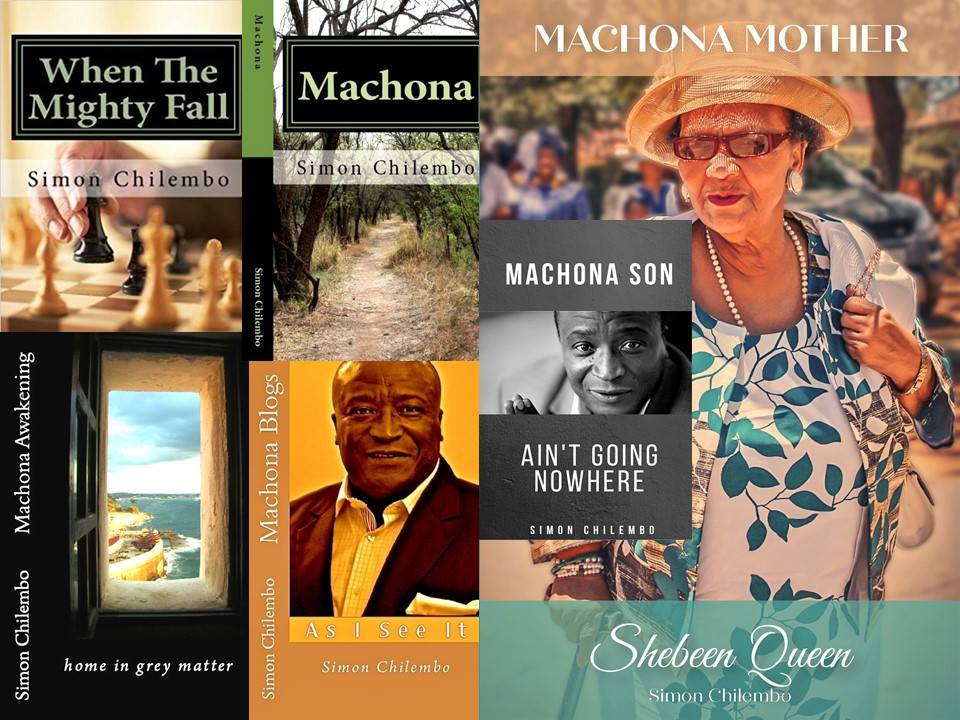
I know that in her old age, my mother’s fear of living in abject poverty ate her soul like cancer did body cells. So, I am convinced that her death released her spirit to a place of lasting peace and abundance. I know that that’s what she aspired to achieve during her life time, anyway. My fourth novel and sixth book, Machona Mother – Shebeen Queen, is inspired by my observation of hers and other mothers’ and wives’ lives in South Africa. Through this I reflect on the challenges of wifehood and parenthood in oppressive societies the world over.
On the eve of my mother’s burial, I was threatened with a bullet in the head. My torment in South Africa had come to a head. I had to leave. Three months earlier, she had in fact finally acknowledged that my future in South Africa was bleak. The only thing she could do was to give me her blessings, and I’d have to find my way back. I should leave whenever I could. She was laid to rest on October 13, 2018.
Eleven days later I landed in Oslo. In grief. Tired. Bankrupt. Homeless. Businessless. Jobless. At total mercy of other people and the state for the first time in my adult life. I received unprecedented overwhelming support and love. This gave me a refreshing new taste of humility in my heart.
Alas, I’m still shocked by the discovery that love has inexplicably diminished, if not vanished altogether in certain quarters. But then again, love is like milk: when it’s spilt it’s gone. No salvage. No cry. Like milk, fresh love abounds. Always. Spilt milk tends to be messy. Post-spillage clean-up is ever so necessary, therefore.
Left unattended to, spilt milk can go stale and stink. Poison. There is a poisonous dark cloud of love lost hanging over my head. Apparently, this cloud is at alarming speed spreading itself throughout the extent of domains that are crucial for my continued existence as a free and happy man of the world.
I now feel that the time has come for me to dissipate the treacherous cloud. Had I lived a hermitic life somewhere oblivious to the real world of real people, I really wouldn’t bother. My imperfections notwithstanding, as an ethically conscious man living in a morally charged world, I have no doubt as to my personal integrity in every step I make every day of my life. It isn’t just about my ego. I respond from a need to protect the honour and legacy of my late parents. Through the latter I reach out to my ancestral spirits throughout the entire Sub-Saharan Africa.
My own legacy matters too. It’s not just about me. It’s all in the name of the living of my people in the afore-mentioned part of the world, particularly my clans in Zambia and South Africa. I have in mind my bosom friends, my godchildren, my teachers, and colleagues all over the world throughout my life’s journey thus far as well. I intend to stay the course until my last breath on earth, which won’t be tomorrow. I’m here for the long haul.
My thoughts also go to all the people the lives of whom I have impacted before, I impact today, and I shall be allowed to impact in the future anywhere in the world: my raison d’être. It is my wish and hope that all the people falling into this broad category shall never feel shame, embarrassment, guilt, or fear at the mention or thoughts of my name, my deeds. My legacy.
I’m proud of my roots. I’m protective of my heritage. I value highly the love and faith of my confidants. I am in awe of the big religious and philosophical thoughts of the world that daily inspire and guide me in my search of liberatory enlightenment in the labyrinth of life. Truth must never shy away from me.
With the poisonous dark cloud of love lost hanging over my head cleared, the following shall be revealed:
- I have been unilaterally charged and convicted without a trial.
- I am not a sexual pervert. I am not a dirty old man. I am not a sexual predator.
- I am not a paedophile. Neither in practice nor by inclination.
- I am not a rapist. I am not into the habit of imposing my sexual power over women. I am not in the habit of taking advantage of sick, weak, and vulnerable women. I am not a sexual manipulator. I am not a philanderer. I shall never engage in sexual intercourse at any price, with anything.
- I love power. But I am not power-hungry. I am not a powermonger. The essence of my being is not defined by the power that I wield as attendant to the things that I do. For example, when I’m revered for being a 6th Dan Black Belt Karate Master, I don’t take it personal. I am nothing more than a conduit between higher knowledge and the people that my position empowers me to serve.
With or without Karate and its inherent existential and functional attributes, I remain the same original Simon Chilembo ever aspiring to be a decent human being each and every day of my life, my fallibilities considered. Karate does not define the essence of my being. It is but one mirror of many that reflect the infinite potential of the essence of me as a human being, a social change force.
I shall never fight for power acquisition and sustenance at any cost. But I shall fight with all of my life against deliberate malicious application of unfairness and injustice as tools and manifestations of power against me, my own, including the values that I stand for. - I am addicted to love and peace.
- It is preposterous to seek to delete my existence in the historical developments of certain phenomena in my worlds. History never forgets. The wise will always query. Answers will have to be given, no matter how murky.
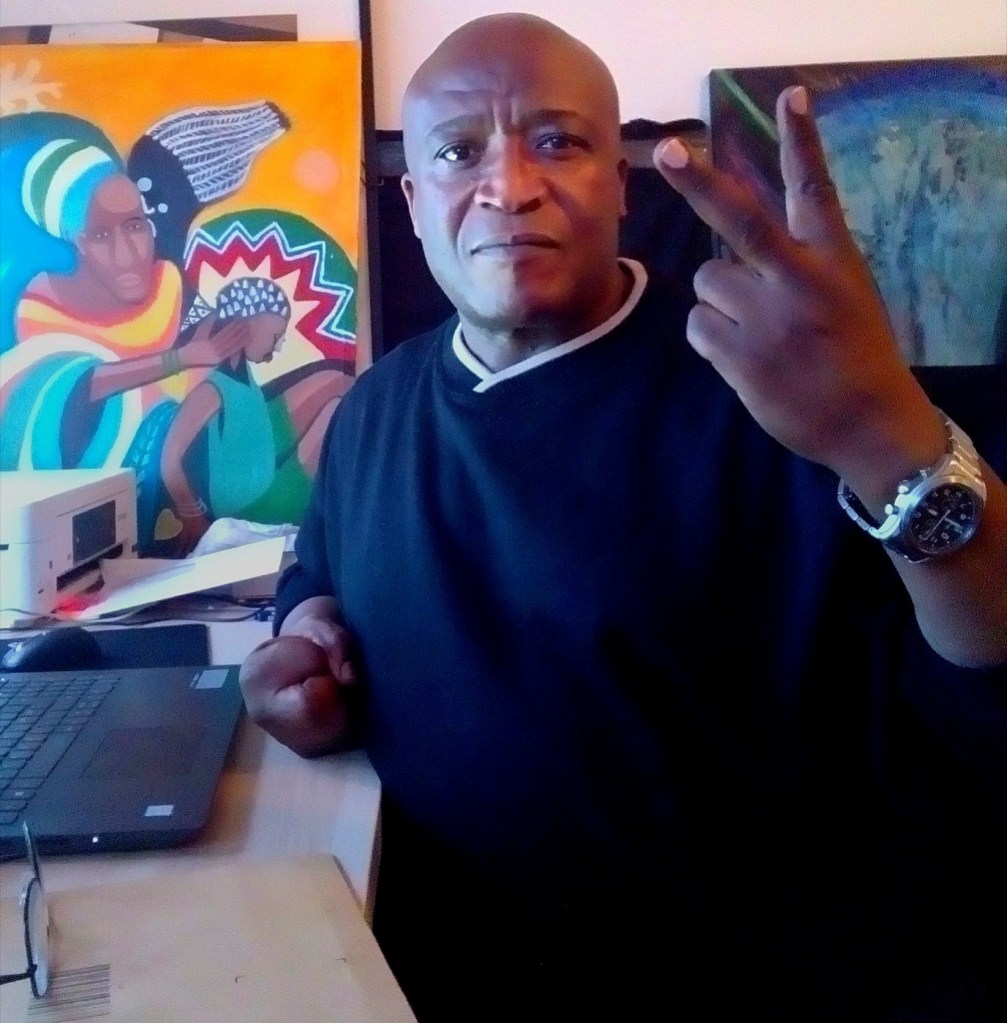
Having stated the above, I encourage anybody with any compelling evidence to contradict me to come forth and present their cases. This evidence shall be tangible, derived from real-life circumstances. It shall not be derived from ill-founded conclusions obtained from subjective misinterpretations of my literary works. It shall not be derived from malicious rumours about me either. Otherwise, people can just lay their weapons down and move on with their lives. We all deserve happily-ever-after living once love has found new hearts to entice. That’s the way of the world.
Character assassination claims and rumours about my person have been doing the rounds in Oslo and environs especially since the publication of my debut novel, When The Mighty Fall, in November, 2015. I feel strongly about these. Such that, in the unlikely event that it can be objectively proved that I am a molester, I will kill myself. That not as a manifestation of any suicidal vice about my character. Moreover, I will consciously choose to kill myself for my sins to save society resources and troubles of arrests, tedious court cases and all that goes with dealing with issues of crimes against humanity. It ought to be as simple as that, really.
I am not a fan of capital punishment. However, my abhorrence of sexual abuse, especially with respect to children, ignites the most primitive of my human instincts. Were I to be found actually guilty in this case, I wouldn’t hesitate to execute upon myself the ultimate punishment that my primitive instincts see as justifiable against child molestation.
I will publicly nail myself on the cross. I will invite the world to come and practice archery on my body until there’ll be no more flesh and bone left for an arrow to pierce. Then my corpse must be set on fire whilst on the cross. No funeral services. No urns. Let the wind blow the devil’s ashes away to places far away into outer space. No memorial services. Denialism of my place in history will be just fine, then: I was never here. I was an accident of nature. I was a figment of my imagination. I was just an illusion.
I say to my enemies all the time: you don’t know me.
Simon Chilembo
Oslo
Norway
Tel.: +47 925 25 032
October 24, 2019
BLACK CURSE: Africa Burning!
Divide and Conquer Necro-Power Games
South Africa
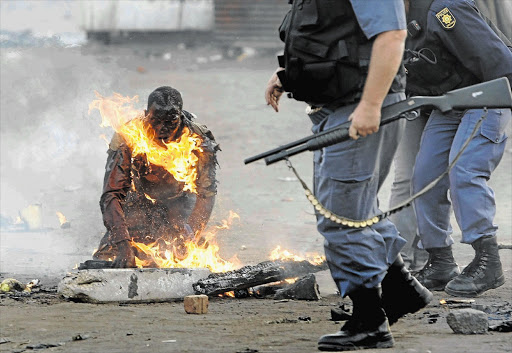
Has Afro-Xenophobia lynching squads
Eliminating their kindred
Off the streets of the land
Even the soil of the land
Won’t absorb the blood of the slain
With the rains far, far away
The blood cakes on the ground
Corpses not welcome in mortuaries
Rot
Under the sun of
The land of the broken rainbow
Bleeding dark
Venomous blood
The stench combines
With smoke of those bodies
Caught in flames of devilish fire
In Mzansi fo sho
Satanic voices chant: HABASHWE!!!
And then I recall
Last time:
I heard that
Boko Haram were Nigerian
Al-Shabaab were Somalian
The Lord’s Resistance Army were Ugandan
In eastern Democratic Republic of Congo
Kivu province is a land of bloodbaths
In the days of Zaire
There was Mobutu Sese Seko
Patrice Lumumba’s ghost
Must have haunted this man for life
In neighbouring Uganda
There was Idi Amin
They say he ate human flesh
Rwanda gave genocide application
A new Afro-touch meaning
In Charles Taylor’s Liberian war
Survivors had their hands hacked off
We’ve had Emperors Jean-Bédel Bokassas
Of the Central African Republics
A seven-university-degreed Mugabe of Zimbabwe
Has just died
Believe me: Matebeleland people aren’t mourning
Closer to home
I understood as a child that
Qomatsi was Lesotho rulers’ licence to kill their own
In the Gambia
Yahya Jammeh’s atrocities
Make Qomatsi a child’s play in comparison
And so, asking for a friend
I wonder:
Who is better?
Who is worse?
Same bloody-black-curse-difference
If you ask me
Simon Chilembo
Oslo
Norway
Telephone: +4792525032
09/ 09- 2019
A TITAN IS GONE
REMEMBERING A WARRIOR GRANDMASTER:
JAMES BONAR NOBLE, SENSEI,
DECEASED August 11, 2018.
SPECIAL NOTES
- This is a very personal tribute. It’ll describe a special relationship that I had with Sensei Noble during the years 1978-88.
- I write with the kind of clear conscience that he taught me about. Furthermore, I write with the have-no-fear sense that he instilled in me. I write with the selfless attitude that he demonstrated in working with me individually, and as part of the broader Karate collective in Lusaka. That said,
- I write neither doing anybody a favour, nor expecting any favours from anybody. I write out of the sense of devotion he showered me with. The kind of devotion I have for, and have striven to show to my own Karate students, has been an attempt at replicating Sensei Noble’s Karate-Do spirit.
- I have not had any direct connection, at any level, with Sensei Noble since I left Zambia, in June 1988.
- Situations and events that are necessarily going to be mentioned in this piece are done so to the best extent my memory serves me. Any inaccuracies arising I apologize for in advance. Names of people mentioned are also done so with but only the best of intentions, and respect. If any inaccuracies arise here, or any insinuated malice is detected, they shall not have been intentional on my part. For that, I apologize in advance as well.
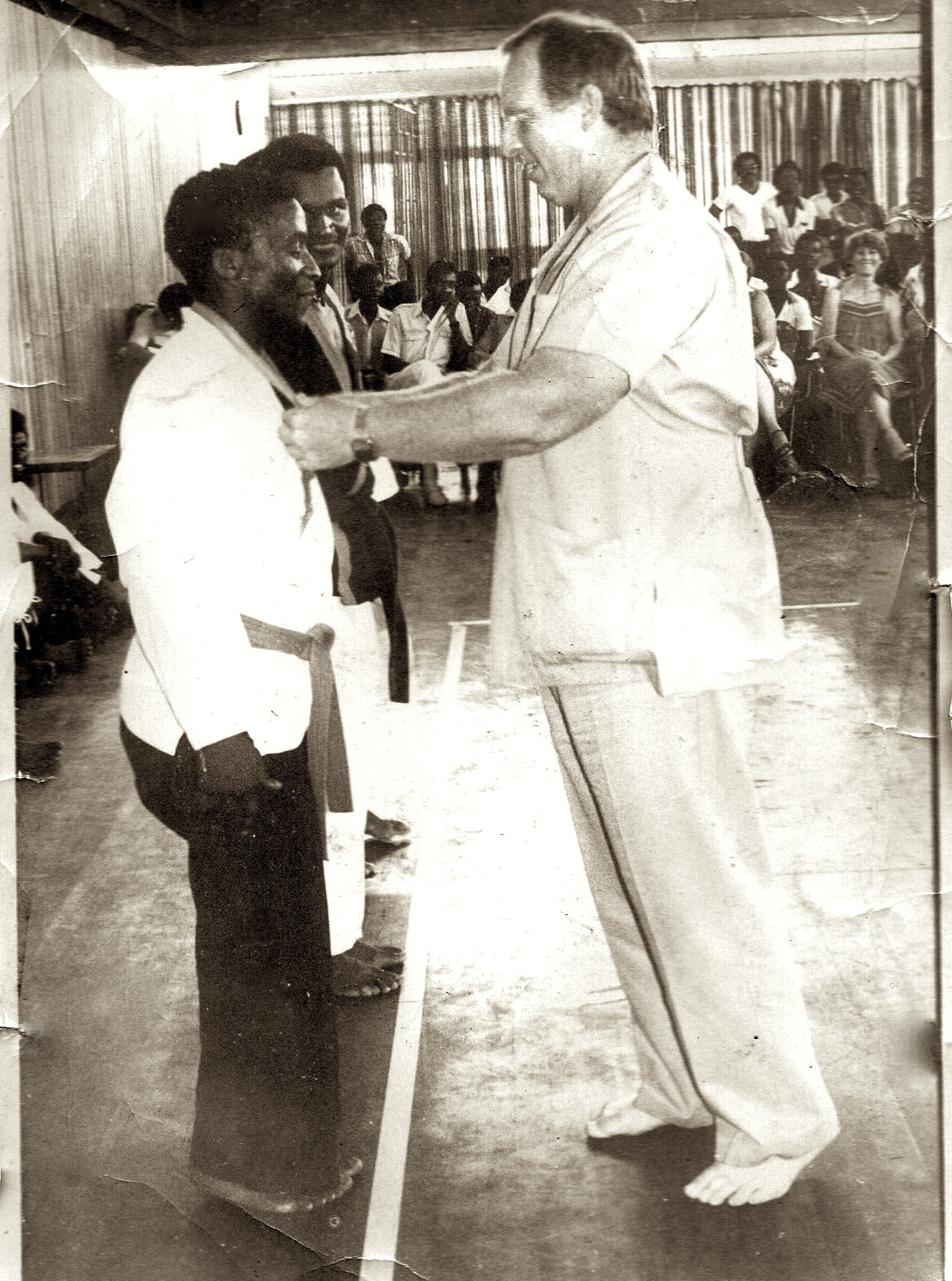
©Simon Chilembo, 2014. JB Noble, Sensei. Wycliffe Mushipi, Sensei, on my left. Presenting Zambian National Kata Champion Gold Medal, 1983. As I flawlessly executed the mid-air rotational flight in Kanku Dai Kata, in the dead still Nakatindi Hall, Lusaka, I thought, “How’s that for flying, Bonar? Your work!”
In 1986-88, my relationship with my fellow senior students of Sensei Stephen Chan is at rock bottom. We were the core group of the recently formed All Zambia Seidokan Karate Kobudo Renmei, headquartered at the University of Zambia (UNZA) Karate Club, in Lusaka. The issues were around mutual misunderstandings vis-à-vis organizational and club leadership roles. They were also around stylistic interpretations, and expressions of our new Karate style, Seidokan.
My biggest sin, though, was to decide to unilaterally take on Zimbabwean, Jimmy Mavenge, late, under my tutelage. I had trained the latter, and subsequently graded him to Sho (1st) Dan Black Belt in Seidokan Zambia Karate. The goal had been that he would, upon his return to his country, take Karate to the people, de-racializing the sport in the country in the process.
I was, inwardly, a devastated man during that time. One day, after briefing my mother about my difficulties with my Seidokan Zambia colleagues, she says, “Why don’t you leave these people, Buti? You cannot fight them alone; there is no need to. You can always form your own club, can’t you? Do that, for your own peace of mind, man!”
“Sure, ‘Ma, forming a new club is not a problem. But, you see, taking them individually, these people aren’t too much trouble, really; they are all driven by group power. However, I still have one person I think I can rely on. That is Sensei Noble. If I have him on my side, then, all these people can go to hell. However, should he side with them, then, I’ll quit.”
Jimmy Mavenge’s rebellious Black Belt grading took place during the middle of the second half of 1987, if I recall. The Seidokan Zambia Black Belts I had invited to witness the event weren’t, of course, willing to be part of the grading panel. That included Sensei Noble. They decided to take up positions on the mezzanine in the UNZA Sports Hall. So, I carried on solo.
In superb fitness state, his former guerrilla mutinous spirit tuned high, Jimmy ran through his gradings’ required routines like a possessed man. He passed with flying colours. Awarding him his diploma, I took my personal black belt off me and passed it onto him.
From the mezzanine, Sensei Noble exploded, throwing his arms up in the air in exasperation, “Did you see that? Did you see what he has just done? Now, it means we cannot annul this grading!”
Before he would turn and walk away, Sensei Nobles’ eyes and mine met ever so briefly. However, I didn’t see the intensity of negative emotion I had expected. His facial expression radiated a sense of wonder that I had seen many times at training with him before. At the same time, it was like he was saying, “Sorry, Semmy, but you are on your own now!”
And, I thought to myself, “Well, this is it, I’ve lost my trusted ally! But I ain’t quitting before my job is done. I owe it to Jimmy to help him make a smooth transition into Zimbabwe. And, I have to use the 1987/ 88 academic year to revamp the UNZA Karate Club (UKC).”
The club had almost collapsed following the squabbles of the senior Black Belts. At some point, only Jimmy and I would turn up for training. When he left for Zimbabwe, a few weeks after the gradings, I was left alone.
I do not recall if I ever did get to have a formal position in the then Zambia Karate Federation (ZKF) Board of Directors cabal. But I got to coach the Zambia Midlands Karate Team in 1986-88. That meant that, although the Zambia Seidokan deliberately excluded me from certain events, Sensei Noble and I would often meet in connection with our ZKF work. The Sensei was the active patron of the ZKF, then. In the ZKF domain, our relationship was as amicable as ever.
I shall take the writer’s prerogative and postulate that I have sat 10 000 miles with Sensei Noble in his car; all in ZKA related training and administration matters in Lusaka, and between Lusaka and Kitwe, in the Copperbelt Province. That would also include a trip to Harare, together with the Zambia National Karate Team, in 1981.
Sensei-Student bonding does not take place on the training floor. In the dojo, the Sensei and his students just want to kill each other, whilst, at the same time, the former’s job is to constantly remind the latter that “life is good, people. Love it, preserve it!”
Although I had no idea of it at that time, my Sensei-Student bonding with Sensei Noble took place in those 10 000 miles I’ve sat with him in his car.
“You have upset many people, Semmy. Stephen Chan Sensei is not happy with you at all. You have infringed upon Sensei Chiba’s territory. No good, no good at all, Semmy!” Sensei Noble said to me during one of our trips. This was sometime in early 1988, about six months after the Jimmy Mavenge gradings scandal. By then, I had already been to Harare to check on his progress.
I responded, “I’m well aware of that by now, Sensei. That withstanding, the work that Jimmy has already done since he got back home is amazing. It’s one of those occurrences that, to be believed, they have to be witnessed personally. I’m, now, even more convinced that we did the right thing.”
I went on to explain how Jimmy had started to train children and youth at Harare’s Mbare township, where the not so fortunate people lived. He had also started to teach Karate at an orphanage run by a close friend of his. All for free. On the other hand, Sensei Chiba ran a private dojo in the city centre, catering for the paying middle class, predominantly white. Efforts to reach out and pay a courtesy call to the senior Japanese sensei had been futile.
“Alright, Semmy Sensei, I will give you that one. But the others don’t know what you have just told me. We have to do something about this, then.”
I’m not quite sure now, but I have a vague recollection that, not long after I had left Zambia for Norway, Sensei Noble did drive out to Harare to check on Jimmy. On the trip, he had taken along one of my absolute meanest detractors. The rest is history.
While giving him the report on Jimmy, what I did not tell Sensei Noble was that my work with the former was, in a large measure, influenced by his off-the-mat teachings.
Sometime in the first half of 1979, tensions at our former Trinity Karate Club had become extreme. A point had been reached where either Sensei Noble or the bunch of new young lions Sensei had to go. If I recall, it was after the last training session that he would lead at the club, that he offered to drive me home to Chelston. The latter is nearly 20km on the opposite part of the city, in relation to his residence at the Andrews Motel, about the same distance away from the mentioned reference point
“You see, Semmy, everybody wants to lead. But people don’t realize that leadership is something you grow into. I’m really not sure if those guys are ready to lead the club. However, they want it, so they can have it. My conscience is clear, I have taught them only the best of Karate available in the country, if not all of Africa. If they now feel they know more than I do, fine by me. They’ll soon find out that real Karate is not found in books. Books guide. They don’t teach. Lasting knowledge is learned man-to-man,” Sensei Noble said.
He continued, “People don’t know that I have nothing to prove. I have no need to want to prove anything. Do these guys want me to break their bones to prove that I am stronger than them? Do they want me to jump and fly like a teenager to prove that I am a good Karateka? Rubbish, if you ask me!”
The Sensei was in his forties at this time.

©SIMON CHILEMBO, 2014. FLYING TO KATA CHAMPION GOLD MEDAL, 1983. AS I FLAWLESSLY EXECUTED THE MID-AIR ROTATIONAL FLIGHT IN KANKU DAI KATA, IN THE DEAD STILL NAKATINDI HALL, LUSAKA, I THOUGHT, “HOW’S THAT FOR FLYING, BONAR? YOUR WORK!”
With his left hand, pointing at his head, and tapping on his left side of the chest, Sensei Noble went on, “The point is, Semmy, I have it all in here. I can’t fly, and I have no desire to, so you know. But I can teach you how to fly. By the way, as from this coming Sunday, and subsequent ones, until further notice, I’ll be teaching special classes to interested Brown Belts and above. That’ll be at the Evelyn Hone College. We start at 9 o’clock. Feel free to join us.”
“Oh, thank you, Sensei, I’ll be there. Of course!”
“I know that public transport is a problem on Sundays. So, don’t worry, I’ll come and pick you up. And, do, please tell your parents that I’ll bring you back home safe afterwards, okay?”
“Yes, Sensei, thank you! You are very kind.”
“A sensei is like a father, Semmy. When you are good, he’ll be good to you. Always remember that!”
“Hoss, Sensei!”
One year later, Trinity Karate Club was in such leadership crisis that it had to close down.
Indeed, my work with Jimmy was a well thought out venture. I did it with love. I believed in the man and the cause he pursued, in that regard. My conscience was clear: I had no pecuniary, nor power interests; I was simply doing what my heart told me was right; I believed I had acquired sufficient knowledge to empower Jimmy to shake up the then racist Zimbabwean Karate establishment, and it worked; although I felt no need to prove it, I knew that I was strong and skilful enough to give anybody a good fight should the situation degenerate to that level. I would have been just too happy to break an enemy’s bone or two, actually. All this I had learnt from Sensei Noble’s way of Karate.
I do not recall how long the Sunday morning training sessions lasted, but it was many, many Sundays. True to his word, Sensei Noble would come and pick me up from, and take me back home. No complaints. No demands. Just training. I used to find it strange that this man, who also taught children at the Lusaka International School on Saturdays, did not take even a Sunday off in order to be with his own children and wife.
More than twenty years later, Martin Rice, a very special, Sensei Noble’s younger protégé from Ireland, is visiting us in Norway. Naturally, we begin to talk about our experiences with the legend. I mention the Sunday sessions, and the lengths to which our grand Sensei went to accommodate me.
“But, Simon, on those Sundays, after dropping you off at your home, he would, then, come home to me for another two hours of private lessons!”
Sensei Noble’s devotion to the Zambian Karate community that he raised single-handedly, at least in the Midlands, up until the 1980s, has made a lasting impression on me. That he even had the extra capacity to work with the select few of us in the manner that he did touches the softest of my emotions to this day.
There has been a time I asked Sensei about his level of engagement in Karate. He replied, “Well, Semmy, funny that you should ask. You know, once the spirit of Karate gets into you, it consumes you. But, each time you see the good things Karate does for people, and, by extension, society, you can’t stop it. You can’t live Karate half way. You can’t teach Karate halfway. People will come and go. But you have to be there all the time. One day, a student of your calibre, Semmy, walks into the dojo, and you, then, know that there is no way you can let this talent down. And, so, you just give and give. It’s such a joy, Semmy. My family understands that Karate is an important part of my life.”
Back in Zimbabwe on a normal civil servant’s salary, Jimmy no longer had the kind of cash he used to have whilst on his diplomatic tour of duty in Lusaka. He couldn’t afford to pay for my visits to him. I visited him twice during the first half of 1988.
In his humorous way, Jimmy had a brilliant idea, “Shamwari Sensei, you mean after all these years together you haven’t learnt even just a bit of diplomacy from me? Soften yourself, be nice, go down on your knees and ask the Seidokan Zambia people to sponsor your trips here. We have already crossed the Zambezi, anyway, and Seidokan Zimbabwe is here to stay. So, they better work together with us now!”
I had already started to make my own money then, “No, no, no, Shamwari Sempai, Senseis sponsor themselves and their students, you see!”
Through working with Sensei Noble, I learned that a Sensei must be self-sufficient. A Sensei that depends on sponsorships and donations cannot do his work effectively.
On a drive from Kitwe to Lusaka, Sensei Noble is cruising at between 140-150km/ hr. A Mercedes Benz overtakes us like it was a bullet, and soon disappears from our sight up ahead. Perhaps 15 minutes later, we approach a road accident spot. The Merc had overturned. It had rolled several times, apparently. Totally wrecked.
“Yes, that’s what you get when you drive at a speed like that on roads like these, Semmy. Karate teaches us to always be aware of our surroundings in relation to the actions we wish to undertake. From that, we can calculate and predict likely outcomes. I knew that that car wouldn’t reach Lusaka, driving at that speed,” Sensei Noble spoke wryly as he drove past the accident scene. We would learn later that the driver of the Merc had died on the spot.
The grand Sensei has told me that when he first came to Zambia in the early 1950s, he had only the amount of pocket money a fresh university graduate from Scotland would have in those days. Not much. He landed somewhere in northern Zambia, somewhere around Lake Bangweulu, if I’m not mistaken. To pay for his hotel stay there, he offered to hunt game for the establishment. That’s how he started off in Zambia, a place he had come to with no intentions of living in permanently.
From that experience, he has said something like, “You see, Semmy, as you get older, and you start travelling the world, you’ll soon discover that there is more to you than who you think you are: your race, status, education, and the like. You’ll find that you get to places where none of that counts. So, in order to survive, you have to look for solutions in things that you never even knew about before. That’s how a Karate man’s mind works. Just like people fight differently, you can beat anybody with the same techniques, but adapting them to the kind of man attacking you. That’s how life is, the essence of you does not change, but your attitudes can, and have to, according to where you are, and the circumstances you find yourself in.”
I applied that Sensei Noble’s philosophy in Norway. Whilst in a place I was not supposed to be, for an act I was not supposed to commit, a colleague saw through me, “You Simon, I know your type. You are a survivor. Don’t tell me that you are a Massage Therapist because that’s a career path you had planned all along. I know you are good at what you do, but you chose to study Massage Therapy out of survival pragmatism needs, given your life circumstances in Norway. You are cut out for greater things, and I know you know that!”
Yes, Sir, I do. But until the greater things come my way, I’ll do what I gotta do to survive here and now, as per my Sensei Noble’s teachings.
Whilst in Harare with the 8-man Zambian National Karate Team, in 1981, I was singled out to join Sensei Noble as he joined two other Zimbabwean senior Black belts (whites) to tea at the home of a Japanese diplomat. I do not remember the name of the diplomat. Present were also the dreaded Sensei Chiba, and two other Japanese Judo Sensei. I was a not so sophisticated, little 20 year old schoolboy, then. But the grown up, senior Budo masters were real nice to me. I recall Sensei Chiba advising me to use whatever nature provides to train with, if I cannot go to the gym. “If you do not have a punch bag, there is always a tree to punch!” he said.
Driving back to our hotel, Sensei Noble said, “You were highly honoured today, Semmy. High-ranking Japanese don’t just invite any strangers into their homes.”
“Hoss, Sensei!” was all I could say.
An aspect that is not spoken much about is that, in his pioneering work of opening up possibilities and teaching black Zambians Karate from the late 1960s, Sensei Noble was, actually, treading on thin ice. That’s because, in my view, that was a time of numerous state coup d’états across the African tropics countries. White mercenaries, whom the media romanticised as Martial Arts experts, led many of these coups. “Mad Mike” Hoare is the first name that comes to mind here. A reliable source has disclosed to me that there were concerns that some of Sensei Noble’s Karate students could be enticed to join the lucrative (for those who don’t die!) mercenary bandwagon. So, relevant Zambian State Security organs closely watched him, and the whole lot of his prominent senior students.
I am sure that there are many others in the Zambian Karate fraternity who’d concur with me that Sensei James Bonar Noble gave us, individuals, and the collective much more than we could ever ask for. He, like other ordinary mortals, was not perfect. I, for one, am not in a position to cast any stones. Unfortunately, by the time the roses in my garden bloom in the spring, I’ll have relocated to another abode.
My heart felt condolences to the Noble family in Lusaka. The same applies to the Zambian Karate fraternity, if not the nation, for the coming to an end of a life of an illustrious service to the people through the Martial Arts. Many of Sensei Noble’s students and their own protégés continue to tread upon the selfless path of humility, giving, and devotion that he started. Their impact is felt across the cross-section of the Zambian society. Some are also forces to reckon with in various parts of the world.
Sensei James Bonar Noble may be gone, but he shall never be forgotten. His legacy is just too deeply engrained in the psyches of many of us. May his soul rest in eternal peace!
Simon Chilembo
Welkom
South Africa
Telephone: +4792525032
August 13, 2018
MGEU, FOOTBALL SUPER STAR
MOYA NKHABU: TRIBUTE TO A ROLE MODEL
Growing up in the old, subdued black South Africa, I could never see myself playing serious football in a formal club setting. From the point of view of personal drive, the game has never charmed me that way. I could never say whether or not my lack of success as a junior street football player was due to being untalented, or simply that my passion was never aroused strongly enough. I’m inclined to suspect the latter.
©Simon Chilembo 2018. 2006/7, with Abel Nkhabu, a.k.a. Moya, Mgeu, legendary pioneer South African professional football player. Family friend, mentor.
In the old, apartheid South Africa days, football talent groomed itself, and thrived on the township streets, and rural playing fields. It was raw, pure, and ecstatic. Paradoxically, it provided spaces for all the joys of a free childhood in a then tyrannical state. Moreover, my childhood street football reality provided escape from the attendant ills of poverty in many a black South African home: all round domestic violence, woman and child sexual abuse.
Like most South African township boy children, I imagine that the first expression of my active physical power, from the time I managed to stand up, balance, and walk, was probably to kick at something. I have been kicking for as long as I can remember. Ball control, reading the game, and stopping opponents from scoring against my street team were my forte.
Dribbling was never my inclination. But, I recall, even the very best of our dribblers during my street football active years, up to age 12 years old, knew well not to fool around with the ball around me. If I had any football talent at all, it shone brightest whenever we opted to play a rather rough version of the game. Often, if it’s genuine street culture, it has to be rough; it has to be tough, it has to break all the rules, like Rock & Roll.
Here, the object was not to score goals, but for the competing teams to incapacitate each other’s players until there was only one young man standing, with the ball. If the one team totally demolished the other, the winning team’s members went for one another, then. Thus, the last man standing outcome. It gave an unforgettable, ego-boosting adrenaline rush. Great, great fun, it was.
In this brutal game, we had to be subtle, but extremely effective. That was so that if any adults were watching us play, they wouldn’t understand that we were, actually, out to deliberately injure one another. A strict rule was “no ball, no attack”; meaning that we went for one another only to the extent that one side had ball possession. And, direct kicks to the legs above the ankle were not allowed.
The idea was to “slice”, or “chop” each other’s legs at the ankles, much like Karate players execute the devastating leg sweeping technique called “Ashi barai”. Serious injuries, necessitating hospitalization, often occurred here. I never got injured. Several casualties have pointed to me, though. In action, I can be light and quick on my feet. I developed this ability from this dangerous kind of football playing. I would, later, take the skill with me to Karate. Fifty years on, I’m still standing, rocking as if there’ll be no end to my rolling life. Truth is, I want to live forever. I am a dreamer, and so shall it be.
My street football career was much fun, whilst it lasted. It gave me lasting valuable life lessons, as well: street survival alertness (“Tsotsis”, violent street hustlers, didn’t play football!), and fierce competitive spirit, or killer instinct cultivation. Street football also afforded me the first real taste of leadership, going into puberty and subsequent young manhood. The leadership trial run would reward me with just as premier and unforgettable taste of the thrill of victory. That owing to the coaching my impromptu leadership role empowered me to do with my team, one day.
A team had challenged us from another part of our township, Thabong Location, Welkom. Our challengers were notorious for severely beating up their opponents when they, the former, lost matches. These guys were a little older than us, and they had some of their neighbourhood supporters following them everywhere they went. Our team, on the other hand, was, usually, an ad hoc affair. It spontaneously organized itself around whoever was available on our street, and wished to play, there and then.
Unfortunately, on the day of the challenge, whereas we had more than what we needed of potential players, no one wished to play. All were afraid of getting beaten up by the visitors, in the event of the latter’s loss against us. The problem was that the visitors were still going to be violent if we chose not to play. These guys, the challengers, were crazy: when they won, they still beat up the opponents, if only to teach the losers not mess with the bad guys! So, either way, we were in trouble. Catch 22.
I do not seem to recall what led to my team prodding me for a solution to the dilemma we were in. They even decided that I should be the team captain for the day. Because I had already started training boxing by then, a thought struck me that if I made my team believe we were strong as individuals and as a collective, we could win in such a way that the bad guys wouldn’t want to fight us afterwards.
How? Let’s wear them out, whilst we remain strong all the way, throughout the match. How? Let’s do what nobody else did at that time: do a pre-match, team spirit enhancing jogging and calisthenics session! It’s called warming-up these days. Doing that would also give us a psychological edge over the opponents. It worked like magic.
My team played with the intensity and unity of purpose that we had never thought were possible before. In my head, I still vividly see replays of the match to this day. Playing on what we, then, called the “12 hurra!” principle, we beat the bad guys 12-0. The loss, combined with my team’s upbeat, super confident mood, overwhelmed the bad guys so much that they left our zone running as if they had just seen snakes, or some scary monsters like that. Eventually transferred into Karate, I have enormously enjoyed sports leadership and coaching since. I’ve won, I’ve lost. I’ve been stupid, I’ve been wise. I’ve made friends, I’ve lost friends. I’m here. I live. I love.
Adult club football was a different ball game altogether. I enjoyed watching this, not so much for the thrill of the game, but out of the fascination I had for those players that stood out as the best in the game, regardless of position played. The fascination was about the aura these guys seemed to carry, both on and off the field. They seemed to be ever so strong and happy.
It’s always been a great fascination for me as to how men, and women these days, running after, and with a ball could, at the same time, induce so much euphoria amongst the spectators. Off the field, the super star players seemed to wield so much power that it appeared, for me then, as if they could be rulers of the world. That was despite the fact that I, at that time, I had no real clue as to how gigantic and complex the world really was. They had all the beautiful girls. Attendant hyper fornication scandals I didn’t care much about. Rock & Roll is what it is: you burn, you burn. If the highway to hell is short, let it be. I’ll talk to Mother Mary another time.
One of those super star players was Abel Nkhabu, a.k.a. Moya, or Mgeu, late, 2017. May his soul rest in peace. I first came to personally know, and look up to him in the years 1972-74. Looking back, I like to think that, actually, this man was my first real-life, non-family Super Hero. He seemed larger than life, and, yet, he could touch me, ask me about my wellbeing, and encourage me to be good at school always.
There were also some of Mgeu’s generation of original black South African football mega stars around. By status, they were bigger than him by far; they have remained so, and are, today, living legends in their own rights. I still look at them with awe; still getting that tingling sensation in my hands and feet I used to get at their sight, on and off the pitch, in my early teens.
These men, in various capacities at club and national association levels, continue to steer modern South African football. They are doing so with the same inspirational class I recall from the early 1970s. In them, I still see hope for this troubled land of my birth, South Africa. However, these men are still far away from my immediate spaces. They have yet to touch me like Mgeu did. A consolation, though, is that, in my eyes, they carry on his spirit, and that of numerous other giants of the pre-1994 South African football scene.
Much of my desire to defy and beat the odds in order to succeed in life, be a super star, and live forever, is owing to these men of wonder in the history and development of this land. There is more to football than just seemingly mad twenty-two men chasing a ball around a stupid rectangular space limiting their freedom to run away with it, the ball.
Inspired by the big and strong, unbeatable Hercules in the bioscope, I liked making leather wristbands for my friends, my lebandla, my street gang, and me. The finest I ever made was of some fine, thick, nicely patterned leather piece from one of my mother’s old handbags. Mgeu liked that wristband so much that he borrowed it for a while. He wore it on several big matches he played, with Welkom Real Hearts FC.
“Monna, dude, I, actually, feel stronger and more courageous when I’m wearing this band. And, you, know, the other thing is that people on the field get afraid of me, believing that the band is a fortifying juju gear. I like it very much!”
I refused Mgeu’s offer to buy the wristband. Of course, I was taken by the symbolic power effect it had on him. I wanted to have the power too. When he, eventually, gave the wristband back to me, he was overwhelmingly effusive. An ordinary older South African man would have bullied me and kept it, anyway. Mgeu’s return of the band permanently cemented the bond that we already had. Before that, no other adult man had ever shown me that kind of respect for my personal integrity. It was gratifying for me to find that there, in fact, were still some grown up men one could trust.
As first-born child in my family, I was raised to love, protect, and support my younger siblings, that as a matter of course. My general love for children and youth derives from my upbringing values. From the time I became aware of my sibling position and role in the family, fondness and caring for those younger than me, to beyond my home, was something one just did without question. It was something I never put much thought to, even.
My younger, and last-born sibling, Lucy Dintletse’s birth, in 1974, brought the real intensity of my love for children to my consciousness for the first time. Lucy’s affectionate family nickname is Sonono, often shortened to Sono. The very nearly nine years of her life would thrust the love to heights I have yet to fathom. MHSRIP.

©Simon Chilembo 2018. Sono’s Catholic baptism day celebration, June, 1974. Our maternal grandmother, Auma, there. My powerful women. MTSRIP, Sono (1983); Auma (2004)
I see Sono in every child of the world. Whenever I see children of the world suffer under mankind’s proclivity to wars in outrageously vain attempts to impose peace upon one another, her sweet face emerges above the misery I see; the pain, the hopelessness I feel. And, then, faith that, someday, we gonna be alright, is rekindled. Through every child whose life I touch wherever I am in the world at any one time, my steadfast hope and wish are that, one day, these children will grow up to be conduits of love and peace for all mankind.
Mgeu was one of the pioneering black professional football players in South Africa, in the early 1970s. He made a dashing and influential figure, to his grave. His entire life, he was fiercely anti-apartheid and black people’s oppression. From Mgeu, I learnt that a man could be big and strong as a super star, but he could still have time and energy to engage positively with children and youth. This has remained one of the key defining moments of my life.
Whereas my father remains the formidable force behind my formal dressing taste, my smart-casual dressing style has heavy Mgeu undertones. My father was laid to rest twenty years ago today, July 04, 2018. MHSRIP. I remember him with immense love with this article too: my father, the finest of gentlemen, my hero; the original Machona – (the) Emigrant, the traveller, the gypsy from the warriors of love mystics of my Tumbuka people, Eastern Province, Zambia. If you jump into Malawi, Tanzania, and, partly, the Democratic Republic of Congo (DRC), you’ll land into the midst of the extended empire of my people.

©Simon Chilembo 2018. With Big Daddy Cool, Sir E L W Chilembo. Pappa’s picture taken on my 21st birthday celebration party, June, 1981.
The one quality I’ve not quite been able to grasp, though, is the phenomenal “Ladies’ Man” tag Mgeu proudly carried to the very end. If we meet up again on the other side, I should ask him for specific coaching on this one; assuming that there’ll still be ladies abundance when I arrive there. But then again, we might find that the ladies on the other side are more work than what I have down here on earth. Nnnahhh, we let this one pass.
In the presence of Mgeu, I’d always feel like a 12-14 year old boy, if not even younger. In the photo accompanying this piece, we are meeting up soon after I had arrived in Welkom, from Norway, Christmas time, 2006/7. You know that sweet, loving feeling you get when you are with your favourite uncle, I had it at the time the photo was being taken; I’m feeling it as I write this article, at this very moment. Thanks, football, for one of the most significant men in my life!
I was fortunate enough to have had a few good men to relate to during my formative years. Many of those that were not so nice to me never lived to see the close of the 1970s. Good riddance. A lot of these not-so-nice men were generally unkind to youngsters. It’s just as well that longevity was never to be their gig. Morons!
In my dealings with children and youth, I endeavour to be, at least, as good as those adult males that have, each in their own special ways, contributed to my being the mad energy bundle that I am, now as a fully grown adult myself. I have never been able to think of a better way to express my deep felt gratitude for the presence of good men in mine, and other children’s lives.
In the early 1970s, Mgeu, together with a host of other first generation of black professional football players were organized under the auspices of the then National Professional Soccer League (NPSL). In my forthcoming 6th book, 4th novel*, read how these transformed the lives of the black people of South Africa, at a time when the then South African apartheid regime was at its most venomous. The NPSL effect is played out around a particular family’s life in Thabong, Welkom. Watch this space for more information about the impending book release. Coming soon!
Simon Chilembo
Riebeeckstad
Welkom
South Africa
July 04, 2018
Tel.: +4792525032
*MACHONA MOTHER – Shebeen Queen
NECROCRACY
MURDER IS MURDER
We live in necrocratic world. We, the people of the world, live at the mercy of our world leaders. We may be breathing and blinking about at this one moment. The next, we are obliterated from the face of the earth. BOOM! so fast and loud we can’t see it coming, we can’t hear it land, we can’t feel it explode. Just like that. Like with the snap of a finger.
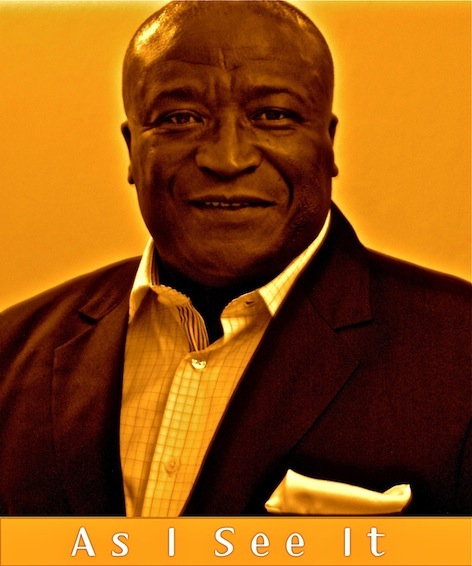
©Simon Chilembo 2018: Author, President, ChilemboInspireInsights™
Death is death. Murder is murder, regardless of who executes it, no matter for what cause. Murder sustains necrocracy the world over.
We live so that necropots can justify their existence: “But, hey, the people of my great, the greatest country in the world, have elected me. Great people, wonderful people, smart people. God bless you! I’m gonna make you great again. Greater!”
Jeeezuzzz!!!
We die so that necropots can live: “We shall eliminate all the enemies of our great nation, the greatest nation in the world. The people of our great nation, the strongest nation of them all, by the way, say that we must follow our enemies of peace and our way of life anywhere in the world. We’ll find them. They can’t hide. The only place for them to hide is their shit-hole countries’ graves once we’ve taught them a lesson. Don’t mess with God’s greatest nation on earth. We gonna getcha!”
Lord, have mercy!!!
As a concept, an instrument of power, and process, leadership is, by default, murderous. Any person that, by any means, legitimate or otherwise, depending on the dominant existential paradigm in a given domain, assumes power over others, automatically becomes a potential murderer. The probability of necropower becoming a reality for a leader is directly proportional to the joint organic and structural complexity of the organization they lead.
We see the highest of such sociological complexity at the national leadership level. Therefore, all national leaders at the top of the decision-making hierarchy will either be directly murderous as individuals, or be directly responsible for murderous acts committed by others on their behalf. All in the name of national security, in defence of national sovereignty, territorial boundaries, and in support of allies in international solidarity treaties in times of strife in various parts of the world. In this regard, at any one time, no state leader can be seen to be better or worse than any other regarding necropower atrocities; be they locally, regionally, or globally.
Murder is murder. Death is death, regardless of who dies, no matter for what cause. Death is the food of necrocracy the world over. But all life is sacred. No matter the race, colour, creed, and all the possible permutations of the condition of being human on earth.
On the grander scale of conflicts, wars allow necropots to manifest the full range of their respective psychopathic dispositions. We die, we survive, we cry, we fight amongst ourselves, we mobilize mass anti- or pro-war protests, we run away to other lands for shelter, we are pro the one necropot contra the other/ -s, we go to the United Nations, we get peace-keeping forces, and we still die; all of us: children, women, men, combatants, cats, and dogs. Observing all this, these necropots just laugh at us. They think we are absolutely crazy. Murder is such fun. It is such profitable business.
The bigger, the more enduring the wars, the bigger the party for the necropots on either side, the more the money made by the war industrial complex, the more the blood on necropots’ hands, and the blinder the necropots get. Wiping the eyes with their bloodied hands, the necropots cease to see reality for what it is. They can only smell and taste blood money everywhere, oblivious to how they have led necrocracy onto an effectively self-destructive path, taking down humanity together with it. They seem to think that a nuclear bomb is a joke. Climate change, well, let’s not go there at this stage.
And we help them, necropots, along. We take sides. Our senses of right or wrong are clouded by our ideologies, personal ideals, identities, ambitions, psycho-social attributes, and much more. We go out and intellectually, psychologically, and spiritually kill those that do not share our views of the world, as in par with our chosen necropots.
Pro-necropot logic: It’s okay, our chosen necropots are not murderers, they only, necessarily, kill in self-defence, even if those getting killed are their very own people. The enemies of our favoured necropot carry out genocide, you see. Our favoured necropots are strong leaders; they only want to achieve the best for their people. It is irrelevant as to whether or not the people approve of our favoured necropot. People are stupid.
Only strong leaders like our favoured necropots know what is good for the people. It’s okay if some of these stupid people have to be killed in the process, you see. From time to time, a bit of ethnic cleansing never hurt anyone.
Our favoured necropot is breeding a nation of sheep people. These will abide by his rules without question, you see. Wouldn’t it be nice if people understood that good leaders, like our favoured necropot, are made and chosen by God for the people? Punishment for those defying God’s will is death. By killing his enemies, our favoured necropot is only carrying out God’s will. May the wrath of God fall upon the external enemies of our favoured necropot!
We live in an age where necrocracy shouldn’t have any space to breathe. We live in an age where it ought to be crystal clear that a war on another cannot stop war, or other wars. In this day and age, fundamental human wisdom ought to be at the general understanding that, irrespective of how we colour and name organized, systematized, militarized killings of human collectives by others, murder remains what it is: murder. Murder doesn’t change character just because it is committed for a worthy cause, as the proponents may perceive it.
We live in an age of stalemates in war. National leaders of the world shall go into their graves with our blood perpetually dripping off their hands. Eternal necropots. The whole lot of them. Ain’t nobody better. Ain’t nobody worse. All as equally guilty of mass murders as hell. The only difference being in numbers. However, even one person slain is one person too many.
There is no way anybody can ever win a war lastingly in this Fourth Industrial Revolution (4IR) age. Albeit in variable degrees, as shall be determined by intellectual and resources capacity, any nation, or subversive group has access to all that is available of knowledge and technology to wage a war, either or both conventional and guerrilla style. Cease fires and progressive peace and reconciliation talks ought to be the order of the day in our time.
Peace and reconciliation talks assume, before everything else, humility and mutuality of respect for one another from all the parties concerned. The same should apply on the ground, from supporters and activists on all sides. Arrogance and bullying will never lead anybody anywhere. Never. Only back to war. Guaranteed.
Nobody can ever be coerced to come to sit around a negotiation table in the absence of the recognition of their humanity, no matter how banal it might seem to third parties. Outsiders can never determine what people know and value about themselves and their place in the world. This is what is at the core of all wars of liberation across the world, both historically, and in our contemporary world.
As a warrior, I know that if somebody unjustifiably hits me, I will hit them back, if they haven’t killed me. If the situation calls for it, I’ll murder them without thinking twice about it. There is a potential necropot in all of us. Nevertheless, if I ever will have to kill, it will be in the protection of my own life there and then. It will never be out of the need to sustain my power and dominance over others, in any given situation.
As a leader, I don’t need to be told that I’m no longer relevant. More often than not, I can see potential power antagonism looming from afar. If, after weighing my options, I deem it justifiable, in view of the bigger common good threatened, I’ll nip the antagonism in the bud. Otherwise, I pack my bags and leave. I, both as a matter of principle and personal proclivity, will never impose my leadership on unwilling people with whom I’m supposed to be pursuing a common cause.
As a private person, in whom it is encapsulated my warrior spirit and leadership potential, I am conflict shy. I’m conflict shy to a point of misrepresented cowardice, up until I have to fight, if and when called upon to. Conflict gives me a headache. Especially if it is over situations that do not make sense to me, or over matters that I consider not as adding value to my existential imperatives. Such conflict disorients me. It makes my body itch.
Conflict makes me want to sneeze, but constricts my chest at the same time. I’m acutely allergic to what I consider to be nonsensical conflict pursuits founded on ignorance, parochial thinking, and poor philosophical principles, if any at all. I am conflict shy not only by choice, but also by natural disposition. Therefore, I am not prone to militant activism.
It is not about lacking the guts, or having no spine. I am simply not confrontational by nature. I am just not wired for unrestrained, militant activism. Neither am I inclined to evangelism with respect to life values I stand for, and the choices I shall want to, and actually make in my life.
I speak and shout with my writings. I also often express my life views in professional, and other social engagements endeavours I’ll find myself in from time to time. It is what it is. Take me or leave me. I am anti-necropower, regardless of the practitioner, or their cause. Murder is murder. Necrocracy has no future.
Simon Chilembo
Welkom
South Africa
June 21, 2018
Tel.: +4792525032
STORY OF MOTHERS AND WIVES
WHAT MOTHERS AND WIVES DO
The little I know about my mother’s life inspires my forthcoming fourth novel, which will be my sixth book. As I progress with the work, I get to appreciate more and more that a wife and mother will do what they have to do for the good of their children and the honour of their husbands. At the same time, wives and mothers are also made of flesh and blood; they are human too, just like everyone else.
They shall slip and fall, gather dirt like everyone else. They shall rise, shake themselves from the dust, and fail to erase the stains; just like everyone else. If the good they did for their children, and the honour they bestowed their husbands is greater than the outcomes of their fallibilities, then, who is anybody to judge?
 ODE TO WINNIE MANDELA:
Courage personified
Defiance personified
Endurance personified
Grace personified
Humanity personified
Inspiration personified
Longevity personified
Loyalty personified
Mystique personified
Resurrection personified
Motherhood dignified
Phum’la ka kuhle, Mamma
Should they seek
To blow out
The torch of your legacy
I will be there
They’ll have to first
Take me out
A luta continua
For the love of Mothers
Amandla ngawethu!!!
SIMON CHILEMBO
RIBEECKSTAD
WELKOM
SOUTH AFRICA
APRIL 13, 2018
TEL.: +4792525032
MANDELA, KAUNDA LEGACIES
Unilateral Tug of War
Just in terms of numbers, South Africa and Zambia cannot be equated. Of course. The former outstrips the latter by far: from territorial boundaries dimensions, population sizes and overall demographics, natural resources endowment, optimal economic potential and actual performance, to military power. Numbers don’t lie.
It goes without saying, therefore, that at any one time, any one variable or all highlighted above considered, South Africa will, in real terms, be a much more complex society relative to Zambia. Meaning that politics in South Africa will, correspondingly, be a more challenging enterprise for those involved in the national political leadership arena, whether in ruling power or in the opposition.
Needless to say that there are, indeed, countries smaller than even Zambia, but happen to have much more intricate political intrigues than South Africa. Another time and another place for the last observation raised.
A simple Google search will either confirm or debunk my assertions above, much as it will do with many of my postulations throughout this presentation.
Politics is the science of government. Government is the collective of institutions, including their constituent leaderships and functional personnel. They are created to enforce societal progress rules and policies that are arrived upon by the representatives of the body politic.
The government, or the state, will often reflect the interests of the dominant political parties. However, through corruption and greed, the dominant, ruling political parties may themselves be subtly steered by peripheral influential, manipulative economic forces. These may either be local or international actors, if not a combination of both. In South Africa, the concept called “State Capture” describes the collusion between the powerful economic elite and the government.
Notwithstanding the “State Capture” phenomenon, the interests of the respective political parties are often shaped and differentiated by their cardinal ideologies. An ideology is the summation of ideas based on theories and policies of political and economic engineering of society.
Ideologies are applied in varying ways to indoctrinate particular societies to address and find solutions to existential questions and challenges in certain pre-determined, and non-variable methods. Therefore, ideologies are not only critical for shaping individual countries’ internal living conditions, they also influence individual countries’ international relations premises; i.e. which countries will have mutually cordial diplomatic relations with one another, which supranational institutions the countries will be members of, which international solidarity causes countries will engage in and at what cost, etc.
In contemporary times, historical factors leading to the creation of specific nations often contribute to the kind of ideology adopted, developed, or redefined to suit local conditions. A nation’s wealth, often with particular reference to its relative strategic significance to the major economic and political nations and power blocs in the world, will also have a bearing on the nature of the dominant ideology. A subservient country’s geographical location on the globe can further add to, or reduce its strategic value.
At any one time, a quick reality check will show that relatively newer and smaller nations with both perceived and real strategic importance to the major political and economic giant nations, e.g. the industrialized Western world, have a hard time determining their own, sovereign national ideologies.
Old ties bind some of these emergent states with their former colonial masters from the Western world. Others will be held in infinite indebtedness to comrade states from the Eastern socialist, or communistic countries that helped in their liberation struggles for independence.
It is in the light of all the above that I choose to look at the comparative legacies of Nelson Mandela of South Africa, and Kenneth Kaunda of Zambia. Comparative because of the many critics of Nelson Mandela, who, in my view is unfairly battered in relation to the critics’ view of to whom real Southern African statesmanship ought to be accorded contra Kenneth Kaunda’s legacy too. I specifically address myself to Zambian critics.

Nelson Mandela attends the lieing in state of ANC president OR Tambo at FNB stadium, Soweto, South Africa. (Greg Marinovich)
Before I proceed, I wish to make a few salient personal points:
- I must declare that this is a non-solicited presentation. It is only an outcome of the involuntary workings of my critical thinking mind and its creative processes. It is my subjective, free world intellectual response to the foul anti-Mandela vis-à-vis Kaunda sentiments I have seen expressed in the various social media platforms, particularly Facebook, for many years. It is not my goal to want to be malicious against anybody. Neither is it my intention to seek or expect approval, favours, or rewards from anybody.
This is an honest, independent expression of my thoughts and feelings with nothing but the very best of intentions. All this is done with the utmost respect both for Mandela and Kaunda, their respective families, and their followers through their respective foundations and other fora … (Continued in the book: “MACHONA BLOGS – As I See It”. Order Simon Chilembo books on Amazon)
Simon Chilembo
Welkom
South Africa
Tel.: +4792525032
February 13, 2018
INTRINSIC MOTIVATION IN A NATIONAL CONTEXT
Guiding questions:
1. What spurs a nation or a people to attain heights of development?
2. Is it a collective that is the main driver or a leader with “Intrinsic Motivation”

©Simon Chilembo 2018
NOTE
The article below is motivated by Mr Fisho Mwale. It arose from a Facebook interaction yesterday, Thursday, January 08, 2018. I was one of the respondents to his posting, “BUSINESS IDEAS”. In it, he referred to his personal family experiences to highlight some cultural impediments towards following up emergent business opportunities in our society.
Mr Fisho Mwale, summarizing his bone of contention, wrote, “Sometimes out of the box great business ideas do not work due to many factors such as timing, cultural values and lack of guts. You have to believe in your ideas and it’s important to get ‘buy in’.”
In agreement with him, I responded:
“… Great real-life entrepreneurial development case study material, …. Thanks for the insights, Sir! I wish to also add lack of what I call “Intrinsic Motivation” to the list of factors inhibiting follow-throughs to great business ideas and, indeed, opportunities arising from given circumstances.
“Intrinsic Motivation is an active killer-instinct driven desire and determination to achieve set goals, and beyond. That arising, perhaps, from chance opportunities, or those created in response to certain apparent societal, if not bigger natural conditions and/ needs. E.g. the cholera epidemic mentioned above. It works independent of external deliberate or unintended hindrances, and is often a profoundly personal journey. Seen from the outside, people in “Intrinsic Motivation” mode can appear to be selfish, reckless, one-track-minded, and defiant, amongst other negative personal attributes.
“This kind of motivation is ignited by desperate survival need circumstances too, if not a pure natural curiosity state of being. When pushed against the wall, without any possible manoeuvre or exit, fearless, “thrill-seeker”-type-people with strong wills to live will find the most ingenious ways to survive: creativity kindled to find the most unconventional solutions that could be developed into business models, subsequently.
I believe that we have to teach ourselves to be hungry enough, curious enough, and afraid enough to ignite our “Intrinsic Motivations” in order that they, pushing the continuum farther, ignite the killer-instinct guts necessary to get us to see things through, no matter the odds. It is a mind, attitude thing, really. Doable.”
The reply from Mr Fisho Mwale was gracious. He concluded by throwing me a challenge, “Thank you and I would love for you to expand more and discuss it from a National context …”
The latter got “… my Intrinsic Motivation to find, and engage with like-minded people about national development issues, plus possible solutions …” to shoot to the roof.
DEVELOPMENT: Attainment, Nurture, Sustenance.
In Social Science, the concept of Development is defined in terms of upward qualitative and quantitative transformation of society over time. Operationally, it means that from society’s observable benefits of this positive change, people will reflect higher and enduring frequencies of subjective states of contentment, hope, and belief in an ever bright future for all.
This state of affairs will be a manifestation of societies ability to provide for all the people’s basic short-term and long-term needs and wants for successful living from day-to-day, all their days: food, shelter, health, education, security, and more. Abundance is when society has a constant surplus of all the resources that are necessary to ensure that the people’s contentment levels do not dramatically spiral downwards in cases of natural calamities, wars, and, especially, population growth in time.
The objective side of Development is, therefore, operationally seen in the growth, in sheer numbers and magnitudes, of material and service values of all the tangible and intangible aspects of societal management towards lasting prosperity attainment. Herein come elements of:
- Infrastructure – water reservoirs, food production facilities (agricultural land, food processing plants, etc), housing, roads, hospitals, schools, power stations and grids, telecommunications, and others.
- Services – the entire spectrum of social amenities and necessary operational personnel across the board (health workers, engineers and other scientists, entrepreneurs, R&D, and many more), national security (police, military), including culture, i.e. the whole possibilities field of the creative arts.
- Longevity – In sustained development states, short of mortal accidents of all kinds, under variable circumstances, people tend to live into ripe old ages. Absence of private and societal want, as well as a general sense and state of well-being in society tend to have a life prolonging effect on the people: resilience against various life-threatening illnesses, and ever improving medical treatments of the same.
Because Development is about growth, and is forward-looking, it can be encapsulated in the concept of progress. This means that stages of development can be measured, and isolated in terms of space and time. Viewed in this regard, it ought to be understandable that Development entails a rise in complications of societal management and administration.
In the context of this presentation, management is about the allocation of resources in appropriate quantities to relevant material and service needs in developmental work. Administration, then, sees to it that resources are applied for their originally intended purposes, and according to stipulated rules with regard to predetermined decisive conditions.
Therefore, from the point of definitions above, for Development to succeed, it is imperative that it is spearheaded by people of at least as intellectually and culturally progressive as Development itself is inherently, and necessarily entails on its reality.
“INTRINSIC MOTIVATION” FOR DEVELOPMENT: The Collective? A Leader?
On the one hand, human beings are inherently self-centered as individuals. On the other, because human beings are, actually, also very smart, they realized a long time ago that to survive in an inherently hostile nature, they had to learn to live in collectives. We, as humans against other earthly creatures, owe our position at the top of the food chain to our ability to work together in our necessary efforts to tame aspects of nature for our, yes, Development (-al) needs … (Continued in the book: “MACHONA BLOGS – As I See It”. Order Simon Chilembo books on Amazon)
Simon Chilembo
Welkom
South Africa
Tel: +27 813185271
February 09, 2018
GOD IN MAN
SCIENTIFIC MAN OF GOD
Epigenetic inheritance theory has captured my fascination in a profound way. It has cast new insight into how I now think about the nature of man. That with reference to how I relate to man in the spontaneous, continuous process of writing and playing my own story as I go through the labyrinth of life. Some call it legacy.
©Simon Chilembo 2017
But I don’t really care much about “the legacy I shall leave behind”. If I do have a legacy, it has, actually, built, and shall sustain itself for as long as time wants it alive. Nevertheless, immortality is the goal. Who wants to live forever? I do. Why not?
All I care about is the integrity of the authoring of my life story lines as I dance my way through to my exit point of the maze that far, far away.
My hope is that my life story shall be read and judged with open, scientific minds, both whilst I still walk the face of the earth, and when I’m dead.
Thanks to epigenetic inheritance theory, I have finally seen the light: yes, the human body is, indeed, a temple of God. By extension, any other creature that subscribes to, and lives according to tenets of any prescribed faith, has its physical body as the temple of God; at least in the Western world’s perception of the Deity.
Even more precisely, the philosophical duality of God and her anti-thesis, Satan, is not only a construct of the core of man’s existential questions’ thinking: their abodes, heaven and hell, respectively, are, in fact, in the DNA of man.
There is no place called heaven outside the realm of man’s existence on earth. Neither is there a place called hell in the same illusory domain. Heavenly rewards, or satanic retributions for our virtues and sins, respectively, we live them accordingly right here on earth. When we die, we are dead: our DNAs have switched off from our consciousness, and so have the ideas of God, Satan, heaven, and hell.
It is only the unenlightened that fuss about life after death for the deceased. The human soul leaving the dead is as real, as independent, and as infinite as the universe. So, leave it alone. It knows how to take care of itself. Ever heard of a buried soul? They failed to bury Jesus.
It ought to make perfect sense that life-after-death is, indeed, a reality for the living only. Life goes on. But, living in the dark, and confronted with challenges of life with nature, the survivors seek answers outside of themselves. Finding no workable solutions out there, panic grips them. Fear of the unknown rules over their lives through and through … (Continued in the book: “MACHONA BLOGS – As I See It”. Order Simon Chilembo books on Amazon)
Simon Chilembo
Welkom
South Africa
Telephone: +27813185271
December 19, 2017
 Simon Chilembo