Home » Posts tagged 'creativity'
Tag Archives: creativity

𝗟𝗢𝗩𝗘 𝗟𝗘𝗧𝗧𝗘𝗥𝗦 𝗣𝗢𝗘𝗧𝗥𝗬
𝗪𝗛𝗘𝗡 𝗪𝗢𝗥𝗞 𝗦𝗣𝗔𝗥𝗞𝗦 𝗖𝗥𝗘𝗔𝗧𝗜𝗩𝗜𝗧𝗬, 𝗪𝗛𝗔𝗧 𝗗𝗢 𝗬𝗢𝗨 𝗗𝗢?
DISCLAIMER
I am not an employee of NAM (Nasjonalmuseet/ the National Museum of Art, Architecture, and Design). I work at NAM on behalf of an outsourced service provider, in which I have full-time employment. This presentation today is one of several literary creative inspirations that I have so far gotten whilst performing my formal duties at NAM. The presentation is unsolicited, and it is done with no inherent ulterior motives. It is done and delivered with but the best of intentions, without fear or favour.
Neither NAM nor my employer can or must be directly nor indirectly associated with the thoughts, opinions, and sentiments I am going to express in this presentation. I alone am responsible for the contents herein. I hope, though, that the output shall be of a quality and standard that shall cause neither embarrassment nor disrepute for both NAM and my employer.
The inspirational moment, and its subsequent outcomes, i.e. poem, publication in a book, and the social media video recital here would have happened regardless of whether or not I worked at NAM. All that needed to happen was for my eyes to fall on the particular inspirational object. It could have been anywhere, at any time. It just happened to be at NAM, Oslo, on October 28th, 2022 this time around.
As I walk through, back and forth, round and around in my professional errands in the various public exhibition spaces in the museum, the vast variety of objects on display works my emotions and thoughts in phenomenal ways. Many a time I feel like I see myself floating in this boundaryless enclosure that is an intermingled environment of what I’ve gathered of ideas of heaven and hell. In this environment, the material and the conceptual are all merged into one new reality that defies human speech for description. The opposites as we know them on the earthly plane cancel out one another in this strange new reality. And it doesn’t matter.
For example, in this temporary but recurring new reality, I don’t see the environment as I do with my eyes distinguishing between normal light and darkness. The sensory organs don’t work in the conventional way here. When I expect to hear a sound in my head, as from observing a painting depicting fire, somehow silence claims its space. It’s in conflicting but harmonic moments like these that I get lost in time and space.
And, in silent thunderous flashes of light, clouds of inspiration engulf my thoughts with darkness. Through this haze, I get to sense words in either written or spoken forms. In this state of mind, I lack a background upon which to base my experience of these words that I hear in what I perceive as silent sound in stationary motion. This is how my writings come to be. Preserving my sanity, thereby. I appreciate art for what its charming beauty and its irresistible goriness do to ever kindle my creativity. A work of art has not moved me if my response to it does not inspire an expressive textual idea in my head.
Immersed in the writing process, I do not create writing ideas from nothing. My writing ideas are stimulated through my responses and reactions to my actual interactions with events and attributes of my environments at any one time. It is not always that the writing idea shall be manifest at all. It is one thing to have an inspiration, and it is another to bring the inspiration to life – the mood, time, and space have to be right. That means that my literary output so far is only the tip of the iceberg concerning how much more I shall potentially produce. Every day I can’t help but get several concrete inspirational moments stored in my creative database in my brain. Therefore, I work at the right place at the right time. I shall live to see my 1000th book published before I’m a hundred years old.
Every piece of poetry, essay, or novel that I write helps me to hold my feet on the ground. The writing process cleanses my soul; it elevates my passion for living. This is so because, when I write, I get lost in a realm of being in which asking existential questions and finding functional answers are the imperatives for survival. This is the realm in which, with text, I get to materialize for life my dreams, my hopes, and fears. I am eternally grateful for the privilege of working at NAM for what immense value the workspaces add to my creativity.
Currently, and until January 14th, 2024, NAM has a major exhibition of some of the works of Harriet Backer. The exhibition is called Every Atom is Colour. Whenever I’m in the magnificent exhibition hall, I get a sense of a warm, safe, homely feeling. This is reminiscent of the better part of my formative years whilst attending school in Lesotho, 1965-69. I feel and see so much of my late maternal grandmother’s aura throughout the space.
Harriet Backer gives me a reassuring, here-and-now sensation in my entire being. I see myself walking into a bright future standing still with time in Harriet Backer’s presence. This is much like seeing the visions of the kingdom of God that my grandmother used to tell me about. She used to say that I was a chosen child of God; when I’m grown up, I’d be king of my people. And, when I die, I’ll be headed to heaven, where I’ll sit on the right side of God, and live happily ever after. Amen!
I’m not quite ready to die yet. Heaven can wait.
I first met Harriet Backer in the northern spring of 2022, a few months before the official opening of NAM. Upon entering the room through its main entrance, I saw a portrait of a letter-reading girl hung up on the wall facing the entrance squarely from across the room. This was one of those love-at-first-sight moments that often make my heart sing throughout my body. The girl’s enthralling beauty reminded me of a girl that I once knew as a growing-up boy-to-man in South Africa in the early 1970s.
Each time I entered the room I’d daydream about the many, many love letters I’ve written in my time. The girl in the portrait is there but not there at the same time. I could bring her to life in my fantasies, but I could never have her in the flesh, yet I love her all the same. Hopeless love.
In the same manner, the girls I used to write letters to in many parts of the world were there in my fantasies as I sat down and wrote. The fantasies would get wilder tortuous during the replies waiting phases, which could be weeks to months in those pre-internet days. Upon receiving even only one reply after the long wait, I used to curse my fantasies for failing to bring in the flesh these girls home to me. But I kept hoping that one day, it would happen. I’m keeping the dream of love alive in memories of some of the girls now dead.
I’ve met numerous other new girls since. We don’t write letters these days. Social media and other modern communication platforms do the trick. But it’s not the same. I guess that’s how it took about six months before the poem inspired by the letter-reading girl came forth.
One day, as I stepped into, the Harriet Backer room, I marvelled at the especially silently exuberant nonchalance of my beloved letter girl on that particular day. Thinking that I saw the painting moving like it was being pushed towards the door, I feared she was shutting me out for once. At the same time, I felt welcome as I confirmed that the painting was attached fast to its regular spot.
I realized, then, that I hadn’t before thought about what the message in the letter could have been and from whom it may have come. I also realized that I had never gotten to look into her eyes since they were so fixed on the letter in her hands. Perhaps I should write her a letter, I thought. At that moment, then, I suddenly heard poetic words singing in my head; the poem Love Letter became the real-world outcome.
Before I read the poem, I have to make another disclaimer as I, in my words, describe what art is:
DISCLAIMER 2
I do not have any academic or professional training in art. My articulation of what art is a function of my layman’s instinctual appreciation of things beautiful against the ugly; both in the figurative and abstract manifestations as my senses perceive it in any given situation and space, at any given time. All I know is how to think and write, and write and think. Art is what I feel. If I feel it, I can think it. If I think it, I can write it. Writing is my art, my artistic expression. Writing is what I do; all attributable to my academic training.
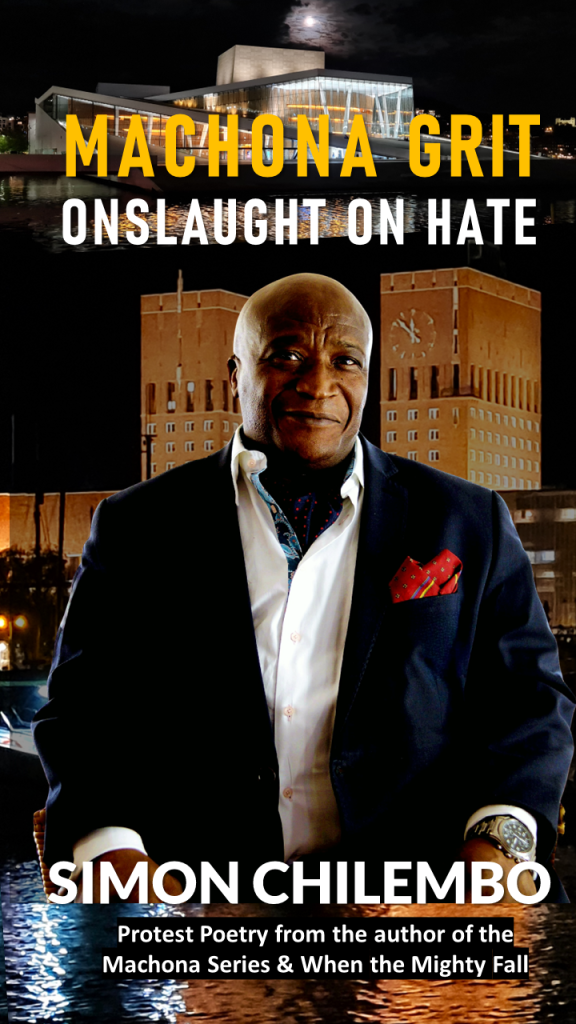
WORKPLACE OF BEAUTIFUL THINGS
People do from time to time visit museums of all kinds for all kinds of recreational, educational, and research reasons. I work at Norway’s Nasjonalmuseet. The institution has proved to be an awesome literary creative’s wet dream for me as an author and poet. I get at least one goosebumps moment each day I am at work. Tens of thousands of works of art are on display throughout the eighty-nine exhibition spaces at the museum. In all their widely variable expressive forms, these artworks move me in a way that ever fills me with love and joy like I have never experienced before. Working here is a privilege I am much grateful for.
At different points in all the exhibition spaces in the museum, there are rest stations comprising benches upon extensions of which are placed, amongst other items, wooden playing cards. The cards have various quizzes and games for the guests to have a go at as they sit and rest. I, together with Ole, a fine but ever condescending colleague young enough to be my grandson, happened to have been engaged in a discussion about various aspects of the museum when we approached one such station. Ole then unexpectedly reached out and randomly pulled out a card from the bench extension. It turned out to be a quiz card with the question: ‘What is Art?’; creating a gotcha moment that I saw Ole revelling in.
Talking about Ole’s gotcha moment, this was yet another one of those moments in which a person of European extraction comes to me with the pre-conditioned notion that Black people are not cultivated enough to appreciate the finer aspects of European culture. Anyhow, my immediate response in this case was, “Art is the capturing of an experiential moment in time and space in order to, perhaps, tell a story about that experience in the future. This capture can be in any form or medium according to the proclivities and talents of the artist.”
Ole, “I hear you. But you will have to elaborate more on all that you have just said!”
Seeing as we had to attend to each our respective duties at work then, I replied, “I shall write an essay for you, then. Deal?”
“Deal!”
My definition of art shall be both conceptual and functional. Conceptually, I know art when I perceive it. I do not have to be told. I do not have to be instructed. I know art when my senses register it. Regardless of the representational form, the sentimental response that I get from experiencing any manifestation of art that I consider as beautiful is a constant. Conversely, an unattractive, unpleasant artistic form as I experience it emotionally affects me in the same way relevant to it irrespective of the form or the representational style.
Whenever I read a storybook (or even write one) that I enjoy, my breathing rate slows down, the total bodily relaxation I get gives me a wonderful warm feeling all over; I get goosebumps, and my palms get warmer and moist. This kind of feeling brings me immense joy. The dreamy state it gets me into sends me into a fantasy world of all things possible. If I had been, for one reason or another, going through hard times, this state brings hope home; it fills me with a sweet sense of freedom. In this state, I am invincible. This is my subjective domain for defining what beautiful art is for me as my perceptive senses – eyes, ears, skin, tongue, nose, intuition – register it, feed my hormonal system (feel-good hormones), and the latter instruct my nervous system to induce my being to act accordingly. Pure joy.
Whilst recognizing it for what it is, art that is repugnant to me is exactly that. If it makes me cringe, if it casts a shadow of pessimism over me, if it fills me with negative thoughts and associations, if it gives me a cold sweat, then it is bad art for me. There are times when I can see beauty in bad, ugly art, though. I think about the hands, or some other body parts, that created the work. Every hand shall tell its story according to its owner’s neuro-hormonal wiring and physical capabilities. One man’s apparent gory art may be another’s depiction of heaven. Beauty is in the eye of the beholder.
Functionally, art is a conveyor of messages, a storyteller; a courier of generational narratives in humanity’s dances with nature and itself over time. Art can be an instrument of change. Art can repair the once broken. Art can inspire hope, faith, trust, and love. To the extent that art is a personal expression, art may speak for its creator. Art creators have the potential to make or break society. Ask God, man’s most divisive, master-of-carnage creation. God may have created man instead, her most complex work of art. The outcome is not any better.
Art is identity. Identity may be deception obscured in art. From the outset, art may be true by intent and purpose. But when human perception and interpretation of reality are as polychotomous as there are so many people on earth, art shall be true or fallacious as to the perceptive state
and cognitive capacity of the observer. Therein lies the mystique, the intrigue of art. Who am I? I am a man in love with art.
Art is some powerful stuff. Art is a human creative potential deserving to be handled with tender, loving care. At its best, art is an instrument of peace; art has the potential to stimulate reflection on the human condition. We rise, we fall; art captures all that. Art is beauty. Without beauty, life is not worth living.
Beauty moves humanity forward and higher on the scale of qualitative and quantitative improvements in life. It is not for nothing that nations of the world, interest organizations of all sorts and sizes, wealthy individuals, and many others invest heavily in the promotion, conservation, preservation, and storage of some of our most impactful of artworks over the epochs into the future. Art immortalizes human experience.
WHAT IS ART WORTH?
Your eyes see what they see. Your brains process your perceptions as to their inherent OS programming, i.e. the brain in concert with the hormonal system, which affects behaviour, ultimately influencing our decision or choice-making processes. Your expressive potential is manifest through your creative skills and particular materials and work tools preferences.
The expression of your observed reality or conjured fantasy isolated in your creative expression of choice shall, then, manifest the outcome we see as a work of art in its unique presentation that only you can tell it like it is. It’s up to the eye of the beholder to see or not to see the beauty, the function, and/or the worth of the work.
Simon Chilembo, December 29, 2023
I’ll write you a letter
Etch my words on paper
If it’s a crime to love you
Here is the evidence
My love for you
Is not
A judicial affair
For courtroom theatricals
For juries’ deliberations
For judges’ adjudications
I’ll etch portraits
Of my love for you
On canvas
Lock them in frames
We’ll want to meet again
The other side of
A thousand years ahead
Hanging on walls
In art museums
Of the world
For a billion eyes to see
I couldn’t hide
My love for you
For your eyes
That could never see
My love for you
In plain sight
END
©Simon Chilembo 28/10-2022
SIMON CHILEMBO
Oslo
Norway
January 07, 2024
LANGUAGE AND DESCRIPTION OF EXPERIENCE: COVID-19 OUTCOMES CASE
IT IS WHAT YOU SAY
More talk on how to cope with survivor issues around outcomes of Coronavirus disease (COVID-19) on a personal level. Talk structured around principles of my COOL Coaching (Chilembo Optimal Outcomes Life Coaching) method*.
Pivotal point in awareness of language usage: “Reality manifests itself with impressions that the mind creates as from the language it processes,” Simon Chilembo.
E.g.
1. Ahmet Altan: “… like all writers, I have magic. I can pass through walls with ease.”
2. Mwamedi Semboja, Twitter account tagline: “You can travel anywhere, just by closing your eyes.”
Earlier presentations:
1. SHOULD I DIE: COVID-19 Reflections
2. CORONA VIRUS DISEASE COVID-19 SHALL FALL: My Reason for Optimism
3. Ode to Manu Dibango: WALK SOUL MAKOSSA
4. SIMON’S KITCHEN IMPROMPTU COVID-19 QUARANTINE VEG STEW
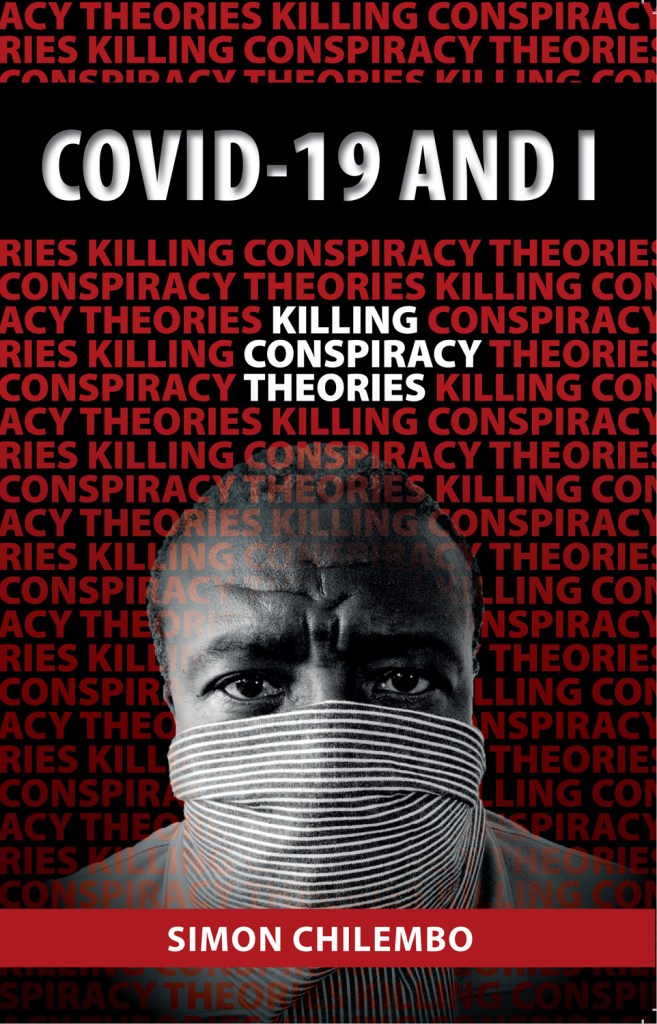
*Subsequently edited and presented in the book Covid-19 and I: Killing Conspiracy Theories)
SIMON CHILEMBO
OSLO
NORWAY
Tel.: +4792525032
April 14, 2020
PS
Order, read, and be inspired by my latest book, Covid-19 and I: Killing Conspiracy Theories.

RECOMMENDATION: Do you want to start writing own blog or website? Try WordPress!
MGEU, FOOTBALL SUPER STAR
MOYA NKHABU: TRIBUTE TO A ROLE MODEL
Growing up in the old, subdued black South Africa, I could never see myself playing serious football in a formal club setting. From the point of view of personal drive, the game has never charmed me that way. I could never say whether or not my lack of success as a junior street football player was due to being untalented, or simply that my passion was never aroused strongly enough. I’m inclined to suspect the latter.
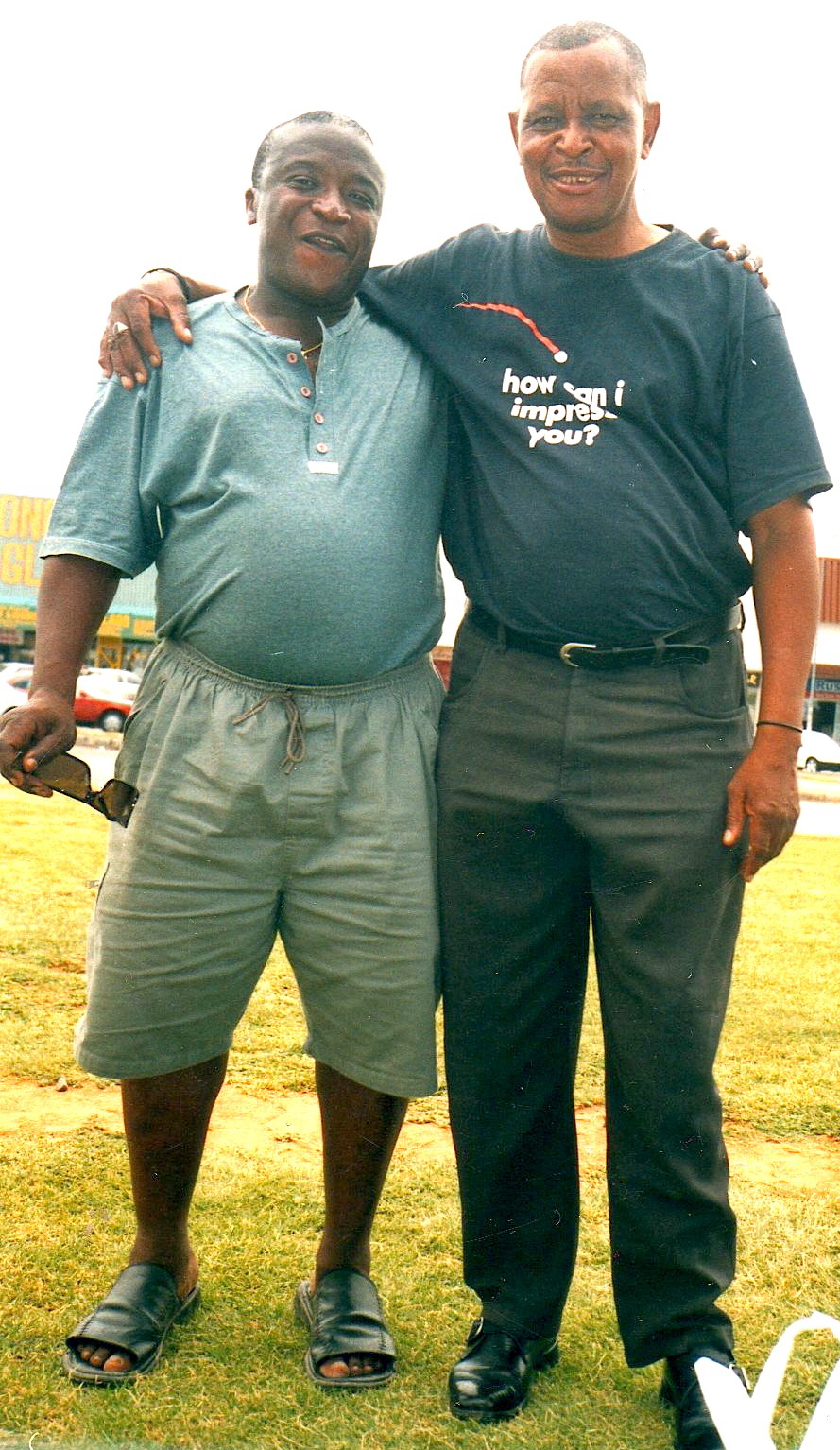
©Simon Chilembo 2018. 2006/7, with Abel Nkhabu, a.k.a. Moya, Mgeu, legendary pioneer South African professional football player. Family friend, mentor.
In the old, apartheid South Africa days, football talent groomed itself, and thrived on the township streets, and rural playing fields. It was raw, pure, and ecstatic. Paradoxically, it provided spaces for all the joys of a free childhood in a then tyrannical state. Moreover, my childhood street football reality provided escape from the attendant ills of poverty in many a black South African home: all round domestic violence, woman and child sexual abuse.
Like most South African township boy children, I imagine that the first expression of my active physical power, from the time I managed to stand up, balance, and walk, was probably to kick at something. I have been kicking for as long as I can remember. Ball control, reading the game, and stopping opponents from scoring against my street team were my forte.
Dribbling was never my inclination. But, I recall, even the very best of our dribblers during my street football active years, up to age 12 years old, knew well not to fool around with the ball around me. If I had any football talent at all, it shone brightest whenever we opted to play a rather rough version of the game. Often, if it’s genuine street culture, it has to be rough; it has to be tough, it has to break all the rules, like Rock & Roll.
Here, the object was not to score goals, but for the competing teams to incapacitate each other’s players until there was only one young man standing, with the ball. If the one team totally demolished the other, the winning team’s members went for one another, then. Thus, the last man standing outcome. It gave an unforgettable, ego-boosting adrenaline rush. Great, great fun, it was.
In this brutal game, we had to be subtle, but extremely effective. That was so that if any adults were watching us play, they wouldn’t understand that we were, actually, out to deliberately injure one another. A strict rule was “no ball, no attack”; meaning that we went for one another only to the extent that one side had ball possession. And, direct kicks to the legs above the ankle were not allowed.
The idea was to “slice”, or “chop” each other’s legs at the ankles, much like Karate players execute the devastating leg sweeping technique called “Ashi barai”. Serious injuries, necessitating hospitalization, often occurred here. I never got injured. Several casualties have pointed to me, though. In action, I can be light and quick on my feet. I developed this ability from this dangerous kind of football playing. I would, later, take the skill with me to Karate. Fifty years on, I’m still standing, rocking as if there’ll be no end to my rolling life. Truth is, I want to live forever. I am a dreamer, and so shall it be.
My street football career was much fun, whilst it lasted. It gave me lasting valuable life lessons, as well: street survival alertness (“Tsotsis”, violent street hustlers, didn’t play football!), and fierce competitive spirit, or killer instinct cultivation. Street football also afforded me the first real taste of leadership, going into puberty and subsequent young manhood. The leadership trial run would reward me with just as premier and unforgettable taste of the thrill of victory. That owing to the coaching my impromptu leadership role empowered me to do with my team, one day.
A team had challenged us from another part of our township, Thabong Location, Welkom. Our challengers were notorious for severely beating up their opponents when they, the former, lost matches. These guys were a little older than us, and they had some of their neighbourhood supporters following them everywhere they went. Our team, on the other hand, was, usually, an ad hoc affair. It spontaneously organized itself around whoever was available on our street, and wished to play, there and then.
Unfortunately, on the day of the challenge, whereas we had more than what we needed of potential players, no one wished to play. All were afraid of getting beaten up by the visitors, in the event of the latter’s loss against us. The problem was that the visitors were still going to be violent if we chose not to play. These guys, the challengers, were crazy: when they won, they still beat up the opponents, if only to teach the losers not mess with the bad guys! So, either way, we were in trouble. Catch 22.
I do not seem to recall what led to my team prodding me for a solution to the dilemma we were in. They even decided that I should be the team captain for the day. Because I had already started training boxing by then, a thought struck me that if I made my team believe we were strong as individuals and as a collective, we could win in such a way that the bad guys wouldn’t want to fight us afterwards.
How? Let’s wear them out, whilst we remain strong all the way, throughout the match. How? Let’s do what nobody else did at that time: do a pre-match, team spirit enhancing jogging and calisthenics session! It’s called warming-up these days. Doing that would also give us a psychological edge over the opponents. It worked like magic.
My team played with the intensity and unity of purpose that we had never thought were possible before. In my head, I still vividly see replays of the match to this day. Playing on what we, then, called the “12 hurra!” principle, we beat the bad guys 12-0. The loss, combined with my team’s upbeat, super confident mood, overwhelmed the bad guys so much that they left our zone running as if they had just seen snakes, or some scary monsters like that. Eventually transferred into Karate, I have enormously enjoyed sports leadership and coaching since. I’ve won, I’ve lost. I’ve been stupid, I’ve been wise. I’ve made friends, I’ve lost friends. I’m here. I live. I love.
Adult club football was a different ball game altogether. I enjoyed watching this, not so much for the thrill of the game, but out of the fascination I had for those players that stood out as the best in the game, regardless of position played. The fascination was about the aura these guys seemed to carry, both on and off the field. They seemed to be ever so strong and happy.
It’s always been a great fascination for me as to how men, and women these days, running after, and with a ball could, at the same time, induce so much euphoria amongst the spectators. Off the field, the super star players seemed to wield so much power that it appeared, for me then, as if they could be rulers of the world. That was despite the fact that I, at that time, I had no real clue as to how gigantic and complex the world really was. They had all the beautiful girls. Attendant hyper fornication scandals I didn’t care much about. Rock & Roll is what it is: you burn, you burn. If the highway to hell is short, let it be. I’ll talk to Mother Mary another time.
One of those super star players was Abel Nkhabu, a.k.a. Moya, or Mgeu, late, 2017. May his soul rest in peace. I first came to personally know, and look up to him in the years 1972-74. Looking back, I like to think that, actually, this man was my first real-life, non-family Super Hero. He seemed larger than life, and, yet, he could touch me, ask me about my wellbeing, and encourage me to be good at school always.
There were also some of Mgeu’s generation of original black South African football mega stars around. By status, they were bigger than him by far; they have remained so, and are, today, living legends in their own rights. I still look at them with awe; still getting that tingling sensation in my hands and feet I used to get at their sight, on and off the pitch, in my early teens.
These men, in various capacities at club and national association levels, continue to steer modern South African football. They are doing so with the same inspirational class I recall from the early 1970s. In them, I still see hope for this troubled land of my birth, South Africa. However, these men are still far away from my immediate spaces. They have yet to touch me like Mgeu did. A consolation, though, is that, in my eyes, they carry on his spirit, and that of numerous other giants of the pre-1994 South African football scene.
Much of my desire to defy and beat the odds in order to succeed in life, be a super star, and live forever, is owing to these men of wonder in the history and development of this land. There is more to football than just seemingly mad twenty-two men chasing a ball around a stupid rectangular space limiting their freedom to run away with it, the ball.
Inspired by the big and strong, unbeatable Hercules in the bioscope, I liked making leather wristbands for my friends, my lebandla, my street gang, and me. The finest I ever made was of some fine, thick, nicely patterned leather piece from one of my mother’s old handbags. Mgeu liked that wristband so much that he borrowed it for a while. He wore it on several big matches he played, with Welkom Real Hearts FC.
“Monna, dude, I, actually, feel stronger and more courageous when I’m wearing this band. And, you, know, the other thing is that people on the field get afraid of me, believing that the band is a fortifying juju gear. I like it very much!”
I refused Mgeu’s offer to buy the wristband. Of course, I was taken by the symbolic power effect it had on him. I wanted to have the power too. When he, eventually, gave the wristband back to me, he was overwhelmingly effusive. An ordinary older South African man would have bullied me and kept it, anyway. Mgeu’s return of the band permanently cemented the bond that we already had. Before that, no other adult man had ever shown me that kind of respect for my personal integrity. It was gratifying for me to find that there, in fact, were still some grown up men one could trust.
As first-born child in my family, I was raised to love, protect, and support my younger siblings, that as a matter of course. My general love for children and youth derives from my upbringing values. From the time I became aware of my sibling position and role in the family, fondness and caring for those younger than me, to beyond my home, was something one just did without question. It was something I never put much thought to, even.
My younger, and last-born sibling, Lucy Dintletse’s birth, in 1974, brought the real intensity of my love for children to my consciousness for the first time. Lucy’s affectionate family nickname is Sonono, often shortened to Sono. The very nearly nine years of her life would thrust the love to heights I have yet to fathom. MHSRIP.

©Simon Chilembo 2018. Sono’s Catholic baptism day celebration, June, 1974. Our maternal grandmother, Auma, there. My powerful women. MTSRIP, Sono (1983); Auma (2004)
I see Sono in every child of the world. Whenever I see children of the world suffer under mankind’s proclivity to wars in outrageously vain attempts to impose peace upon one another, her sweet face emerges above the misery I see; the pain, the hopelessness I feel. And, then, faith that, someday, we gonna be alright, is rekindled. Through every child whose life I touch wherever I am in the world at any one time, my steadfast hope and wish are that, one day, these children will grow up to be conduits of love and peace for all mankind.
Mgeu was one of the pioneering black professional football players in South Africa, in the early 1970s. He made a dashing and influential figure, to his grave. His entire life, he was fiercely anti-apartheid and black people’s oppression. From Mgeu, I learnt that a man could be big and strong as a super star, but he could still have time and energy to engage positively with children and youth. This has remained one of the key defining moments of my life.
Whereas my father remains the formidable force behind my formal dressing taste, my smart-casual dressing style has heavy Mgeu undertones. My father was laid to rest twenty years ago today, July 04, 2018. MHSRIP. I remember him with immense love with this article too: my father, the finest of gentlemen, my hero; the original Machona – (the) Emigrant, the traveller, the gypsy from the warriors of love mystics of my Tumbuka people, Eastern Province, Zambia. If you jump into Malawi, Tanzania, and, partly, the Democratic Republic of Congo (DRC), you’ll land into the midst of the extended empire of my people.

©Simon Chilembo 2018. With Big Daddy Cool, Sir E L W Chilembo. Pappa’s picture taken on my 21st birthday celebration party, June, 1981.
The one quality I’ve not quite been able to grasp, though, is the phenomenal “Ladies’ Man” tag Mgeu proudly carried to the very end. If we meet up again on the other side, I should ask him for specific coaching on this one; assuming that there’ll still be ladies abundance when I arrive there. But then again, we might find that the ladies on the other side are more work than what I have down here on earth. Nnnahhh, we let this one pass.
In the presence of Mgeu, I’d always feel like a 12-14 year old boy, if not even younger. In the photo accompanying this piece, we are meeting up soon after I had arrived in Welkom, from Norway, Christmas time, 2006/7. You know that sweet, loving feeling you get when you are with your favourite uncle, I had it at the time the photo was being taken; I’m feeling it as I write this article, at this very moment. Thanks, football, for one of the most significant men in my life!
I was fortunate enough to have had a few good men to relate to during my formative years. Many of those that were not so nice to me never lived to see the close of the 1970s. Good riddance. A lot of these not-so-nice men were generally unkind to youngsters. It’s just as well that longevity was never to be their gig. Morons!
In my dealings with children and youth, I endeavour to be, at least, as good as those adult males that have, each in their own special ways, contributed to my being the mad energy bundle that I am, now as a fully grown adult myself. I have never been able to think of a better way to express my deep felt gratitude for the presence of good men in mine, and other children’s lives.
In the early 1970s, Mgeu, together with a host of other first generation of black professional football players were organized under the auspices of the then National Professional Soccer League (NPSL). In my forthcoming 6th book, 4th novel*, read how these transformed the lives of the black people of South Africa, at a time when the then South African apartheid regime was at its most venomous. The NPSL effect is played out around a particular family’s life in Thabong, Welkom. Watch this space for more information about the impending book release. Coming soon!
Simon Chilembo
Riebeeckstad
Welkom
South Africa
July 04, 2018
Tel.: +4792525032
*MACHONA MOTHER – Shebeen Queen
POST-WRITER’S BLOCK POEM
I BEAT GRAVITY
I tell them always
You can’t pull me down
I beat gravity, Baby
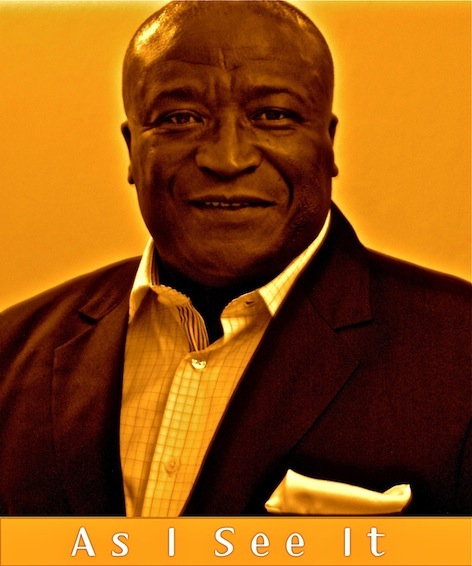
©Simon Chilembo 2018: Author, President, ChilemboInspireInsights™
Time shall tik and tok
Tik and tok
Tik and tok
At tik and boom time
I bid farewell
To gravity
I rise again
I don’t go through space
Tik and tok
Like time
I cut through space
With the speed of light
Catch me
Stop me
Pull me
If you can
You think
You can break me
I tell them always
You don’t know me
You want
To break me
I tell them always
Aigobeki le ntsimbi
This metal here
It doesn’t bend, Baby
I stand tall
Straight up I rise
I beat gravity, Baby
Don’t touch me now
©Simon Chilembo
Welkom
South Africa
May 22, 2018
Tel.: +4792525032
38 YEARS AN EXILE: XXVII
HOME AT LAST! Part 27
Greek Tragedy – Tragic Diaspora Myths
 O edl’ ihlaza! That’s isiZulu language, South African poetry at its most elegant for you: You are eating it while it’s still green (read: You’re eating it raw)! Ever eaten an unripe fruit? Sure not the best of tastes, not the best of chews; like getting caught in the act with your lover’s best friend by your lover, on their own bed in their own house.
Now, that’s one big screw up. Much as the acute diarrhoea and abdominal pains you’ll suffer after eating a green, unripe fruit. Assumption is that you don’t die. You dead, you fucked, it don’t matter no more. Wilfully eating an unripe fruit can also be indicative of the immaturity, ignorance, sheer stupidity, and lack of sophistication of the mind of the consumer, a green mind. Mind makes the person … (Continued in the book: “MACHONA AWAKENING – home in grey matter”. Order book on Amazon).
SIMON CHILEMBO
Riebeeckstad
Welkom
9469
South Africa
July 25, 2015
38 YEARS AN EXILE: XXII
HOME AT LAST! Part 22 IN PRAISE OF PUSSY – A Song – Diaspora Poetry Inspired by: Åpne din bergsprekk – Det er på tide å ta fitta tilbake/ Open Your Crevice – It’s time to get the pussy back.
The most beautiful thing
I wobble down on my knees for you
To bury my face inside of you
As if to pray
To the highest God
In holy revelation

©Simon Chilembo, 2015
In my Son of The Soil Garden of Eden
Dedicated to your splendour
I watched honeybee
Busy inside a rose the other day
Petals in non-modest reddish-pinkish-orangish-yellowish-golden glow
As if source of the sun
Pollen in opulent provide

©Simon Chilembo, 2015
I caught the musk of your innermost depths
Went giddy in my head …
… (Continued in the book: “MACHONA AWAKENING – home in grey matter”. Order book on Amazon).
Simon Chilembo
Riebeeckstad
Welkom
South Africa
June 17, 2015
38 YEARS AN EXILE: XVII
HOME AT LAST! Part 17
WEALTH MANAGEMENT IN THE DIASPORA

For an ordinary Diasporant with humble origins from their motherlands, with no history of family wealth accumulation over time and, therefore, not born with silver spoons in their mouths; as well as not having been raised with soft pillows under their wings by virtue of family status, influence, privileges, and power, the Diaspora can present unprecedentedly huge opportunities to earn money, create, build, and sustain wealth … (Continued in the book: “MACHONA AWAKENING – home in grey matter”. Order book on Amazon).
Simon Chilembo
Riebeeckstad
Welkom
South Africa
March 24, 2015
38 YEARS AN EXILE: XI
HOME AT LAST! Part 11
POWER TO THE PEOPLE
 Ama-a-andla nga wethu! We’ve got it all so wrong in Mzansi fo sho. Power To The People! Is not all about the right to toyi-toyi for the next 350 years over even the most banal of people’s dissatisfactions against, or demands from the government. It is not about the false-premised belief in the right to the indiscriminate orgy of vandalism, theft, abuse, and misuse of public infrastructure with impunity due to poverty, daily evident in the most unequal society in the world today. Power To The People! is not a statement of delusional entitlements to excesses of privilege and power to members of the ruling, as well as other elite classes, and their beneficiaries … (Continued in the book: “MACHONA AWAKENING – home in grey matter”. Order book on Amazon).
Simon Chilembo
Riebeeckstad
Welkom
South Africa
November 30, 2014

SMARTER ZIMBABWEANS, STUPID SOUTH AFRICANS?
IS IT TRUE OR NOT THAT ZIMBABWEANS ARE MORE SMARTER (sic), EDUCATED THAN SOUTH AFRICANS??
Asked somebody on a Facebook group, The SA Political Forum (no longer exists).
A clumsily formulated, but interesting question which has provoked extremely intense debate on the forum in recent days. The latter manifesting more the worst than the better of our views of one another in this part of the world: nationalism, racism, tribalism, bigotry, parochialism, xenophobia, ignorance, primitivity, nauseous arrogance, pettiness, immaturity, insensitivity, paternalism, mental derangement symptoms, lack of imagination, intellectual poverty, academic disorientation, non-culturedness, superstition, spiritual emptiness, insecurity, dumb-headedness, self-destruction tendencies, predator mentality, terribly developed language/ communication skills, cheap rhetoric, thick-headedness, anarchism, mistrust, misinformation, information distortion, history misinterpretation, manipulation, wilful ignorance of facts, e-kassie mentality, ill-defined defiance, profanity, foolish pride, as well as threats; including leadership/ rule by fear.
I do not quite recall how my first year, 1965, at school in Lesotho unfolded. What I do remember well, though, is that it was a hell lot of fun learning how to read and write for the first time. Returning from what I had then understood to have been Christmas holidays, January 1966 I discovered that I had completely new classmates at my school. The others from the previous year were in another class I heard called Padiso/ Sub B.
That didn’t bother me much, however; all I wanted to do was to continue learning how to read and write. It was ever such great fun, at the request of the class teacher, to stand in front of the class reading or counting for my new classmates. Nevertheless, I recall that at some point this whole thing began to bore me half way to death; I kept reading and counting the same things all the time. I felt it was time I went to join my old classmates who were now in Padiso/ Sub B. So, I stated my wish to the class teacher.
The school principal wouldn’t allow that to happen, I was told. Why??? “Because you are just too intelligent for your age, Simon. Boko ba hao bo tla bola …/ Your brains will rot if you go to higher classes while you are still under age. People who get too much education while young get mad, you see. Don’t worry, you shall go to Padiso/ Sub B when you are 8 years old” the teacher resolutely told me. So, I stayed in Grade 1 for three years, 1965-67, to keep my sanity together. Jeeezuz!
During the years 1967-69, the only meaningful school activity I recall are the almost daily after school fights arranged by older boys and girls. The idea was that boys my age should/ would beat the brains out of me because teachers at the school never stopped talking about how intelligent I was. Sadly for the matchmakers and my opponents, I would win absolutely all my fights. There was no way I was going to allow these dumb heads to kill my brains. I was also a street-smart kid.
The thing is, while these age mates of mine were still working around getting the alphabet, and numbers, together, I was already reading to my class teacher and my grandmother some passages from the Lesotho Times newspaper. I am a South African child begotten of a Zambian father. At this formative school of mine in Lesotho, there were many other mixed ethnicity parentage children (representative of the ethnic and racial diversity of the Southern African sub-continent) from relatively more resourceful families in the major South African metropolis, including Lesotho itself.
In 1970, going onto my tenth year of age, I find myself in a South African school classroom for the first time. The academic excellence self-confidence developed in Lesotho got acutely shaken by my failure to understand what the textbook I was given by the new class teacher was about. Reading comprehension, of course. I struggled through the assigned reading passage, and then answered the subsequent 10 questions best I could. I got zero out of ten.
The teacher expressing dismay at my explicit lack of knowledge of Afrikaans, I couldn’t reveal that I had actually started schooling in Lesotho, where there was/ is no Afrikaans spoken or taught in schools. By the time of the mid-year exams in June that year, though, I was scoring the highest all-round grades in class
Upon return from winter holidays, my class teacher called me out to where she and other teachers were apparently discussing something serious together with the school Principal. I was told that all had agreed that I deserved to be promoted to the next class because I was just too intelligent for Grade 3, which I had in fact been forced to repeat in the first place. I declined. Why? I was afraid my brains would rot, and I would thus go mad from too much education while still young. Bummer! I kept scoring the highest grade point averages at school in South Africa till end of 1974.
First quarter of 1975 I am in Lusaka, Zambia. No school that year. Very depressing. I have never felt smaller, and more insignificant. Shattered medical studies dreams. But then again, just under 15 years of age, I discover, and enter into a space called library for the first time in my life: Lusaka City Library, British Council Library, American Library. Book, books, and books everywhere, including my Uncle Oliver’s private library at home, as well as later, the magnificent UNZA library. And there were so many magazines, journals, and other publications of all sorts to read. I became a bookworm that year. A whole new world of thinking and dreaming was opened for me; and thus began my daily English reading and writing journey to this day.
Back to school in 1976. Forced to backtrack again because, my father was told, the then South African Bantu Education Grade 7 academic standards were lower than those of Zambia. But, as soon as I had gotten into the rhythm of things at school, I was topping class grade average points, as usual. I could never understand the Grade 7 failure panic and hysteria characteristic of the time in Zambia. I, of course, passed the final exams with flying colours later in the year.
South African born, Zambian dad begotten man-child would show constant, and predictable, academic excellence throughout the entire Secondary/ High School career to university; crushing class- and schoolmates from many other countries/ nations of the world, including Zimbabwe. This, despite the fact that I didn’t know what a science laboratory was until I was 17 years old at secondary school. That Zambian school children had already been exposed to sophisticated scientific education for years had also greatly intimidated me at first. There was at that time an awesome Zambian youth scientific magazine called Orbit. The story would repeat itself in Norway, both academically and professionally in my adult years.
20 years ago, after failing a Drivers’ Licence theory examination in Norwegian language, a blue-eyed Norwegian young man, upon hearing that I had scored almost 100% in the same test, exasperates, “Fffæææn/ Ssshit, I never knew that there were in fact wise negrer in the world!” Another dick head bites the dust.
The moral of this story is that when you are hot, you are hot. Your origin, or Nationality, due to various objective and subjective factors, may have some, but certainly not, decisive bearing.
My initial response to the question on the forum went as follows:
NOT true! The 5 million or so … in SA should tell a lot about Zimbabweans’ smartness, with their country messed up by (one of) the most educated presidents in Africa. We have our Msholozi, we have our legacy of inferior, for Blacks, apartheid Bantu education. But, for one of many examples, and despite acute imperfections here and there, through SASSA, South Africa effectively distributes at least R 10 BILLION in various social grants a month.
Ultimately, it’s not so much about how smart or educated Nation(-s/ -nals) are, it’s about how they apply these qualities to meet their people’s needs and aspirations as their nations develop and progress among nations of the world.
Simon Chilembo
Riebeeckstad
Welkom
9459
South Africa
Tel.: +4792525032
October 12, 2014
 Simon Chilembo